




By Katharine Vincent & members of the Basin team:
Water is essential for human life – we need it for domestic use, for agriculture, for industry – and it is also essential for the ecosystems on which we depend.
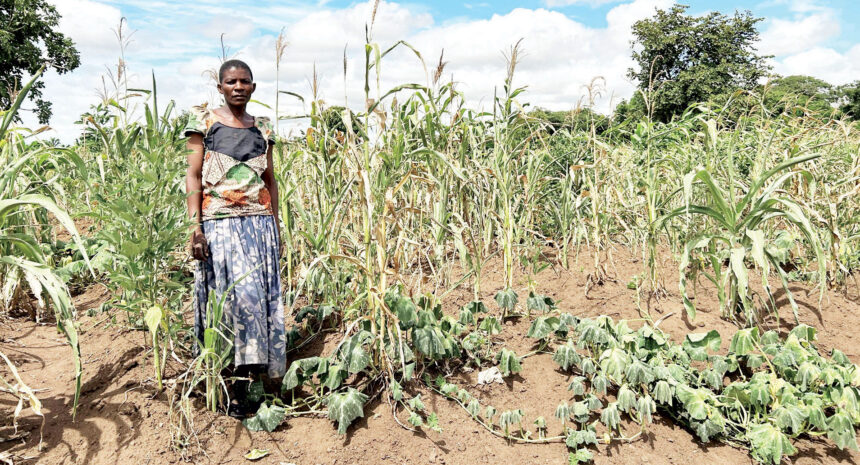
Yet the availability of water is affected by a changing climate. This was acutely clear over the last season, when El Nino led to drought conditions that have led to ongoing hunger and food security.
Adapting to climate change often includes a central focus on water. To ensure our lives and livelihoods are not disrupted, we need to have water of appropriate quality in the right places at the right times.
In Malawi, as in other countries, there is a long history of projects in the water sector to achieve water security.
- Advertisement -
These involve a combination of hard infrastructure, such as irrigation schemes and piped water supply systems and nature-based solutions such as check dams and land management.
These approaches are typically embedded in a user-led water management approach which may also include awareness raising and capacity building.
Yet these water management schemes are not always successful – or at least they do not always remain successful at the end of a project life.
As adaptation science progresses, we are realising that there are untapped disciplines which can bring relevant insights that may be able to support greater success in adaptation projects – in the water sector and beyond.
- Advertisement -
- Advertisement -
Behavioural and psychological sciences give us insights into why we behave the way we do.
In the water sector, some interventions have tried to change the way people behave.
An example is trying to instil handwashing so it become a regular practice. But we have spent less time looking at why people behave as they do in the first place.
If we better understand what drives the way we all behave in the first place, then we have a better chance of designing interventions that are successful in bringing about adaptation that leads to long-term water security.
A new project – Behavioural Adaptation for Water Security and Inclusion (Basin) – is investigating this in Malawi, Tanzania and Burkina Faso.
Basin is implemented by an international partnership led in Malawi by Water Witness International and the University of Malawi.
Across the three countries, we have identified a range of case examples where we believe there is potential to investigate what leads to positive behaviours that contribute to adaptation and water security.
In reverse, we can also investigate what barriers exist to positive behaviours that currently lead to less effective adaptation and water security that falls short of expectations.
One common thread across countries is the behaviour of unpaid volunteers and understanding what motivates people that serve their communities to act in voluntary roles.
Water management is often propped up by the work of volunteers.
In Malawi, we are focusing on civil protection committees and the executives of contract farming associations to understand what motivates them to take on those voluntary roles.
In Burkina Faso and Tanzania, we are using the case of community volunteers who raise awareness of water resource management among their communities, help to spearhead management of community water resources, collect water data to provide to the authorities, and, in some cases, also try to hold duty-bearers such as district water officials to account.
As well as looking at individual behaviours at the community level, we are also investigating the policy environment.
The use of laws and policies can directly and indirectly shape the way people behave by influencing what they are and are not allowed to do.
But beyond laws and policies themselves, the process of creating legislation and policies is also a product of behaviours of the individuals that are involved in the process.
The behaviours reflect the values and worldviews of individuals, and the collective operating environment of their organisations which determines what types of behaviours are encouraged or discouraged. This collective operating environment can create barriers to action.
Although our focus is particularly on water and adaptation, we intend that the insights from this investigation will have broader applicability in adaptation projects across many sectors.
The success of many adaptation projects is contingent on local ownership and leadership. Understanding the characteristics of people who are motivated to play these roles means they can be targeted with greater likelihood of success and sustainability of interventions – for the benefit of the wider community.
Targeting these critical players – ‘leverage points’ in the system – may also be a more efficient use of resources and capacity, as opposed to broad-brush attempts to change behaviours of entire populations.
Knowing what affects how people behave can be better reflected in the content of laws and policies so that they “nudge” desired behaviours. These approaches are already widely used in the global North to encourage positive environmental behaviours and reduce destructive ones.
And a better understanding of the way in which the collective operating environment within organisations shapes individual behaviours will give insights into how barriers arise to action.