





By Charles Mpaka
Sitting in a chair shorn of trappings of royalty, Chief Chikomeni, one of the paramount traditional leaders in Lumezi District in Eastern Province in Zambia, spoke slowly from his mind and heart.
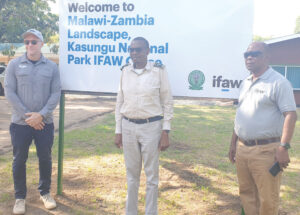
“You won’t find anyone burning charcoal here,” he said last week at his palace, looking straight at a delegation comprising officials from the International Fund for Animal Welfare (Ifaw) which included the organisation’s Executive Vice President, Jason Bell.
“We have worked so hard to achieve this,” he said.
- Advertisement -

Charcoal making and agricultural land expansion are major causes of deforestation in Zambia. In his area, Chikomeni put a decree in place: No person opens a new farm land without permission from his chiefs.
- Advertisement -
“We did that to safeguard against clearing of forests anyhow,” he said.
“Farming is our primary means of living here. But we will not do it at the expense of forests. We need sustainable approaches. For example, we have three dams that need maintenance so people can continue fishing and irrigating their crops for a living. Not cutting down trees.”
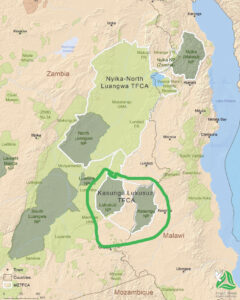
Dotted with swathes of impressive indigenous forest stands and customary land where people cultivate, Chikomeni’s territory lies in the Malawi- Zambia landscape. This is an ecological corridor that stretches between Kasungu National Park in Malawi and Lukusuzi and Luambe national parks south of the biodiversity-rich Luangwa Valley in Zambia.
Some of Chikomeni’s subjects live in the boundaries with Kasungu National Park where they have borne the brunt of elephants invasions.
- Advertisement -
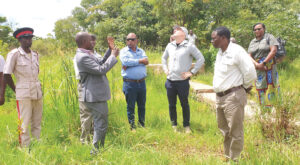
“We hope the authorities will address these conflicts,” he said. “But we are in support of Room to Roam. That is why we are restoring and preserving natural forests because it also benefits us greatly when our land is not stripped of forests.”
The aim of the Room to Roam strategy is to see elephants and humans thrive together.
It builds on the Combating Wildlife Crime project which Ifaw implemented in the landscape between 2017 and 2022 in partnership with the Departments of National Parks and Wildlife (DNPW) in Zambia and Malawi.
The project, funded by the USAID, led to the decline of elephant poaching that had riddled the landscape for decades.
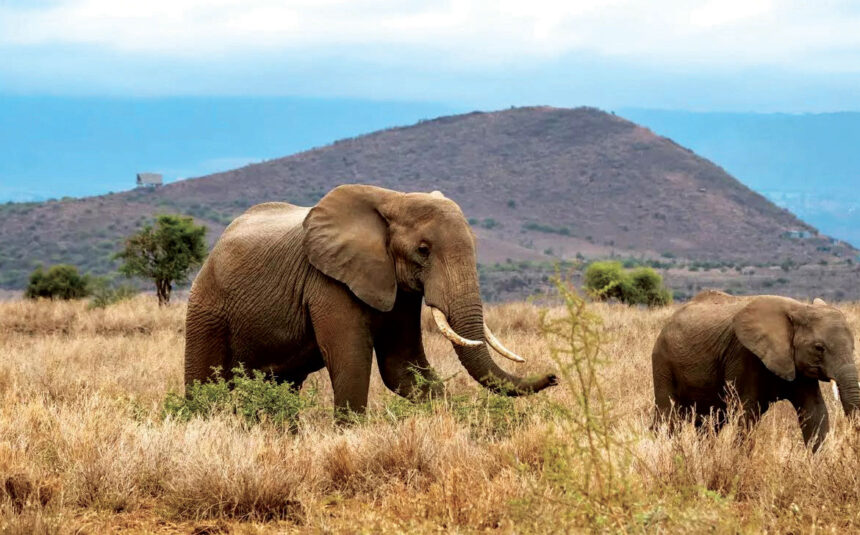
It culminated into a month-long translocation in July 2022 of 263 elephants and more than 300 other animals from Liwonde National Park to Kasungu National Park.
That translocation somehow saved Liwonde National Park and the surrounding communities there. At only 580-square kilometres and with its elephant population nearing 600 that time, the park was sliding towards critical shortage of space and food for the mammals.
On the other hand, spanning over 2,000 square kilometres and with capacity to hold more than a thousand elephants, Kasungu National Park offered a rescue route.
But that capacity at Kasungu National Park is only up to a point.
Elephants are migratory species. And they are voracious. They barely sleep –spending much of the 24 hours roaming about, sometimes covering more than 190 kilometres in a day, according to some reports, in search of food and water that can reach as much as 200kg and more than 100 litres respectively for each adult elephant per day.
Thus, conservationists see the Malawi-Zambia landscape as a fitting space where elephants can range freely and have their populations stabilize.
According to Bell, the Room to Roam strategy is based on 23 years of research on the dynamics of elephant populations across Southern and East Africa.
That research has shown that for elephants and other wildlife populations, as well as people, to thrive in future against threats such as climate change, there is need to maintain a network of connected ecosystems.
“Elephants need space to adapt to the pressure of a changing climate where prolonged droughts are impacting their ability to access water and food throughout the year. Fragmented habitats don’t allow elephants to move,” he says.
Room to Roam actually fits in an already existing frame. The Malawi-Zambia landscape is a Sadc designated Tranfrontier Conservation Area (TFCA).
It lies south of the 32,000-square-kilometre Malawi-Zambia Transfrontier Conservation Area which boasts national parks, forest reserves, game management areas and communal lands.
In its policy brief, Sadc says these conservation corridors increase opportunities for investment in income generating activities such as eco-tourism and sustainable farming practices for communities to fight poverty.
“TFCAs often seek to establish a complementary network of formal and informal protected areas across the landscape, linked through corridors which ensure the continued existence of migratory wildlife species which are otherwise becoming increasingly isolated due to habitat loss and fragmentation,” it says.
Essentially, TFCA is the politics; Room to Roam is the science, as Patricio Ndadzela, Ifaw’s Director for Malawi and Zambia, puts it.
And both of them are tracing a historical pattern, Ndadzela says, because these landscapes were originally ecologically and culturally connected.
“The fragmentation we see today is because of growing human population and activities such as farming and formation of settlements,” he says.
Ndadzela explains that with Room to Roam, Ifaw seeks to reestablish that ecological connectivity but in a manner that’s consistent with current and projected human population dynamics and natural resource pressures.
Speaking during the visit to Chikomeni, Bell said at the heart of the strategy are people.
“At Ifaw, we don’t look at conservation in isolation of people. We consider chiefs and the people as key partners in our work,” he said.
He committed Ifaw’s continuous engagement with communities to learn from their ideas to make the strategy work best for both people and animals.
Ifaw also seeks their input as to how it can support them better in situations of conflict with elephants.
“When people are losing their crops to elephants, we have to come out and help them. We just need to learn from you chiefs and your subjects on the most appropriate way to do so,” he said.
Bell says the bottom line is that if Africa has to have a thriving wildlife populations 50 to100 years from now, then the Room to Roam strategy must succeed
“We cannot afford to just put out fires where human-wildlife coexistence is concerned; we have to look ahead and plan for the future if we want to see animals and people thriving together,” he says.
Kwame Tweneboa Awuah, a land ecologist who conducted a study, published in January 2019, on forest cover and land use in the landscape, says with continuous monitoring, community engagement, sustainable land use practices and policy support, Room to Roam initiative is bound to succeed.
“Addressing the causes of deforestation and fragmentation, like agricultural expansion and uncontrolled burning, is crucial. The integration of conservation efforts with local livelihoods and agricultural practices will be essential for long-term success,” he tells Malawi News in an email from his base in Canada.
Awuah further says the strategy stands to benefit both wildlife and people.
“For wildlife, it provides safe corridors for movement, which is crucial for genetic diversity and ecosystem health.
“For local communities, it offers opportunities for sustainable livelihoods through agroforestry and ecosystem-based approaches, potentially reducing human-wildlife conflicts and improving resilience against climate change,” he says.
Seeking to tap into those opportunities, Chikomeni who is also patron of several community conservation structures is leading his subjects along on the path of the strategy.
“Last year, I planted 2,000 trees. This year, I am planting 3,000. I want my subjects to learn from me. We need forest cover,” he said.