




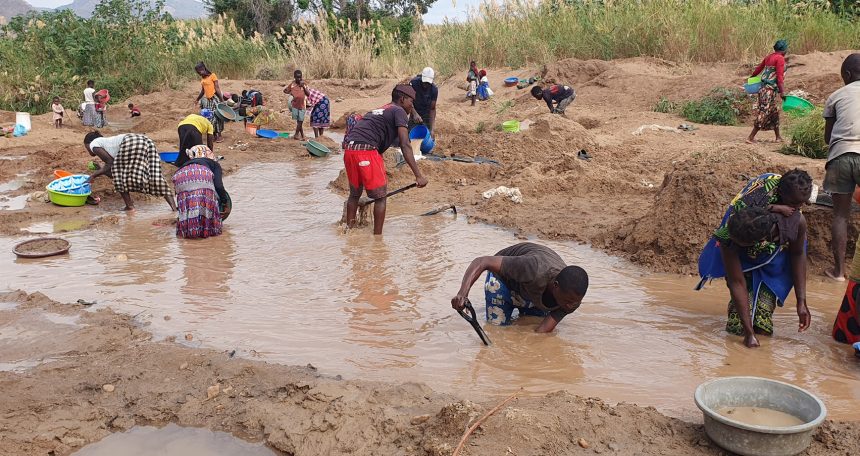
One a flourishing protected area, Namizimu Forest Reserve is now expanding as a wasteland stripped of its trees and pockmarked by pits by illegal miners hunting for gold.
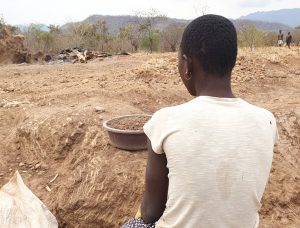
Namizimu Forest Reserve in Mangochi District is being ripped apart to a desert.
For a decade now, every day, scores of people – women, men and children from within the community – gather to dig for gold using hoes and shovels.
In their wake lies vast stretches of degraded land, dirty water and safety risks.
Until around 2015, Namizimu Forest Reserve was almost pristine, a flourishing habitat where different species of animals and plants thrived.
- Advertisement -
But things have taken a different direction over the past 10 years as the once-protected area is now a free-for-all zone.
Trees are being cut down, some have the soils around them stripped to their depth leaving the trees without protection from winds.
Today, the area is a vast wasteland pockmarked by pits, fallen tree stumps and dry soils.
Down in Bua River in the forest, people filter soils in its water in search of the precious mineral.
- Advertisement -
- Advertisement -
Not seen here are those that buy the gold – the ones that are literally financing this destruction.
One of the miners, Pilirani Maseya of Chiponda Village, told The Sunday Times during our visit to the site, that it is not an easy job.
“We also that know we are destroying the natural resources since we dig everywhere as long as there is soil. We just think we can get something out of it so that we support our families,” she said.
“Sometimes we spend the whole day digging without getting anything. Getting injured in the process is common here,” she said.
Thokozani Khondiwa of Saiti Village in the area said they ventured into gold mining for their needs despite knowing it is a risky job.
“There are many people that have been severely injured in this forest after walls of trenches fell on them,” he said.
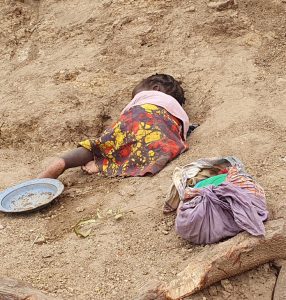
According to Khondiwa teenage pregnancies have also become rampant around the area as young girls are being preyed upon by those conducting the mining.
Senior Group Saiti Mwasungu also expressed concern over how mothers abandon their babies at the site in their hunt.
Yet, despite all the work of the past 10 years, there is nothing for the community and the households to show in terms of benefits other than the destruction, he said.
“From 2015 [when the illegal mining started in the forest] up to now, I cannot say we have benefited. Instead of having development in our area, we are now crying for lack of it and for this destruction,” he said.
Down the Bua River which drains its water into Lake Malawi, communities are paying the price too.
Hawa Richard, one of the residents in the area, complained that the dirty water in the river affects their daily lives downstream. They don’t have clean water to wash clothes and clean kitchen utensils.
At the mining site, lives of babies are gambled with. Mothers dump them anywhere –in trenches, on the riverside and other open spaces – without care as they go on their frantic search.
Child rights activist Memory Chisenga said such treatment of babies is against the law and those responsible for it ought to be held to account.
“In the first place, that place is supposed to be a protected area. Secondly, the miners are putting children’s lives at risk. That’s supposed to attract action from the authorities,” she said.
The developments at Namizimu Forest Reserve speak broadly of the mining sector in Malawi, according to Malawi Economic Justice Network Regional Coordinator for the South, Mike Banda.
Malawi is not doing well on mining governance, he said.
“If you look at it, most of those involved in the mining in Namizimu are young people who are supposed to be in school. You are looking at child labour and poverty that will be passed on to the next generation,” he said.
He said any mining activity is supposed to benefit the communities surrounding it but it is supposed to be responsible mining.
Secretary for Mining, Rodwell Mzonde, said the ministry is collaborating natural resources and tourism departments to ensure protection of such reserves.
“We will work on a lasting solution and we will make sure that Namizimu Forest and others are maintained and protected,” he said.
When that will be, no one knows. But every tree that falls in Namizimu Forest Reserve is knocking down Malawi 2063 vision for environmental sustainability, which seeks to protect forests, water resources and biodiversity for wealth creation.