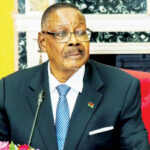






A video clip circulating on social media has drawn attention to emerging succession discussions within the governing Democratic Progressive Party (DPP).
In the clip, Speaker of the National Assembly Sameer Suleman who is also the party’s National Organising Secretary appears to suggest that the party’s next leader could be determined by its current president, Peter Mutharika.
Suleman cautions party members against prematurely positioning themselves for the DPP presidency, emphasizing that the decision rests with the party’s incumbent leader.
“A lot of things will happen ahead. Let’s not get distracted but set all our eyes on the President. He is in his last term and there will be some trying to position themselves [to take over leadership of the party].
“But no one should be positioning himself or herself now as a successor; it is the President himself who will decide. We will do what our president will tell us.
- Advertisement -
“You don’t force yourself on others to lead them. You can spend your money to become a leader but if God, through our president, decides otherwise, you are just wasting your money,” he says.

While some interpret Suleman’s remarks as a call for party discipline and unity, others see them as a subtle endorsement of a top-down succession approach.
Political commentator George Chaima said Suleman’s statement reflects a “politics of imposition”.
He said this risks undermining democratic principles within party structures.
- Advertisement -
- Advertisement -
According to Chaima, leadership in a democratic setting should emerge from the will of party members rather than unilateral endorsement.
He said imposing a successor could trigger resistance among supporters, particularly those who feel excluded from the decision-making process.
Analysts note that successors viewed as handpicked frequently struggle to consolidate authority, risking party cohesion.
Responding to Malawi News questions about what he meant in the statement, Suleman said his remarks did not signal any internal struggle over who might succeed Mutharika.
Rather, he meant to encourage unity within the party.
He said that discussions about 2030 leadership should not distract members of the party.
He urged them to focus on strengthening the party and supporting its current leadership instead.
“I just wanted to relay a message that the party should be united and focus on building itself because we respect our father, President Peter Mutharika,” he said.
Suleman said the priority now is not who leads the party in 2030 but working collectively to build a stronger political foundation ahead of that time.