A study on Malawi’s food supply chain has highlighted gaps that are contributing to losses, higher costs and difficulties in getting commodities from producers to consumers.
Outcomes of Deep Dives Analysis of banana, rice and soybeans by Mwapata Institute show that while Malawi has potential to harness the three and other crops for food security, structural challenges are still limiting the potential.
For example, the production of rice, which is Malawi’s second-most important staple food crop and significant cash crop, faces challenges, which is affecting output.
According to a Mwapata Policy Brief, rice production remains primarily rain-fed, with only 10 percent of its producers using irrigation.
This, and other challenges, are said to have stifled output, with statistics provided showing that the national rice yield has stagnated at 1.8 metric tonnes (mt) per hectare, despite an increase in production area.
- Advertisement -
The drop in yield is attributed to climatic factors, including erratic rainfall, prolonged droughts and low use of certified seed, according to Christopher Nyondo, a research fellow.
“Supporting policy development and coordination, and embedding rice into development plans and flagship programmes, would significantly elevate the status of the value chain,” he said.
Commenting on the issue of soybean value chain, Nyondo said, with targeted policy reforms, the sector could generate up to $181 million gross domestic product gains, create 29,500 jobs and lift 196,000 people out of poverty by 2030.
“Malawi’s soybean sector presents a clear pathway for inclusive agricultural transformation, but unlocking this potential requires coordinated, system-wide reforms.
- Advertisement -
- Advertisement -
“First, closing the yield gap should be prioritised through strengthened seed systems, expanded extension services and improved access to inputs. Raising productivity is critical to stabilising supply, reducing climate-related volatility and enabling the sector to fully utilise existing processing capacity,” he said.
Banana production has also been singled out as one area with vast potential to facelift Malawi’s food supply trends and improves exports if well harnessed.
Mwapata Institute Research Analyst Joyce Minofu, whose scope focused on the crop, said Malawi has a 6,000-tonne banana demand gap, and that Malawi remains a net importer of banana.
“Malawi’s banana value chain has a strong foundation for commercialisation, supported by robust domestic demand, favourable production conditions and attractive farmer margins.
“However, realising this potential will require addressing persistent structural constraints, including weak seed systems, disease pressure, limited access to irrigation finance and inadequate technical support,” she said.
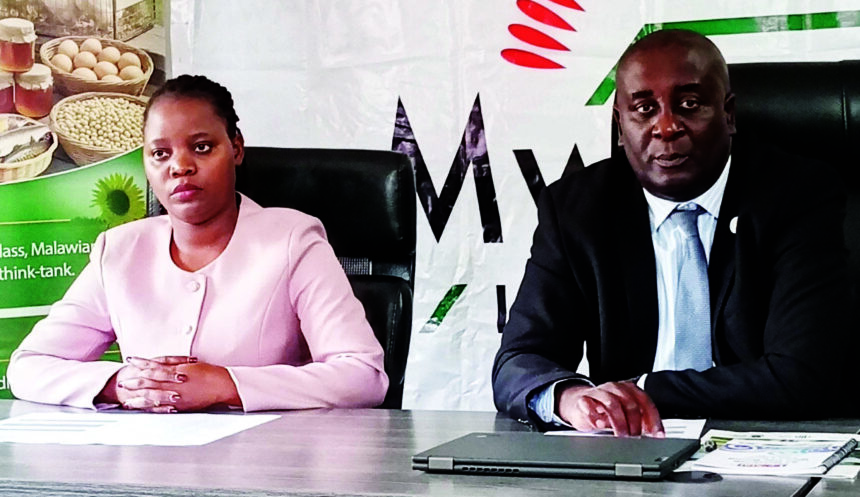
Mwapata Institute Executive Director William Chadza said addressing the challenges in Malawi’s agricultural supply chain required concerted effort, policy reviews and massive capital investment.