By Pemphero Malimba:
Giving birth is regarded as a blessing from God among believers, including those in Malawi.
However, some women are facing calamities in the aftermath of child birth.
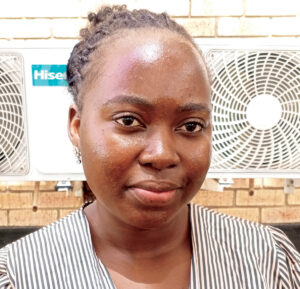
Thokozani Katchere, a Chilinde Township-based woman in Lilongwe, is one of them.
- Advertisement -

On December 31, 2020, Katchere gave birth to a baby girl in the seventh month of her pregnancy at Kamuzu Central Hospital (KCH) in the capital.
- Advertisement -
Her child, who was born weighing 1.8 kilogrammes (kg), was meant to be born in early 2021.
“My child was born prematurely because I developed urinary tract blood infection. This forced me to give birth prematurely as it caused some complications to my health,” she said.
People in her area and those surrounding her did not look at her daughter as a blessing owing to social norms existing in the area.
“People were saying all sorts of things. They were saying that because my child was born prematurely, she may not be normal physiologically. They were saying that she could not make it. This affected me mentally and I lost hope because of what people were saying,” the mother of one said.
- Advertisement -
At the moment, the four-year-old girl, whom we have named Bettie, is attending middle class lessons at one of the nursery schools in the city.
“She is doing well in her studies. I have never seen any problem with her, health wise. She does everything, the way other children do,” the 23-year-old narrated.
Following her experience and that of others, a group called Tinali konko was formed.
The group, which has several members who include women whose children were born prematurely and those whose children were born with various forms of disability, instils hope in other women through visits it conducts at KCH in the city.
“Through this group, we help other women who are in Kangaroo. We provide them with hope so that they should not experience what we experienced. We encourage them to have hope and know that it is possible to take care of their children and see their children grow,” she said.
Katchere, who is continuing with her studies as a form four student at Chiwoko Secondary School in the city, is one of the thousands of expectant women who are able to access medical care in the country’s health facilities.
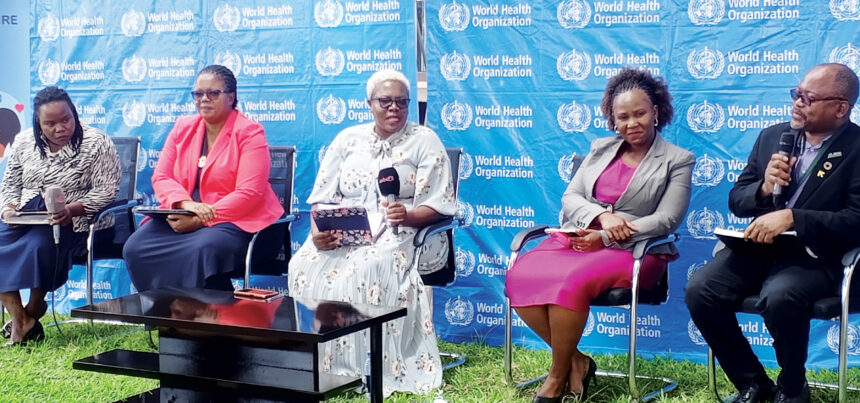
Katchere recently attended a panel discussion on maternal and new-born babies which was organised by the World Health Organisation (WHO) and the Ministry of Health (MoH).
The discussion was part of a year-long campaign in recognition of World Health Day, which falls on April 7 every year.
The campaign, titled ‘Healthy Beginnings, Hopeful Futures’, implores all sectors, partners, health workers and community members to step up efforts to end preventable maternal and new-born deaths and to prioritise women and babies’ long-term health and well being.
Currently, according to MoH, 97 percent of expectant mothers were recorded in 2024 for delivering at their nearest health facilities, where they were assisted by trained personnel.
According to WHO, Malawi’s overall maternal mortality ratio decreased from 439 to 381 per 100,000 live births between 2017 and 2020.
However, MoH indicates that the maternal mortality rate has further reduced to 225 per 100,000 live births in 2024.
On the other hand, the United Nations estimates that in 2020, close to 2,500 women lost their lives in Malawi due to pregnancy or child birth while in 2023 an estimated 12,607 babies died within the first days of life.
WHO reports that based on current trends in neonatal mortality, which is at 24 per 1,000 live births, Malawi is projected to miss the Sustainable Development Goal (SDG) target of 12 or fewer newborn deaths per 1,000 live births by 2030 and only achieve the target in 2041.
The SDG target on maternal mortality rate is meant to achieve less than 70 per 100,000 live births and not more than 140 per 100,000 live births by 2030.
WHO attributes most deaths among expectant mothers to severe bleeding (mostly bleeding after childbirth) infections (usually after childbirth), high blood pressure during pregnancy (pre-eclampsia and eclampsia) complications from delivery of unsafe abortion.
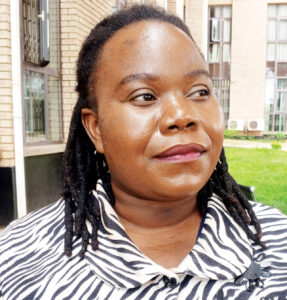
Bwaila Hospital Nurse Midwife Officer Prisca Majawa cites the shortage of essential drugs, inadequate personnel and equipment such as beds as some of the major challenges facing midwives in provision of their services.
“Sometimes, we face shortages of drugs while treating expectant mothers who come to the hospital with some emergencies—for example, magnesium sulphate. We find ourselves in a situation where, sometimes, such drugs get out of stock. This is one of the factors leading to complications among some expectant mothers because if a woman is not treated well, it happens that lives of the newly born baby and mother are mostly at risk,” Majawa said.
She gave the example of her workstation (Bwaila Hospital in Lilongwe) where human resources remain a big challenge.
“The staff that we have, particularly the midwives, are not adequate for the service that is required. So, because of that, you find that the ratio between the number of patients that a midwife is taking care of per day is high.
“For example, at Bwaila, it’s one midwife up to 15 expectant mothers per day, which is a very big number. So, this contributes to lower quality of care,” she said.
She was of the view that shortage of drugs affects medical personnel from providing quality service delivery to the expectant mothers who eventually face complications including death.
She feels that lack of knowledge among expectant mothers on their health affects their early treatment and care.
“Most women who had given birth to children before do things as usual but each pregnancy has its own issues; so, they don’t come to the hospital early. They come to the hospital when a number of things have happened to their bodies— for example, children dying or experiencing bleeding, which is avoidable but gives pressure to us,” she said.
MoH Chief Paediatrician and National Newborn Technical Lead for Malawi, Msandeni Chiume Kayuni, weighed in on the matter.
“Most facilities were built years ago, when the population was still small. So, now that the population is growing, that capacity for the hospital has been reduced. So, that leads to the women getting an infection but also the babies that are coming out are getting the infections,” Kayuni said.
She, however, feels hopeful.
“The ministry is working hard to improve those conditions but it is still a challenge,” she said.
Kayuni encouraged expectant mothers to access care early to prevent various health complications.
WHO Malawi office official Susan Kambale thinks that Malawi needs to do more to turn things around.
“We have done well as Malawi in reducing deaths of expectant mothers but we have a long way to go to achieve the SDG targets. Every expectant woman should access quality healthcare in our health facilities,” Kambale said.
Health rights activist Maziko Matemba thinks adequate financing is crucial to the transformation of the country’s health sector.
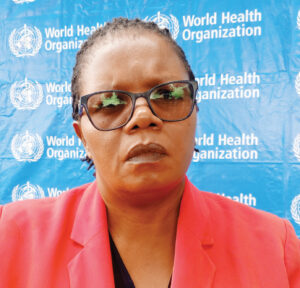
“We need to ensure that skilled workers are in place. We need to have community midwives, and all the cadres who are equipped and motivated to do what they are supposed to do because if, indeed, we are referring all the women that are pregnant to a facility, it means we need to find health workers who can assist them,” he said.
MoH Chief of Health Services- Technical Lilian Chunda says they are aware of the challenges and steps are being taken to improve things on the ground.
“We want to invest more [resources]. The investment will be in the form of human resources; that is, the midwives, the nurse midwives and many others, including those at the community level. We should invest in community nurse midwives,” she said.