




By Blackson Mkupatira
The adverse effects of climate change have intensely impacted smallholder farmers in Chiradzulu District.
Drought and erratic rainfall, combined with traditional farming methods, have left many households reliant on rain-fed agriculture food insecure and in extreme poverty.
However, farmers utilising various community irrigation schemes in the district are transforming their futures by harnessing natural water resources.
Take Charles Mpunga from Kachere Village in Senior Chief Ntchema, who joined the 25-hectare Natama Irrigation Scheme in 2019. Today, his 0.5-hectare plot yields onions worth over K850,000 a year.
- Advertisement -
“I used to rely on rain-fed farming and barely harvested anything. Now, I have built an iron-roofed house, bought a motorcycle and can support my four children’s education, all thanks to irrigation,” Mpunga says.
On their plots, scheme members grow maize, onions, peppers, eggplants and tomatoes.
He says last year they made about K17 million from the sales of their produce, even though only 45 households participated.
“This year, we expect the number of farmers to rise to 73,” Mpunga says.
- Advertisement -
- Advertisement -
Another beneficiary, Ganet Kachingwe from Kheleng’eza Village, who is part of the 44-hectare Chilusa Irrigation Scheme in Traditional Authority Kadewere, shares a similar story.
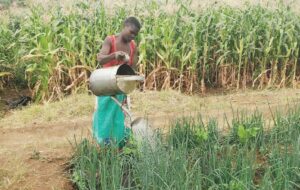
In just six months, Kachingwe earned K2.1 million from his 0.8-hectare okra farm.
“The rains are no longer reliable but irrigation allows us to grow our crops and harvest three times a year, even when the rainy season fails,” he says.
Chiradzulu’s proximity to Blantyre provides an added advantage with a steady demand for fresh produce.
Thanks to the increasing number of farmers in the scheme, Kachingwe says buyers now come directly to the site, reducing transport costs and helping farmers maximise their harvests.
Mpunga and Kachingwe’s stories resonate with Malawi 2063, the country’s long-term development plan, which emphasises agricultural productivity, commercialisation and sustainable development as key drivers of economic growth and prosperity.
The push for irrigation is already yielding positive results across the district, says Senior Chief Ntchema.
“Our farmers are witnessing real change,” he explains, underlining how irrigation has transformed struggling smallholders into thriving producers who can now feed their families and improve their homes.
The traditional leader, however, emphasises that even more households could benefit from expanding the land under irrigation.
Chiradzulu has massive untapped potential for irrigation development, with many areas still available for expansion.
Approximately 4,500 hectares are considered suitable for irrigation, yet only 695 hectares have been developed so far, representing a small fraction of what is possible.
This gap highlights substantial opportunities for scaling up irrigation to enhance agricultural productivity, strengthen food security and improve livelihoods for farmers in the district.
Supporting this transition is Chiradzulu District Council Irrigation Engineer Julia Nyembeze Qoto, who oversees 164 irrigation sites benefiting 4,895 farmers, of whom 2,590 are men and 2,305 are women.
“These projects bolster food security by supplying about five percent of the district’s food. Irrigation has helped many farmers recover from the shocks of drought and flooding,” Qoto explains.
From solar-powered pumps to treadle systems and traditional watering cans, the district promotes diverse irrigation technologies to accommodate farmers of all levels.
One ambitious project, Nazombe Irrigation Scheme in Traditional Authority Ntchema, is expected to cover 200 hectares, while a further 700-hectare expansion at Masamba Irrigation Scheme in Traditional Authority Onga is planned, pending funding.
While farmers initially resisted the shift to irrigation, witnessing the success of their neighbours has changed their minds.
“When farmers see their colleagues thriving, they are more eager to join in,” Qoto says and commends the government and World Vision Malawi for their leadership in promoting irrigation farming in the district.
Currently, the district is addressing the aftermath of Cyclone Freddy, which damaged several irrigation schemes, leaving only 390.11 hectares usable.
Chairperson of Chiradzulu District Council Agriculture Service Committee, Franco Kaliya, states that the council is working with partners to repair the systems.
“Irrigation is the future here. It is the only way for many farming households to overcome drought and achieve self-reliance,” he asserts.
Kaliya encourages farmers to embrace irrigation farming, as it offers not only food security but also a steady income.
“When farmers can support their families, send their children to school and invest in essentials like livestock or home improvements, they create a cycle of prosperity,” he concludes. – Mana