




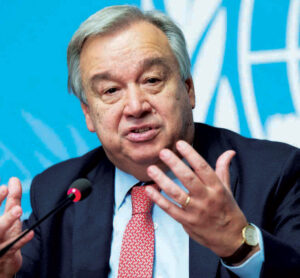
United Nations (UN) Secretary-General Antonio Guterres has described as insulting the sluggish progress towards full legal equality for women, which he says is some 300 years away.
In an op-ed made available to The Daily Times, on International Women’s Day (IWD), which falls today, Guterres has called for more investments in initiatives that promote women’s rights.
The UN chief says billions of women and girls face marginalisation, injustice and discrimination, as millennia of male domination continue to shape societies.
“The persistent epidemic of gender-based violence disgraces humanity. Over four million girls are estimated to be at risk of female genital mutilation each year.
- Advertisement -

“Discrimination against women and girls remains perfectly legal in much of the world. In some places, that makes it difficult for women to own property; in others, it allows men to rape their wives with impunity,” he says.
- Advertisement -
Guterres adds that global crises are hitting women and girls hardest and that wherever there is conflict, climate disaster, poverty or hunger, women and girls suffer most.
“In both developed and developing countries, a backlash against women’s rights, including their sexual and reproductive rights, is stalling and even reversing progress,” the UN chief says.
He further charges that half of humanity cannot wait for centuries for their rights and that the world needs equality now.
Guterres then calls for public and private investment in programmes to end violence against women, ensure decent work and drive women’s inclusion and leadership in digital technologies, among other sectors.
- Advertisement -
He also urges urgent support to women’s rights organisations fighting against stereotypes, battling to make women’s and girls’ voices heard and challenging traditions and cultural norms.
“Currently they receive a paltry 0.1 percent of international development spending. That must change.
“Investment may sound far removed from women’s everyday lives. But it takes investment to give schoolgirls the same opportunities as schoolboys.
“It takes investment to provide digital education and develop skills.
“It takes investment to provide the childcare that enables caregivers, who are mainly mothers, to do paid work outside the home,” he says.
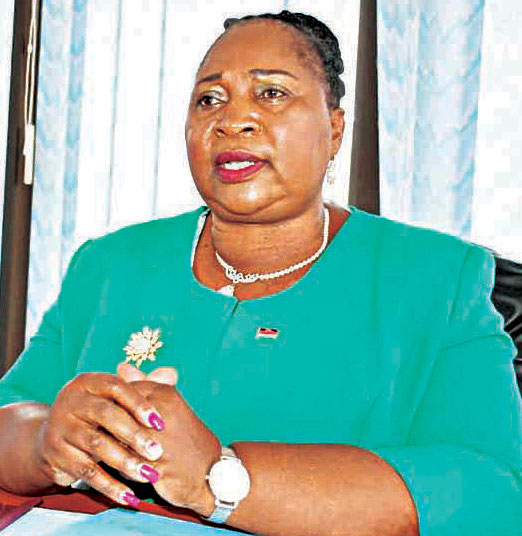
Meanwhile, Minister of Gender, Community Development and Social Welfare Jean Sendeza has admitted that Malawi’s economic indicators portray women and girls as highly disadvantaged when it comes to the access and control of opportunities and benefits.
Addressing the press ahead of IWD, Sendeza acknowledged funding gaps to promote gender equality and women empowerment in sectors such as politics, agriculture, education and health.
She said while the National Gender Policy recommends that one percent of GDP should be invested in gender programmes in all sectors, Malawi is currently operating at 0.2 percent.
“Due to these financing gaps, our women and girls encounter significant gender-based inequalities such as gender-based violence, negative effects of climate change and disasters.
“They also become are easy targets for human trafficking,” Sendeza said.
On the other hand, the minister commended partners who “work tirelessly” with the Ministry of Gender to support equality interventions in Malawi.
She said the multifaceted approach, which includes policy changes and adaptation, has played a major role in closing the gender gap and unlock the untapped economic potential of women in the country.
This year’s IWD theme, as decided by the UN, is ‘Invest in Women: Accelerate Progress’ and it is aimed at tackling economic disempowerment.