Museums all over the world are busier spaces, full of activities. They attract masses always as people want to sample among others the displayed historical and scientific items.
These are spaces that have also turned to be important in terms of attracting tourists and generating forex.
In today’s world of uncertain times, museums according to MuseumNext can act as an anchor in the storm. Museums have the power to create unity on both social and political level.
Amy Hawkins tells it all that museums are the guardians of our collective memory, the storytellers of human achievement, and the catalysts for future innovation.
Their importance according to Hawkins lies not just in preserving the past, but in shaping “our understanding of the present and inspiring possibilities of tomorrow.”
- Advertisement -
In 2024, An African Union Media Fellow Adesewa Olofinko wrote on her online space that she visited a total of five museums while researching the stories of African women in pre-colonial and colonial history.
Her sojourns included The Manhyia Palace Museum in Kumasi, Ghana, The Africa Museum in Belgium, The Kuti Heritage Museum in Abeokuta, Nigeria, Kalakuta Museum in Lagos, Nigeria and Rijksmuseum, Amsterdam in Netherlands.
Olofinko writes that each stopover she made offered a deeper understanding of a story she had always wanted to tell: the untold histories of African women before and during colonialism.
Such is the fine work that museums are doing and the embrace that they are getting from people across the world.
- Advertisement -
- Advertisement -
Aecom and The Themed Entertainment Association compiled an annual report on the world’s most visited attractions with London in United Kingdom, Paris in France and Washington DC in United States of America dominating the list of top 20 museums in the world.
The report has it that The Louvre is obviously the most visited museum of them all with more than nine million visitors annually, curious to see the Aphrodite, known as the Venus de Milo, the Regent diamond, the Law Code of Hammurabi, king of Babylon, the portrait of Louis XIV, Monalisa, the portrait of a woman known as L’Europeenne and other masterpieces.
In Africa, according to TripAdvisor, the most visited museum is The Museum of Egyptian Antiquities in Cairo which features a collection of Egyptian antiquities.
Malawi has museums too spread across the country although up to this day, there is no National Museum.
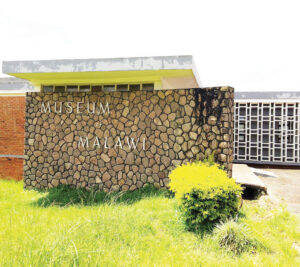
A visit to one of the museums this other day – Chichiri in Blantyre to be precise I was welcomed by a quiet arena.
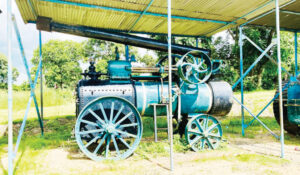
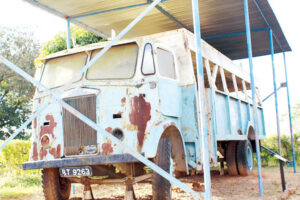
Outside the museum, one gets to see old vehicles which were in fashion in those days but the sad part of it all were that the vehicles had lost their stature while some had been damaged.
Such is the scenario at Chichiri Museum in the commercial city and inside this important arena; the displays are not at that new.
Unlike outside the country where museums are cherished, it is a different story in Malawi.
Something is off beam at Chichiri Museum, the hub needs breath.
Chichiri Museum Chief Curator Smeda Singini while admitting that there were challenges says in recent years, the emphasis for the museum has moved from education, which implies museums teaching things to visitors to learning.
Singini went on to say that museums are special places, where learning that visitors access has special characteristics.
“Museum learning has been called ‘free-choice learning’, because people do it at their own speed, taking their own direction, and because they want to,” she said.
Singini said the old ‘positivist’ theory, that knowledge is ‘out there’ waiting to be acquired, has given way to a new ‘constructivist’ theory that knowledge is actively constructed by the visitor.
However, she said there is still a great deal of debate and that in practice museums use both understandings to make their displays and programmes.
Singini said despite not being active to the fullest, Chichiri Museum’s records of attendance shows that there has been growth in numbers of visitors especially post pandemic.
According to Singini, for 2023/24 financial year, Chichiri Museum had a total of 15,000 visitors but the figure dropped to 10,000 visitors in the year 2024/25.
“A drop in numbers was experienced due to some closures from demonstrations which led to closures for safe and security of people and artifact,” she said.
Singini indicated that the biggest numbers of visitors to the museum are schools and tertiary institutions.
“Schools primary and secondary as well as tertiary institutions still find museum visits very supportive to their curriculum which means for every term and semester, learners are given an opportunity to visit,” she said.
Singini zeroed in on different lessons such as Social Studies, Expressive Arts, Biology, Cultural Entrepreneurship, Museum Studies, Heritage Studies, Tourism and Anthropology as key to student’s visit to the museum.
While the old collections have been labelled old fashioned by some quarters, Singini says the old collections, remain relevant to researchers who are doing heritage related studies.
“The relevance of our collection will differ from the different levels of our visitors, and therefore even in revitalisation or renewal of museum’s collection is meant to mirror and meet needs of a wide section of visitors,” she said.
Singini maintained that Chichiri Museum has an important role in providing education services to users.
“Some education services are formal teaching opportunities in the museum; others will work closely with teachers to allow teachers to make better use of the educational resources available through displays and exhibitions, databases, handling collections and museum staff,” she said.
Singini boasts that Chichiri Museum which was opened on June 29 1966 by the country’s first president Hastings Kamuzu Banda has strong links with schools to facilitate museum visits which are educational and for entertainment.
She said that most teachers of Expressive Arts, History and Social Studies are familiar with museums and how they assist in delivery of lessons with the most common education programme being a study tour in the museum where visitors are offered a guided tour in the galleries and outdoor displays.
“There is so much that is happening on the ground that people cannot appreciate but we have been instrumental in research programmes in the country, for many people undertaking research, museums provide an unrivalled wealth of information,” Singini said.
She revealed that recently they hosted an American post-doctoral scholar, who came to research on copper ingots for sample and data collection.
Besides, Singini said museums have programmes for temporal exhibition where visitors are offered new displays from time to time and that they were currently working on a concept on Gule Wamkulu that will grace their space.
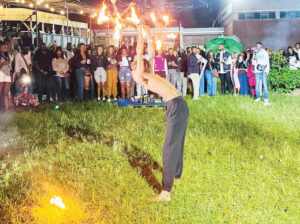
She also spoke of other programmes that have come up as part of bringing the vibrancy at the museum citing the Art Dream Night Market spearheaded by visual artist Chimwemwe Luwanda.
According to her, The Art Dream Night Market which has happened twice at Chichiri Museum beautifully merges contemporary creativity with historical preservation.
“The museum which houses Malawi’s cultural and historical artifacts provides the perfect backdrop for such an event that celebrates artistic expression in a dynamic way. It aligns well with the museum’s mission for public education, recreation and cultural promotion,” she said.
Singini said in tandem with the global discourse on decolonising museums, The Art Dream Night Market aligns with the broader movement by reshaping how cultural spaces engage with local communities and artists.
For most museums in the country, the struggle with the perception of being static, lifeless places where history and culture sit behind glass is real.
But Singini says to dismiss them as ‘dead spaces’ ignores how many have evolved into dynamic, immersive, and interactive experiences.
“In recent times, I have been able to experience new things such as Art Dream Market but I would like to see more especially from the museum itself. For now, I would still say these are dead spaces that need to be resuscitated,” George Kamba, a resident of Chigumula said.
He said he used to visit the museum long time ago but he made a stop after noticing that there was no change.
“I feel they are still in their slumber and this coupled with poor funding, the situation is not that good. Chichiri Museum and other museums in the country, have to move with the times and even align themselves with the digital world otherwise they may be counted out of the equation,” Kamba said.
Director of Museums and Monuments in the Ministry of Local Government, Unity and Culture, Lovemore Mazibuko, last year admitted that there was need to mobilise resources to lift Chichiri Museum.
This also came after The Daily Times reported that some of its open air exhibits were losing their stature.
During our visit then, we found that its open air exhibits such as fire fighting vehicle which was used in the past years, had been broken with some form of vandalism traits in it.
Mazibuko described the open exhibits as vital in museums and monuments and that the elements needed to be safeguarded.
Queried if this was not an act of negligence on the part of the Department, Mazibuko ruled this out.
“Theft is very common and you cannot rule that out. The Department is committed to safeguarding all its exhibits because they are part of the country’s history,” he said.
He said that there was also a need for the country to note that each of the open air exhibits was donated to them by different companies and institutions.
“Maintenance of the same is supposed to be done collaboratively for the fire fighting vehicle, locomotives and bus companies. We will be engaging them to provide support and help wherever necessary, it is also about their heritage, history and where they are coming from,” Mazibuko said.
He indicated then that museums operate on limited budgets hence failing to achieve results in restoring some of the exhibits at Chichiri Museum.
“Museums are not storage rooms of old but spaces for lifelong learning. There is need for mindset change to embrace museums beyond,” Mazibuko said.
Looking at Chichiri Museum, there is a long way to go to keep it vibrant just like other museums in the country and as the government races with the Malawi 2063 vision with a focus on Agriculture, Tourism and Mining, some of the ways to grow tourism for example is to uplift museums.
These are hubs that need to be utilised and yet they being neglected, putting them on the death bed. For now call them ‘dead spaces’.