




By Alick Ponje in Belém, Brazil:
As negotiations at the United Nations Climate Change Conference (COP30) in Brazil enter their final and most delicate phase, debates on adaptation finance are intensifying.
Countries are increasingly recognising that climate change is no longer a distant threat but an immediate crisis, particularly for the world’s most vulnerable nations.
Nowhere is this urgency more visible than in Least Developed Countries (LDCs) such as Malawi.
The southern African nation faces a relentless combination of recurrent floods, prolonged droughts and escalating displacement.
- Advertisement -
For Malawi, the challenge is no longer whether adaptation finance is needed but how quickly it can secure predictable resources and exercise meaningful control over their use.
Central to this debate is the Adaptation Fund’s direct access model. Although it has existed for nearly two decades, Malawi has only minimally ‘indirectly’ accessed it.
Experts point out that the Fund remains the only global climate finance mechanism that treats direct access as a core principle rather than an optional feature.
Direct access allows national institutions to design, manage and implement their own adaptation projects, shifting power from international agencies to the countries themselves.
- Advertisement -
“One of the most important aspects of the fund is that it is country-driven. Countries design projects, implement them and create impact on the ground while we facilitate the process,” Silvia Mancini, head of the Fund’s Country and Partnership Unit, said during a briefing with journalists.
For Malawi, where adaptation needs have outpaced its ability to mobilise large-scale resources, direct access could be transformative.
By managing climate finance directly, the country could prioritise areas and communities most vulnerable to climate shocks, tailoring interventions to its specific context rather than waiting for international agencies to dictate priorities.
Urgency at COP30
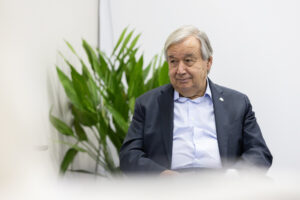
The need for adaptation finance was also highlighted when UN Secretary-General António Guterres met LDC ministers, where he warned that the world’s poorest countries face the greatest climate risks despite contributing almost nothing to global emissions.
“The impacts of climate change are more dramatic because you receive fewer resources and yet you do not contribute to climate change,” he said. “For us, the main priority is always adaptation financing.”
Guterres called for deep reforms in global financial systems, food security frameworks and climate policy to better serve vulnerable nations.
His remarks reflected growing recognition at COP30 that adaptation finance can no longer be treated as secondary to mitigation.
The UN chief added that LDCs possess “enormous moral authority in demanding these reforms.”
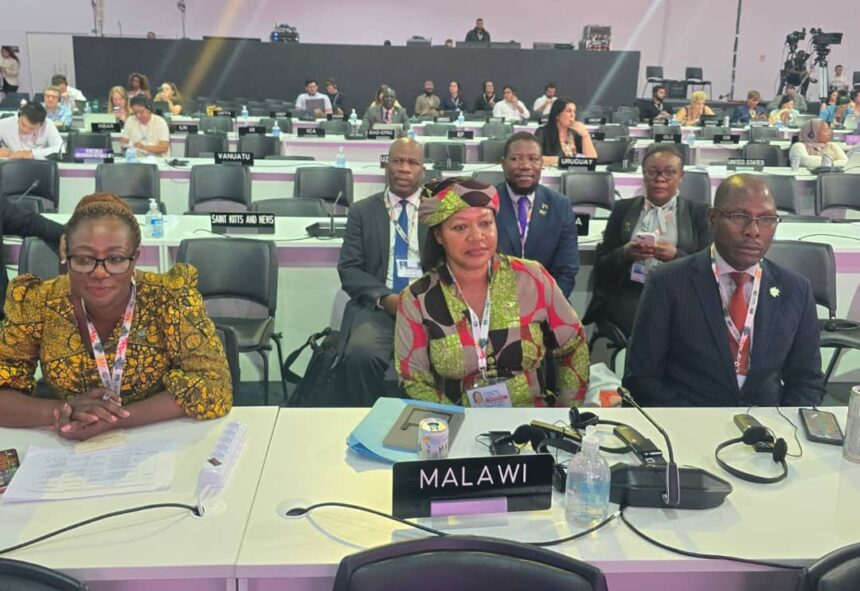
Malawi’s Minister of Natural Resources, Energy and Mining, Jean Mathanga, who delivered the LDC Group’s statement, stressed the scale of the crisis facing vulnerable countries.
“Our countries are being displaced by recurrent and devastating floods. This is why the global adaptation goal must go beyond the unmet $100 billion pledge and move towards delivering $300 billion annually by 2035,” Mathanga said.
She further said adaptation finance must come as grants rather than loans, warning that debt burdens already limit fiscal space in vulnerable nations.
The minister also called for the rapid operationalisation of the Loss and Damage Fund, which would provide resources to recover from climate-induced devastation.
Boost for the Adaptation Fund
Against this political backdrop, the Adaptation Fund announced that it had mobilised $134.9 million in new pledges during the early days of COP30.
Contributions came from Germany, Spain, Sweden, Ireland, Luxembourg, Switzerland, Belgium’s Walloon Region, Portugal, South Korea and Iceland.
These pledges are significant because the Fund aims to mobilise at least $300 million in 2025, putting it on track to triple its outflows by 2030 in line with decisions taken at COP29.
Washington Zhakata, Vice-Chair of the Adaptation Fund Board, said the new resources would strengthen support for countries on the climate frontline.
“The Adaptation Fund is a good investment in our collective future,” he said, adding that the commitments will help deliver tangible adaptation projects in the most vulnerable communities.
Mikko Ollikainen, the Fund’s Head, said demand for adaptation finance has surpassed anything the Fund has seen before.
The Fund can receive resources from a variety of public and private sources, as well as future proceeds from mechanisms under the Paris Agreement that allow countries to fund climate adaptation.
Ollikainen said the support positions the Fund to meet increasing expectations, with its pipeline now exceeding $1.1 billion in proposals awaiting financing.
While it is unclear how many have been submitted by Malawi, information on the Fund’s website suggests that, despite its vulnerability to climate shocks, the country has only minimally accessed resources compared to other LDCs.
A model tailored to Malawi
Direct access offers what is seen as a powerful shift for Malawi, allowing national control over climate funds.
Neha Sharma, the Fund’s Head of Results, Impact and Knowledge, said: “We are sector agnostic. Countries decide their priorities.”
This flexibility is crucial for Malawi, where climate impacts cut across agriculture, water management, hydropower and disaster preparedness.
National control over climate funds would allow the country to prioritise districts most exposed to droughts or floods and target interventions such as irrigation schemes and flood defences.
It would also enable the country to address climate risks in a more integrated way, linking disaster preparedness with food security, energy supply and local economic development.
The path to direct access
To receive funding directly, Malawi must secure accreditation for a National Implementing Entity, which requires strong governance, financial management and experience in handling significant development resources.
Several African countries have already achieved this, enabling them to design and run their own adaptation programmes.
Mancini noted that many countries now nominate two institutions for accreditation and that regional implementing entities are becoming more prominent in addressing cross-border climate challenges.
“Direct access accreditation is not just about funds but about building national capacity.
“It strengthens institutional structures, encourages transparency and allows countries to plan long-term adaptation strategies tailored to their unique vulnerabilities,” he said.
Activists argue that for countries like Malawi, the ability to manage funds directly is not only about efficiency but about dignity and agency.
They say it enables national governments to respond faster and ensure that funds reach communities most in need rather than being delayed through international intermediaries.
As COP30 draws to a close, one message is clear. “Adaptation is no longer optional for countries on the climate frontline,” Mathanga said.