





By using this site, you agree to the Privacy Policy.
Accept
The Times GroupThe Times Group
  • Home
  • National
    National
    Get the latest National News from your trusted source.
    Show More
    Top News
    Thin plastics ban enforcement July 8
    June 25, 2024
    India tips Malawi on value addition
    August 17, 2026
    DPP set for convention
    July 2, 2024
    Latest News
    Malawi Government-owned houses put on rent in Zimbabwe
    November 7, 2026
    More than 30 Malawians stuck in US ‘detention’
    November 7, 2026
    Forex hitch chokes drug supply
    November 6, 2026
    AI must serve humanity—Government
    November 6, 2026
  • Business
    Business
    Breaking news and analysis on business and the economy, including the latest news in technology, stock markets, media and finance.
    Show More
    Top News
    Malawi eyes $1bn IDA funds
    December 12, 2024
    Festive shopping spree amid financial pressures
    December 25, 2024
    Neef input loan scheme poised for AIP takeover
    January 9, 2025
    Latest News
    Import bill grows by 11.3% to $3 billion
    November 6, 2026
    ‘Fuel permit suspension could disrupt production’
    November 5, 2026
    Government turns to household solar
    November 5, 2026
    Minister warrants secure investment environment
    November 5, 2026
  • Entertainment
    Entertainment
    Your source for entertainment news, celebrities, celeb news, and celebrity gossip. Check out the hottest fashion, photos, movies and TV shows!
    Show More
    Top News
    Piksy, Zeze Kingston light up Food Festival
    June 26, 2023
    Mwaiwathu Khupe is Miss Heritage Malawi 2023
    July 17, 2023
    Wizkid makes history with over one billion UK streams
    August 4, 2023
    Latest News
    First Couple mourns Jack Mapanje
    November 6, 2026
    Film industry in solid progression
    November 4, 2026
    St Pius Choir rekindles six decades of melody
    November 3, 2026
    Nigerian star in no-show as Theresa’s concert soars
    November 2, 2026
  • Sports
    Sports
    Keeping you up to date on the latest sports news from Malawi and around the World. With live scores, fixtures from world of Football, Netball,…
    Show More
    Top News
    Nomads, Central Bankers in FDH Bank quarterfinals
    September 12, 2025
    Silver Strikers race against time
    September 30, 2025
    Nomads escape through crack
    October 20, 2025
    Latest News
    Mpira Stadium playing surface ‘overused’
    November 7, 2026
    Dedza Dynamos risk losing sponsorship
    November 6, 2026
    Bravehearts stumble in BAL qualifiers
    November 6, 2026
    Analysts say Kalisto Pasuwa lacks consistency
    November 6, 2026
  • fyi
Search
More Categories
  • World
  • Features
  • Leisure
  • Social and Human interest
  • Digital & Technology
  • Advertise
  • About Us
  • Privacy Policy
  • Contact Us
© Copyright 2026, The Times Group. All Rights Reserved.
Reading: Why our economy suffers
Share
Sign In
0

No products in the cart.

Notification Show More
Latest News
Malawi Government-owned houses put on rent in Zimbabwe
National
More than 30 Malawians stuck in US ‘detention’
National
Mpira Stadium playing surface ‘overused’
Sports
Forex hitch chokes drug supply
National
AI must serve humanity—Government
National
Aa
The Times GroupThe Times Group
0
Aa
Search
  • Home
  • National
  • Business
  • Sports
  • Entertainment
  • Features
  • World
  • Digital & Technology
  • Leisure
  • Social and Human interest
  • Times Radio
  • Read e-Paper
  • Exclusive Content
  • Dzuka Publishing Company Limited
Have an existing account? Sign In
Follow US
  • Advertise
  • About Us
  • Privacy Policy
  • Contact Us
© Copyright 2026, Times Group Media. All Rights Reserved.
The Times Group > Blog > Leisure > Why our economy suffers
Leisure

Why our economy suffers

Alick Ponje
Last updated: 2026/02/28 at 10:44 AM
Alick Ponje
Share
5 Min Read
Between The Lines
SHARE

There have been several troubling revelations showing how badly our economy has been hit over the past few years.

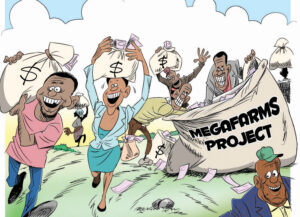
The mega farms debacle, together with National Economic Empowerment Fund (Neef) loans ending up in the wrong hands, paints a worrying picture of mismanagement and misuse of public resources.

It is therefore not surprising that the parallel forex market has continued to record high exchange rates, an issue I will explain shortly.

Funds meant to support food security and empower ordinary Malawians instead flowed into the hands of a few, often politically connected individuals.

- Advertisement -

Ad image

Money that should have promoted productivity and growth was treated as easy cash and spent with little thought for the long-term impact.

- Advertisement -

Finance Minister Joseph Mwanamvekha now faces the difficult task of restoring economic stability and rebuilding public trust.

By ordering audits of the mega farms programme and Neef loans, he has taken steps to address weaknesses in the system and recover misused public funds.

Early signs show that corrective measures are under way, but the challenge remains large.

The mega farms initiative was presented as a way to improve food security and promote commercial agriculture.

- Advertisement -

In reality, it was taken over by political loyalists and elites, many of whom lacked the knowledge or experience needed for large-scale farming.

Loans meant for productive agricultural projects were given to individuals who were not prepared to manage them properly.

The outcome was predictable. Funds were spent on personal consumption and luxury items instead of productive investment.

Only a small number of beneficiaries have repaid part of their loans. Most remain in default, leaving billions of kwacha unaccounted for.

This misuse of public resources has wider consequences. Large sums of money were released into the economy without a matching increase in production.

Money circulated without enough goods and services being produced.

Such excess liquidity fuels inflation. One clear result has been the parallel forex market. Individuals with surplus funds, free from normal commercial discipline, have been able to buy forex aggressively.

This has pushed up exchange rates and encouraged speculation. Money meant to grow crops instead supported financial manoeuvring, adding to the high cost of forex that ordinary citizens pay through rising prices.

There are other reasons for high forex rates on the parallel market, but it is clear that excess liquidity has played a role.

When public funds are given out on the basis of political loyalty rather than ability, development programmes lose their purpose.

Poorly managed credit leads to wider economic problems, including price instability.

The mega farms and Neef crises show how political capture, weak oversight and careless lending can destabilise key parts of the economy.

Mwanamvekha’s audits and more careful fiscal approach are therefore important, not only for recovering unpaid loans but also for restoring confidence in public financial management.

Enforcing repayment, strengthening oversight and holding those responsible to account are necessary steps towards stability.

These episodes should serve as lessons. They show how political influence and weak governance can damage even well-meaning programmes.

Money placed in unproductive hands does not create growth. Instead, it distorts markets and weakens confidence in institutions.

Malawi’s path forward requires discipline and a strong commitment to ensuring that public resources are used productively.

Equally important is the government’s decision to limit borrowing from local commercial banks.

For many years, heavy domestic borrowing crowded out the private sector because banks preferred lending to government instead of businesses and individuals.

Now, with fewer Treasury instruments taking up bank funds, financial institutions must lend more to the private sector and households.

This change is positive for the economy. When banks lend to entrepreneurs, farmers, manufacturers and small businesses, the money supports real economic activity.

It helps create jobs, increase production and expand the tax base. Private-sector lending encourages innovation and competition, unlike excessive government borrowing which often pays for routine expenses.

Limiting domestic borrowing also promotes fiscal discipline. It reduces the risk of building up unsustainable debt and helps control inflation.

By stepping back from heavy borrowing, government allows banks to support productive sectors of the economy while keeping public finances under control.


You Might Also Like

Government budget trump card

DPP government has made me smile on this one!

Malawi imports 1,000 cars a month — where are we going?

‘Respect APM’

Public money, public questions

TAGGED: Fuel inflation, Joseph Mwanamvekha, Neef

Sign Up For Daily Newsletter

Be keep up! Get the latest breaking news delivered straight to your inbox.

By signing up, you agree to our Terms of Use and acknowledge the data practices in our Privacy Policy. You may unsubscribe at any time.
Alick Ponje February 28, 2026
Share this Article
Facebook Twitter Copy Link Print
Share
By Alick Ponje
Alick Ponje is a features writer at The Times Group. He graduated from the University of Malawi with a bachelor’s degree in education, majoring in literature in English. Follow him on Twitter @aponje
Previous Article Wanderers coach welcomes targets
Next Article Mzimba’s gold rush creates buzzing commercial hub while stampeding on farmland, environment
Leave a comment Leave a comment

Click here to cancel reply.

Please Login to Comment.

Stay Connected

554.5k Followers Like
120.8k Followers Follow
5.5k Followers Follow
28.6k Subscribers Subscribe

Latest News

Malawi Government-owned houses put on rent in Zimbabwe
National November 7, 2026
More than 30 Malawians stuck in US ‘detention’
National November 7, 2026
Mpira Stadium playing surface ‘overused’
Sports November 7, 2026
Forex hitch chokes drug supply
National November 6, 2026
//

The Times Group is a multi-award winning media group and the only 360 media house in Malawi.

About Us

  • Company Profile
  • Rate Cards
  • Vacancies
  • Privacy Policy
  • Contact Us

Quick Links

  • e-Edition
  • Times Radio
  • Subscribe for Exclusive Content
  • Submit a Story
The Times GroupThe Times Group
Follow US

© Copyright 2026, The Times Group. All Rights Reserved.

  • Advertise
  • About Us
  • Privacy Policy
  • Contact Us

Removed from reading list

Undo
Welcome Back!

Sign in to your account

Lost your password?
