By Angela Baschieri
Droughts, cyclones, floods and extreme temperatures – these are the ‘new abnormal’ of a world in which weather-related events are becoming increasingly prolonged, intense and frequent.
While Africa contributes only 2 to 3 per cent of global greenhouse gas emissions and it is the least responsible for the global climate emergency, the continent has emerged as the epicentre of the global climate emergency.
Africa is warming faster than other parts of the world, resulting in lower crop yields and sparking conflict over scarce resources such as water and arable land. Millions continue to be displaced as their homes and livelihoods are destroyed by extreme weather events. Once separated from the communities that sustain them, they become more vulnerable.
- Advertisement -

While this cascade of crises affects almost everyone, women and girls are impacted differently and disproportionately – especially when it comes to their sexual and reproductive health. The communities and networks that they depend on for family planning and maternal health care, and for protection from gender-based violence are disrupted by extreme weather events. What follows is a spike in unintended pregnancies, maternal and newborn deaths, and child marriages.
- Advertisement -
This unseen toll that climate emergencies exact on women and girls’ sexual and reproductive health is emerging across Africa, triggering untold suffering. Poor, vulnerable women and girls in at-risk countries are needlessly finding themselves in grave danger – when a saf e and prosperous future can be secured.
It begins with recognizing that women and girls are on the frontlines of a crisis they did not create – and that it will take strong commitments, backed by significant global climate financing, to safeguard their sexual and reproductive health.
It is in this context that UNFPA, the United Nations sexual and reproductive health agency, in partnership with Queen Mary University London and the International Development Research Centre (IDRC), launched an analysis of governments’ climate commitments, capturing the realities and unique needs of Africa’s divergent regions.
The analytical report, ‘Taking Stock: Sexual and Reproductive Health and Rights in Climate Commitments’, includes three sub-regional reports – one for East and Southern Africa, one for West and Central Africa, and one for Middle East and North Africa. Each presents a detailed analysis of the climate plans and commitments of countries under the Paris Agreement in 2015.
- Advertisement -
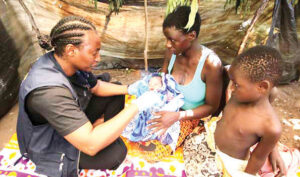
UNFPA’s analysis of the climate plans of 46 African countries reveals that considerations for sexual and reproductive health of women and girls are absent from the vast majority of published climate commitments. Only 17 countries have integrated sexual and reproductive health and rights into their national climate plans.
The consequences of extreme heat and climate change are undeniable. There is increased risk of stillbirths; mounting food insecurity threatens maternal and newborn health; and climate-related displacement is exposing more women and girls to gender-based violence (GBV), including harmful practices such as child marriage and female genital mutilation. These vulnerabilities are compounded in the African context, among the most vulnerable in the world to climate change.
In East and Southern Africa, climate change-driven tropical cyclones are proving increasingly common, spreading waterborne diseases such as cholera and damaging hospitals, putting women with complicated pregnancies in peril.
Yet only 8 out of 19 national climate plans include references to sexual and reproductive health and rights (SRHR) and GBV. And where these are in fact referenced, they typically mention only maternal and newborn health, HIV and AIDS, and GBV – and they are seldom backed by specific programme actions and budget lines.
In North Africa, multi-year droughts are threatening the livelihoods of millions, forcing many women to become heads of households as men are more likely to migrate in search of economic opportunities.
While most countries reference the impacts of climate change on SRHR and GBV, only a few outline specific initiatives aimed at strengthening resilience to climate change through providing SRHR and GBV-related services.
West and Central Africa is plagued by intensifying floods, extreme drought, intense rainfall and desertification, which are exacerbating pre-existing vulnerabilities, including climate-related conflict and diminished access to natural resources, affecting food security.
Yet just 6 out of 22 national climate plans address SRHR and GBV, referring to maternal health, menstrual hygiene and GBV. Even then, most of these countries have not backed this up with meaningful action plans – a failing that must be addressed.
“Governments should ensure more adaptive measures to sensitize women and girls on climate change, while putting in place safety nets to ensure that they continue to have access to sexual and reproductive health services even in times of climate events and displacement,” said Fatou Jeng, the founder of Clean Earth Gambia.
This youth-led climate organization has mobilized thousands of Gambian youths to build marginalized and vulnerable communities’ resilience to climate change.
It is critical that countries prioritize sexual and reproductive health and rights in their climate commitments and strategies. Protecting vulnerable populations is a moral imperative and human rights issue, and must be pursued urgently alongside efforts to reduce emissions.
Yet, while global efforts are not keeping apace with the increasing scale and speed of climate impacts, there is hope on the horizon. The fund established at COP28 in 2023 for responding to climate-related loss and damage can and must deliver much-needed funds and resources to at-risk African countries.
In addition, wealthy countries can and must significantly increase global climate finance aimed at helping women and young people prepare for a future of climate shocks.
Greater access to financial and technical assistance from wealthy countries can facilitate better data collection on how the climate emergency is impacting women and girls in Africa, so that programmes can help those who need it most. It can also strengthen health systems so they are climate-resilient and ensure services are more mobile, stocks are pre-positioned, and adequate staff are in place.
Africa has one of the most demographically diverse populations on the planet, including the world’s youngest population. There is an important ally when it comes to climate action – it is the very women and young people being impacted by climate change.
“More often than not, NDC [Nationally Determined Contribution] discussions are confined to government boardrooms, yet the proposals that stem from them affect the youth and make women, particularly those living with disabilities, invisible and marginalized,” said Kenyan Imali Ngusale of the UNFPA Joint Youth Working Group on SRHR and Climate Change.
If given the chance and offered a seat at the climat e table, women and young people offer a wealth of innovative solutions.
Putting the sexual and reproductive health of women, girls and young people at the heart of climate action is vital. By focusing a global community of interested parties, governments and climate financiers, the world can deliver on climate action and climate justice to safeguard the planet.—IPS