
By Feston Malekezo & Cathy Maulidi:
Farmers Union of Malawi (Fum) has expressed fear that the slow pace at which the 2024-25 Affordable Inputs Programme (AIP) is being implemented could negatively affect food production.
President Lazarus Chakwera launched this year’s AIP on October 14.
The union has made its views known after, on Wednesday, Smallholder Farmers Fertiliser Revolving Fund of Malawi (SFFRFM) Chief Executive Officer (CEO) told members of the Parliamentary Committee of Agriculture that there was 53,997.50 metric tonnes (mt) available in stock.
However, 36,671.50mt of fertiliser is under collateral, meaning that it can only be distributed after the government redeems it.
- Advertisement -
As at now, there is a carryover stock of 1,065mt.
Committee members also learned approximately 16,261mt of fertiliser had been sourced to date out of the required 104,000mt, a development that has alarmed Fum.
The union’s president Manes Nkhata told The Daily Times that their expectation was that distribution would have been completed by now.
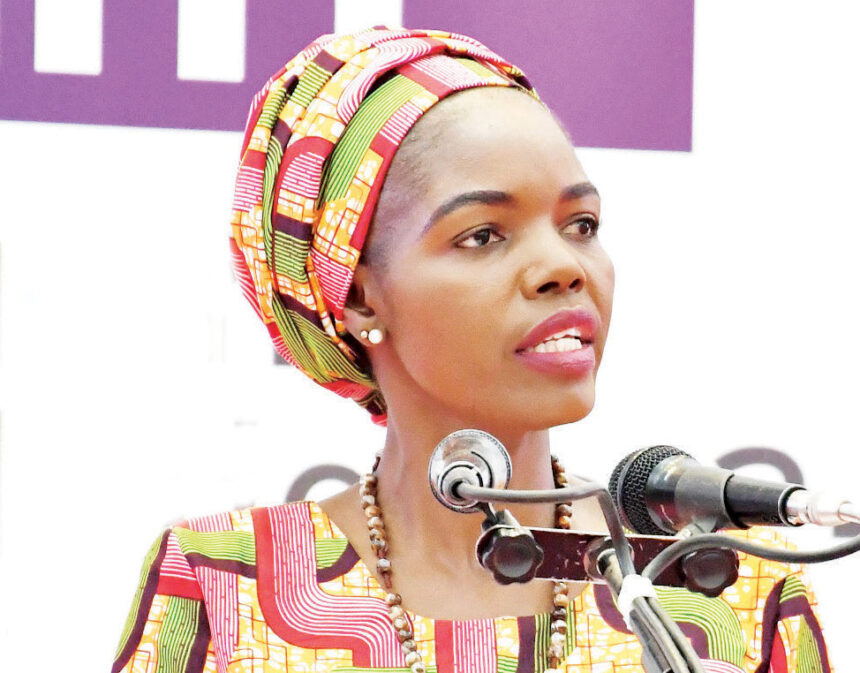
“We, farmers, are very worried with the development as the season is due to start. We had hoped that the distribution of fertiliser to all market outlets would have been completed by now so that farmers could start buying it in readiness for the season,” she said.
- Advertisement -
- Advertisement -
Nkhata said while the problem of fuel shortage could affect distribution of the commodity, fertiliser unavailability is a major concern.
She asked the government to address the problem immediately.
“We, as farmers, had hoped that priority in distribution could have been given to the Southern Region as rains traditionally start in the Southern Region.
“Nevertheless, the major issue is that fertiliser is not available because even the 70 percent that has been distributed in the Central Region is too little,” she said.
According to SFFRFM, out of the 16,261mt, only 10,403mt has been distributed against 37,000mt that was distributed during the corresponding period last year.
Of the 10 403.20mt distributed, 6 571.95mt has gone to the Central Region, representing 70 percent.
The Southern Region has received 3 335.25mt while the Northern Region has been supplied with 496mt.
On Wednesday, Chikunkhuzeni said there was slow progress in the supply of fertiliser due to protracted negotiations.
Chikunkhuzeni also said the ongoing fuel shortage had affected fertiliser distribution.

Recently, Agriculture Minister Sam Kawale recently said the government was upbeat that the situation would improve once the fertiliser under collateral with financial institutions was cleared.
However, development policy analyst Kenneth Sakala fears that the delays could affect maize production next year.
“There has to be speedy action on the bottlenecks,” he said.
Parliament approved K161 billion for implementation of AIP.
To advance its cause, it hired 23 companies to supply fertiliser for this year’s programme, which is targeting 1 054 945 beneficiaries.
The dominance of the Central Region in AIP items has irked Parliamentary Committee of Agriculture Chairperson Sameer Suleman and Rumphi North lawmaker Jappie Mhango, who demanded answers on what is happening.
“Rains start in the Southern Region. As we are talking, people in Mulanje, Thyolo, Chiradzulu and Blantyre are planting maize seedlings but don’t have fertiliser,” Suleman said.
Mhango was equally upset.
“This is disheartening. It’s like they have made a plan to have people in the two regions [Southern and Northern regions] suffer next year. If you check the list, in other centres in the Southern and Northern regions, it’s showing zero, zero distribution. This is very sad,” Mhango said.
Meanwhile, Chikunkhuzeni has faulted suppliers, saying some of them were delaying the distribution of commodities.
He further said they were not favouring the Central Region as figures presented were just given to them by the suppliers.
“We cannot do that. I have staff from different regions including the South and North. We cannot do that,” Chikunkhuzeni said.
The Northern Region has 117 AIP markets, the South has 219 markets while the Central Region has 257 AIP markets.
Chikunkhuzeni also told the committee that the programme is facing a number of challenges.
“The AIP Suppliers requested for the contracted prices to be adjusted soon after contracts were awarded. Negotiations prolonged but, eventually, government accepted the requested price adjustments.
“Despite the price adjustments for AIP stocks, there is still slow progress in the supply of fertiliser stocks.” Chikunkhuzeni said.
He added that shortage of fuel was also affecting the distribution of available fertiliser stocks.
He added that network connectivity was affecting the redemption of fertiliser by beneficiaries.
“Procurement of commercial fertilisers is very slow because of lack of forex for the USD [United States Dollar]- based contracts; and issues of price revisions for local currency-based contracts,” Chikunkhuzeni told member of the committee.