



Malawi is staring at another cycle of dry spells. And food insecurity.
The Department of Climate Change and Meteorological Services has issued several warnings thus far about impending erratic rainfall and prolonged dry periods.
For a country where 80 percent of farmers rely on rain, the risk to food security is high.
Already, up to 2.6 million people are at risk of hunger between this October and March 2027, government figures show. This is due to failure of crops in the last farming season due to erratic rains.
In truth, Malawi is not supposed to be hungry at any point, not with all its vast water resources and the various government blueprints to tap that water to irrigate Malawi’s agriculture and stop farming that is dependent on rain.
- Advertisement -
So far, not much has happened in that respect.
With the government twiddling its fingers on execution of its irrigation masterplan, in Blantyre, a group of 28 women – and four men – refused to get stuck in technical and bureaucratic turnstile.
In 2017, after noticing that hunger was hitting them hard, women in Mwandambe Village in Traditional Authority mobilised to do something unusual.
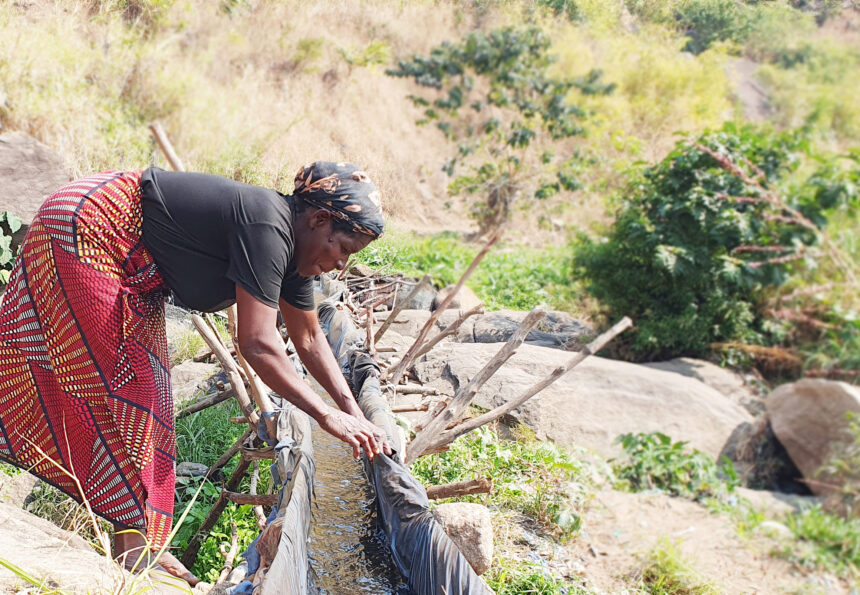
With nothing more than their hoes and their hands and their belief, they began digging a canal on the edge of a hill in their village. The canal would stretch 2km to their field.
- Advertisement -
- Advertisement -
That canal tapped water from Mudi River.
“It took us the whole year to construct this water canal,” said 45-year-old Agnes Notesi, one of the founding members.
“The task was not easy. People said we were on an impossible mission. But we believed in ourselves and we managed,” Notesi said.
To prevent water loss, the women contributed money to buy plastic sheeting to line the canal. For a stronger work, they also started cementing sections of the canal.
“It is now 8 years and we are yet to complete the cementing project due to economic challenges. We think applying concrete would enable the canal carry more water to our fields,” she said.
The benefits of their innovation are already visible.
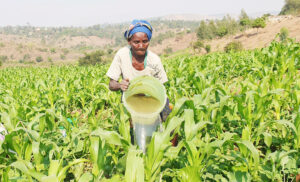
While neighbours wait for normal rains, the women harvest vegetables, beans and maize in the dry months, ensuring food security and income for their families.
Dorothy Thepheya, a widow, said she used to struggle to look after her grandchildren. Before the canal, rain-fed maize had failed for two seasons in a row.
“I decided to do something [when the canal initiative started] instead of just waiting for help from relations,” Thepheya said, wiping sweat as she watered her leafy vegetables.
“Now I am getting food and money from the crops. Without this garden, we would be begging,” she said.
Village Head Mwandambe is a proud leader.
“I am proud that these elderly women are able to support themselves through farming,” she said.
The group’s coordination is one of their strengths. When one member falls sick, the others work in her plot to ensure crops do not fail.
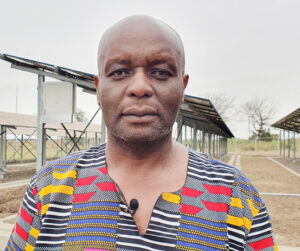
Deputy Director of Irrigation Services responsible for Management Services in the Ministry of Agriculture, Christopher Bodole, said the Mwandambe women represent exactly the kind of farmer government wants to support.
“What these women have shown means they are qualified to be assisted with their needs. The move by the women can help combat hunger,” he said.
The Mwandambe women’s work addresses several Sustainable Development Goals: no poverty, zero hunger, gender equality and climate action.
The women realise they have almost everything. What they need is a little push from those who can.
“The land is here. The water is here. The hands are here. We just need a little help to do more,” Thepheteya said.