The World Bank has said it sees signs of economic rebound in sub-Saharan African countries, including Malawi, supported by increased private consumption and declining inflation.
The bank has made the observation in its latest report, Africa’s Pulse, released on Monday.
The report comes at a time authorities in Malawi are predicting a strong growth of 3.2 percent in 2024 up from 1.5 percent in 2023.

Finance Minister Simplex Chithyola Banda predicted in the 2024-25 national budget that growth will accelerate further to 4.8 percent in 2025.
In an interview Tuesday, Chithyola Banda said Malawi is part of the Sub- Saharan Africa whose economy is rebounding.
- Advertisement -
“We are happy that Bretton Woods institutions like World Bank are seeing things positively in Sub- Saharan Africa
“I would like also to make mention that as countries in sub-Saharan Africa is developing Malawi will not lag behind. We have hope for the better Malawi,” he said.
Africa’s Pulse has since called for several policy actions to foster stronger and more equitable growth including restoring macro-economic stability, promoting inter-generational mobility, supporting market access, and ensuring that fiscal policies do not overburden the poor.
The report notes that the recovery in African economies remains fragile due to uncertain global economic conditions, growing debt service obligations, frequent natural disasters and escalating conflict and violence.
- Advertisement -
- Advertisement -
According to the World Bank, transformative policies are needed to address deep-rooted inequality to sustain long-term growth and effectively reduce poverty.
Overall, the Africa Pulse report underscores that, despite the projected boost in growth, the pace of economic expansion in the region remains below the growth rate of the previous decade (2000-2014) and is insufficient to have a significant effect on poverty reduction.
It says moreover, economic growth reduces poverty in Sub-Saharan Africa less than in other regions.
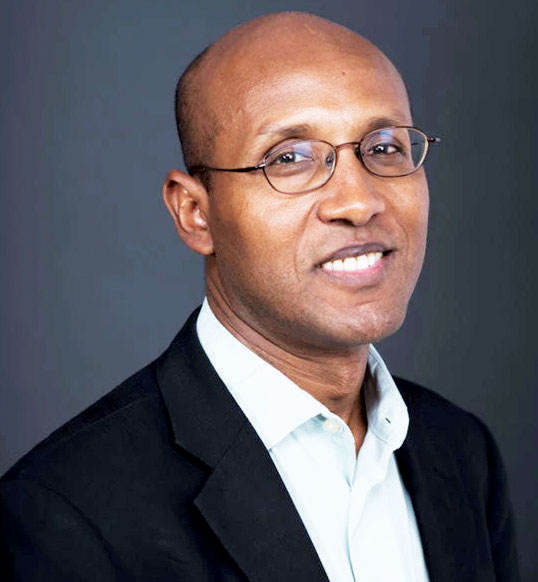
World Bank Chief Economist for Africa Andrew Dabalen said per capita GDP growth of 1 percent is associated with a reduction in the extreme poverty rate of only about 1 percent in the region, compared to 2.5 percent on average in the rest of the world.
“In a context of constrained government budgets, faster poverty reduction will not be achieved through fiscal policy alone. It needs to be supported by policies that expand the productive capacity of the private sector to create more and better jobs for all segments of society,” Dabalen said.
The Bretton Woods institution notes that inequality in Sub-Saharan Africa is one of the highest in the world, second only to the Latin America and Caribbean region, as measured by the region’s average Gini coefficient.
According to the bank, access to basic services, such as schooling or healthcare, remains highly unequal despite recent improvements.
Second, the bank says disparities exist in access to markets and income-generating activities, irrespective of people’s skills.
It adds that taxes and poorly targeted subsidies may have an outsized impact on the poor.
Co-author of a forthcoming World Bank report on tackling inequality in Sub-Saharan Africa, Gabriela Inchauste, says inequality in Africa is largely due to the circumstances in which a child is born and accentuated later in life by obstacles to participating productively in markets and regressive fiscal policies.
“Identifying and better addressing these structural constraints across the economy offers a road map for a more prosperous future,” Inchauste said.