A prominent feature in modern times, Museums of Malawi are, in fact, a mirror into the past.
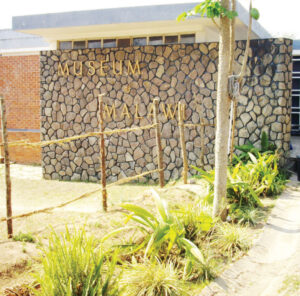
Located next to Blantyre Civic Centre offices along the Masauko- Chipembere Highway, this is a place replete with history.
Welcome to Chichiri Museum, but do not be tempted to conclude that the seemingly tranquil environment that prevails in this place is a tell-tale sign of peace.
Chichiri Museum is a battleground, a place where workers fight a daily war against the possible loss of citizens’ memory about the things that make Malawians unique when drawn against the rest of the world.
Those who visit the museum at Chichiri, and appreciate the many preserved exhibits in stock, go back home full of admiration for the workers’ fortitude, faith, courage and dedication towards the preservation of artifacts.
- Advertisement -
Just that, these days, the territorial scope of the battle ground is uncharacteristically changing.
The museum no longer fights against one enemy—that is, loss of memory and appreciation for our cultural heritage. It now has to win the battle against “wrong perceptions” in the minds of those who have not yet fallen into the pit of forgetfulness.
This is because there are people who understand the concept of establishing museums but (still) fail to pay visits because of misperceptions that it only keeps old, lifeless materials that offer modern society little value.
The truth is that there is more to a museum than static exhibits. The museum offers vast opportunities for recreation activities and can be used as an educational and tourism tool.
- Advertisement -
- Advertisement -
In countries such as Kenya, governments are generating significant income, in terms of foreign exchange, because they have discovered ways of making money out of their cultural heritage.
In fact, places of tourist attraction work with museums to promote local cultures. They literally have the whole calendar filled up with activities.
That is why museums are multi-faceted places that mean so many things to so many people. They are places bustling with recreational, tourism and educational facilities. What matters is the way these opportunities are communicated to all parts of the world.
In other words, museums as vehicles through which cultural values are passed from one generation to another, one nation to another.
One of the many benefits to patrons is the chance to appreciate a multiplicity of cultures gathered together in an exhibition room.
These cultures are portrayed by cultural exhibits from across Malawi.
At the museum, one finds an array of cultures portrayed through exhibits.
Some of the exhibits are static.
There is also some movement, of course, more so because some cultural troupes perform live at the museum. These groups have undergone special training on how to promote Malawian cultural dances.
Maybe the only challenge facing the museum could be that of lack of space.
Malawi has one of the oldest museums in Africa, following the establishment of the National Museum in June 1960.
Malawi’s first President, Ngwazi Dr. Hastings Kamuzu Banda, opened the museum long before he became the country’s president in 1964.
However, the institution has undergone transformation since its establishment.
It forms part of the museum’s on-going effort to adapt to scientific and technological advancements.
A visit to Chichiri, for instance, reveals a plethora of science and technological exhibits.
But these, too, are just a drop of the downpour the museum can offer; the rest remain under lock somewhere, prevented from making it to the exhibition room due to space constraints.
Among the few exhibits are Blantyre’s first fire-fighting brigade machines, traditional clay ovens, a pond of slow-swimming fish, among the limited offers on display.
But, at least, the museum is more than a dead place. For instance, there are many fascinating objects, among them absorption spectrophotometers, motorized wheel chairs, gas coolers, cookers and cultural relics.
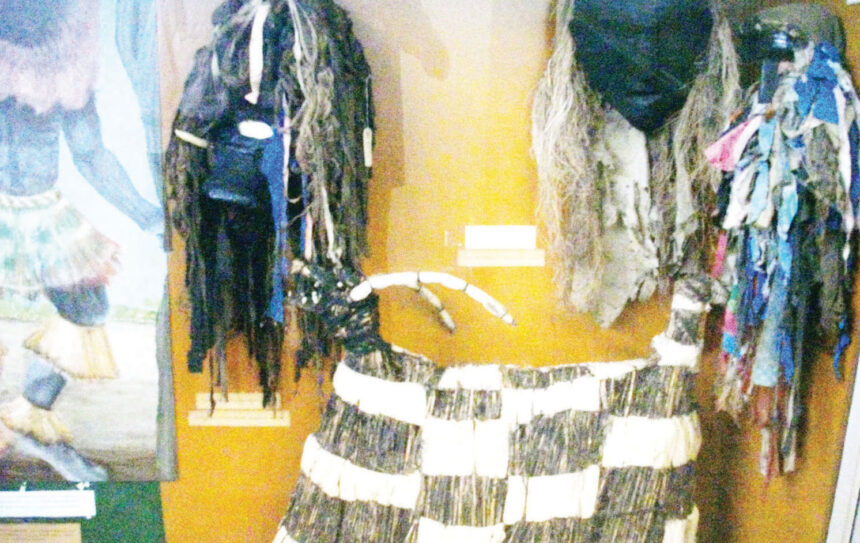
The museum also plays host to a variety of masks and Liguria used in such traditional dances as Ingoma, Gule Wamkulu and Tchopa.
There is also an array of bows, arrows and spears—remnants of the stone and middle ages, when our ancestors counted on hunting to meet their daily needs.
Not that all the arrows on display were used during the stone and middle ages, though, as some were used as lately as between the late 1890s and early 1900s during tribal wars—long before guns and bombs took all the fun out of warfare.
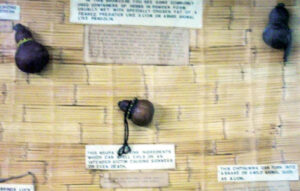
Chichiri is also home to other important exhibits, including traditional salt containers (zigulu), Malawi’s maiden decimal coinage, a picture completed by an exhibition of the first banknote of Rhodesia and Nyasaland.
Also on display are some common insect families and fauna species found in Malawi, and a cross-section of game found in some of the country’s national parks and game reserves.
People visit the place for different places purposes, be it to learn about science, technology, animals, plants and culture.
Other people go there to appreciate a range of cultural and scientific objects.
It is interesting—at least this is the impression I got when I went there—to note that some people visit the museum just to see the Bible Dr. Hasting Kamuzu Banda used during his swearing-in ceremony in 1964.
This confirms that the museum has become more of a baking machine than dead place. This machine needs the raw materials of culture, tourism, education, science, technology and curiosity to produce human food called unity.
Your curiosity is the fuel for that unity of purpose that radiates through the artifacts at the museum.