





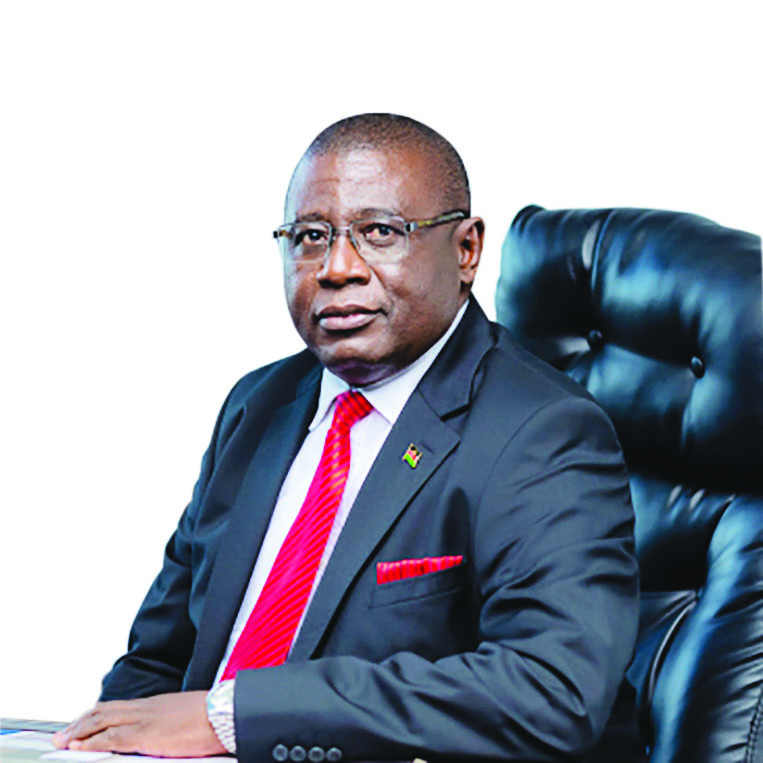
The Malawi Stock Exchange (MSE) recorded exceptional performance in 2025, with the index rising above 260 percent to emerge as Africa’s top performer once again. In this interview with CHIMWEMWE MANGAZI, MSE Chief Executive Officer John Kamanga discusses the factors behind this performance.
How would you describe the market’s performance in 2025?
The market performed exceptionally in 2025, marked by strong capital formation, rising liquidity and sustained investor confidence. The Exchange successfully facilitated TNM’s capital raising of K30 billion through an issue for cash, strengthening corporate capitalisation and supported the share split and subsequent listing of Standard Bank of Malawi, enhancing liquidity and price discovery. Market capitalisation expanded significantly, with nine of the 16 listed companies surpassing K1 trillion in valuation and six exceeding $1 billion. FMB Capital Holdings emerged as the largest listed company, valued at K8.02 trillion or $4.58 billion, reflecting robust earnings performance and investor confidence. Investor participation and market activity also strengthened. The retail investor base grew to over 72,000 by November 2025, while annual trade turnover increased sharply by 183.9 percent, from K116.1 billion or $67.1 million to K329.5 billion or $190 million, reflecting improved market depth and engagement. The increase in turnover was driven by higher share prices and inflationary effects, even as trading volumes moderated to 598 million shares. In US dollar terms, turnover surged to $190.04 million, reflecting currency misalignment and growth in market capitalisation.
MSE is Africa’s top performer once again, with the index rising above 260 percent. What has driven this growth?
- Advertisement -

MSE’s performance has been largely driven by the strong performance of most listed companies, supported by solid balance sheets, resilient business models and widening profit margins that have bolstered investor confidence. Investor demand has surged across both retail and institutional segments. Retail participation has grown significantly, while pension funds and other institutional investors continue to allocate substantial capital. The combination of strong demand and limited supply has driven prices higher and improved market liquidity. Market capitalisation expanded to K33.4 trillion or $18.92 billion by November 2025, representing an 18.6 percent increase in kwacha terms and an 8.3 percent rise in dollar terms since 2021. With Malawi’s nominal GDP around K30 trillion or $17 billion, the market now exceeds 100 percent of GDP, highlighting its growing role in wealth creation, capital formation and investment allocation.
- Advertisement -
Standard Bank executed a one-for-five share split in July 2025. What impact did this have on the market?
By lowering the nominal share price and increasing the number of shares in issue, the stock became more accessible to a wider base of investors, particularly retail participants. This boosted trading volumes, improved liquidity and allowed the share to trade more efficiently, better reflecting its true market value. The split also signalled strong confidence from the issuer, reinforcing positive market sentiment. MSE plans to encourage similar splits a m o n g other high-priced , low-float counters such as NBM , PCL , NITL, FMBCH and Illovo, to increase affordability, expand free float and stimulate trading. Combined with regulatory tailwinds, including the Reserve Bank of Malawi’s revised pension fund guidelines reducing equity concentration limits from 80 percent to 60 percent, these measures will help shares remain accessible to retail investors while supporting institutional portfolio rebalancing, further enhancing market engagement and depth.
The introduction of capital gains tax on all share disposals, regardless of holding period, has been controversial. What impact has this had on trading activity?
The introduction of a capital gains tax initially triggered a short-term increase in selling, as some investors sought to realise gains before the tax took effect. However, this surge was largely transitional. The Exchange is engaging with government to implement measures that balance market attractiveness as a platform for raising long-term capital with fair taxation. A key focus remains expanding participation among low-income Malawians and youth. With rising gambling activity, it is increasingly important to position the capital market as a sustainable, productive and rewarding avenue for long-term financial inclusion and wealth creation.
- Advertisement -
There were concerns that the market could crash due to overvalued shares and the introduction of capital gains tax. What is your view?
Concerns have been raised that overvalued shares, combined with the capital gains tax, could trigger a market correction. While short-term price movements reflect sentiment, the MSE remains a relatively efficient allocator of resources, with valuations grounded in earnings expectations, growth prospects and macroeconomic conditions. Much of the discussion has focused on price-to-earnings (P/E) ratios, which reflect how the market prices a company relative to its earnings. Strong historical and projected earnings often justify higher P/E ratios, as investors pay today for anticipated future returns.