By Pemphero Malimba:
The number of Malawians travelling from Malawi to South Africa using Dedza and Mwanza border posts daily has dropped from about 3,000 to 1,500, the Department of Immigration and Citizenship Services has said.
The department’s spokesperson Pasqually Zulu said the trend had been observed following the recent repatriation of undocumented Malawians.
The Malawians fled Afrophobia-linked attacks.
“We are receiving positive feedback from Malawians who are visiting our office to ask for proper procedures they have to follow before travelling to South Africa for work,” Zulu said.
- Advertisement -
He said the department was referring the concerned people to the South African Embassy in Lilongwe.
“We are telling them to visit the embassy so that they should follow travel requirements so that they should not face any challenge. So, the numbers have dropped,” he said.
He said most of the Malawians were travelling for business, education and medical service access reasons.
“Even employers in South Africa are now afraid of employing foreign nationals, including Malawians, without documentation, hence seeking proper documentation before they [Malawians] return to South Africa,” he said.
- Advertisement -
- Advertisement -
He said the department was aware that some people were using undesignated routes
“We have stepped up surveillance and patrols along the borderline so that we should enlighten them on the negative impact of travelling without documentation because there are so many consequences that arise,” Zulu said
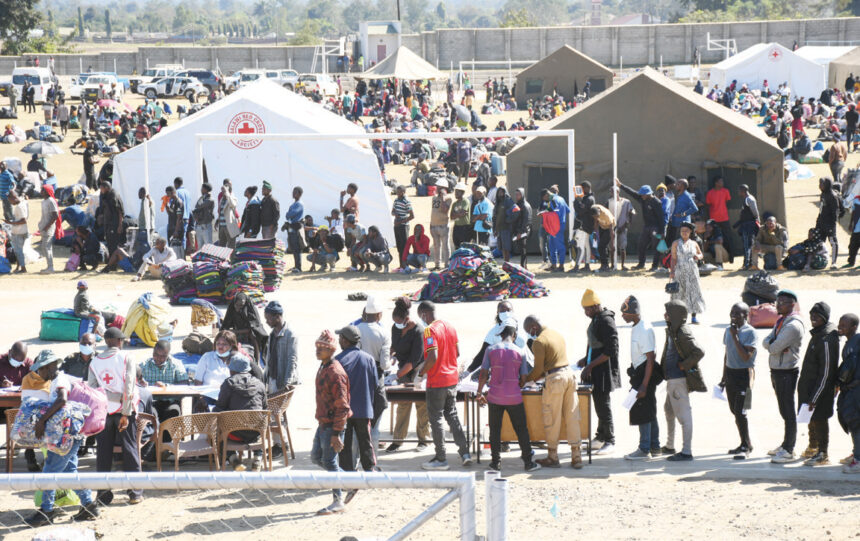
This comes as the repatriation drive for Malawians who were facing Afrophobia-linked attacks ended this week.
Last month, the Government of Malawi ended its repatriation drive, which saw about 60, 000 people arriving in the country.
On Wednesday this week, Malawian Onjezani Kenani announced on his Facebook page that a repatriation drive he was leading had come to an end following the arrival of 43 Malawians.
According to Kenani, the initiative has seen about 400 Malawians returning home.
“In total, we received K141,399,735 and spent K139,279,735, leaving K2,120,000,” he wrote.
He said the remaining K2,120,000 would be used to buy medicines for Vibangalala Rural Health Centre in Mzimba South, Mzimba District.
He later told The Daily Times Monday that Malawi needed to address economic challenges which are forcing youths to search for green pastures elsewhere.
“In Malawi, only 12 percent of youths graduating annually are absorbed in the industry. Where do you think the rest will go? What will they be doing? And, then, there are no serious efforts to make sure that the youth have jobs,” he said.
Social commentator Lucky Mbewe said there was a need to ensure that the country had a favourable economic environment for the youth.
“I would like to appeal to the government to consider putting in place measures for job creation and also business opportunities so that people have something to do here and that they should not think of going to that country [South Africa] again,” Mbewe said.
A recent survey by Afrobarometer found that 57 percent of Malawians aged between 18 and 35 had been considering migrating to South Africa in search of better economic opportunities.
The researchers attributed the trend to economic hardship, limited employment opportunities, skills mismatch and employers’ continued demand for prior work experience among young job seekers.
According to the World Bank’s 2026 Malawi Economic Monitor, the country creates an estimated 40,000 formal jobs each year while about 270,000 young people enter the labour market annually.
Recently, the Parliamentary Committee on International Relations recommended a travel ban to South Africa.
Chief Secretary to the Government Justin Saidi recently urged employers in the country to consider offering jobs to the returnees.