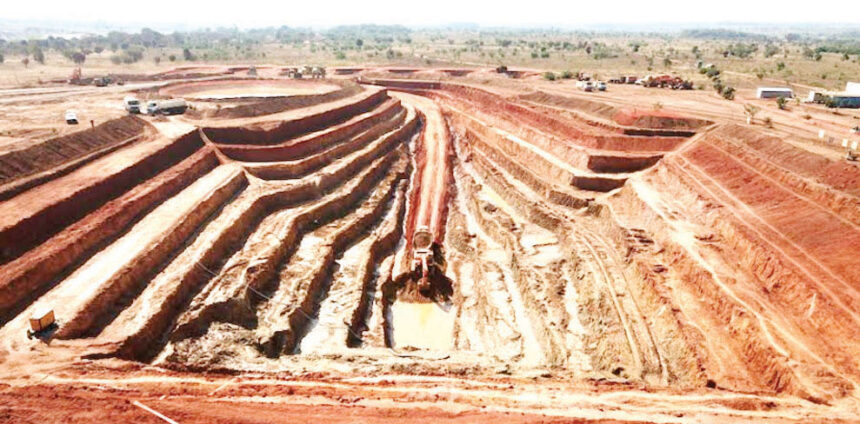
By Mcloyd Chilangiza:
Sovereign Metals Limited, owners of Kasiya Critical Minerals Project, could generate $2.13 billion (about K3.73 trillion) in revenue from rare earth elements over a 23- year economic life, a Scoping Study shows.
This means the proposed mineral resources would provide an additional revenue stream to Kasiya’s rutile and graphite operations, which are projected to generate about $16.2 billion over a 25-year mine life.
The project contains rare earth elements such as neodymium and praseodymium, which are used in permanent magnets, as well as dysprosium, terbium and yttrium, which are used in electric vehicles, renewable energy and electronics.
According to information published on the company’s website, the rare earths circuit could add $722 million (about K1.26 trillion) in present value after accounting for all costs, with the company expected to recover its investment in about 1.5 years.
- Advertisement -
The circuit could also generate about $84 million in annual earnings before interest, tax, depreciation and amortisation (EBITDA), a measure of operating performance.
However, developing the circuit would require capital expenditure of about $29 million (about K50.8 billion).
This means the project could be developed with relatively low additional capital investment, which could be recovered within 1.5 years once the circuit becomes operational.
Sovereign Managing Director and Chief Executive Officer Frank Eagar said the project could be highly profitable because it would require low capital expenditure to develop.
- Advertisement -
- Advertisement -
“The Kasiya DFS already defines one of the world’s largest natural rutile and flake graphite developments. This study shows [that] the same resource can potentially deliver rare earths and deliver commercial scale,” he said.
Geoscientist Ignatius Kamwanje said the project could be highly profitable because the rare earth elements were contained in the same material being processed for rutile and graphite, reducing the additional investment required.
Kamwanje further recommended strategic negotiation of mining development agreements, local value addition and beneficiation, and maximisation of State equity and local ownership through free-carried equity.
Mining policy expert Paul Mvula also recommended that the government negotiate a Mining Development agreement that would benefit Malawians directly.
The Kasiya Critical Minerals Project is expected to produce about 54,000 tonnes of rare earths concentrate over its economic life.
However, Sovereign cautioned that the Scoping Study was a preliminary technical and economic assessment and should not be regarded as a definitive assessment of the project’s viability.
Under the current mining development agreements, the company would pay a 5 percent royalty on gross revenue, 30 percent corporate tax and 0.45 percent for the community development agreement.