






The 31st United Nations Climate Change Conference (COP31) has opened with calls for countries to accelerate the implementation of climate commitments, address barriers to climate finance and turn global targets into practical solutions that benefit communities.
UN Climate Change Executive Secretary Simon Stiell said the conference must move beyond setting global targets and sending signals to political systems and markets and focus on delivering concrete solutions to the climate crisis.
“COP31 must supercharge solutions. Breaking-down existing global targets and national plans into component steps,” Stiell said in his opening statement in Antalya, Türkiye, on Monday.
He said the conference should deliver solutions to increase adaptation financing, improve access to committed funds, expand renewable energy and reduce methane emissions.
- Advertisement -

Among the priorities, Stiell called for solutions to deliver on the tripling of finance for adaptation agreed last year, saying countries continued to face immense frustration in accessing committed and available finance.
- Advertisement -
He also called for efforts to triple global renewable energy capacity by 2030 and improve the transportation of energy across electricity grids and national borders to support the transition to cleaner energy.
On emissions reduction, Stiell urged countries to slash methane emissions, particularly in the oil and gas and waste sectors, including by learning from leading energy producers.
He said combining methane reduction measures with electrification could make a significant contribution to limiting global warming.
“Together, action on methane and electrification are a planetary icepack – able to cut half a degree from projected global heating,” he said.
- Advertisement -
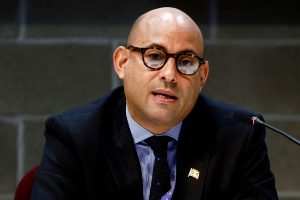
Stiell also identified the Just Transition Mechanism, adaptation, mitigation and climate finance as key areas requiring progress during the negotiations.
On mitigation, he said agreements should help countries accelerate implementation across sectors and economies, while sending stronger signals to markets and societies on reducing planet-heating pollution.
He added that agreements on climate finance should provide clarity on how to achieve the commitments to mobilise $300 billion and $1.3 trillion, without reopening previous agreements.
“That will require the whole financial system to step-up,” he said.
Stiell warned that the urgency of the climate crisis was increasing, pointing to disasters and extreme weather events affecting communities across the world.
He also warned that a major El Niño event could worsen the impacts of climate change.
“A monster El Niño is piling fuel on the climate fire that’s already burning through communities and economies everywhere,” he said.
COP31 president-designate Murat Kurum also called for the conference to focus on implementation, saying climate change was increasingly interconnected with global economic, social and development challenges.
He said geopolitical tensions, trade disruptions, energy insecurity, high living costs, food insecurity and unequal access to technology were unfolding alongside rising climate risks.
“The world’s message is unmistakable: each crisis makes the others worse,” Kurum said.
He said climate change affected food supplies, migration, energy systems, economies and the ability of societies to withstand shocks.
“That is why climate policy today is also development policy. It is food policy. Energy policy. Urban policy. Health policy,” he said.
Kurum said Türkiye wanted COP31 to help close the gap between international commitments and people’s everyday lives.
He identified the widening gap between countries with access to finance and technology and those without as one of the major challenges facing climate diplomacy.
“Narrowing those distances is one of climate diplomacy’s greatest responsibilities,” he said.
Kurum warned that delays in investing in resilience and delivering adaptation finance could increase the costs of future disasters and humanitarian crises.
“Postpone an investment in resilience today and tomorrow we may face the cost of a disaster. Fail to deliver adaptation finance today, and tomorrow’s humanitarian crisis may be worse,” he said.
Kurum said the 1.5 degrees Celsius temperature goal remained a guide for climate action and pledged to bring the voices of vulnerable countries and communities to the centre of the conference agenda.
He said the decisions taken in Antalya would only be meaningful if they translated into practical improvements in people’s lives.
“Our decisions must take shape in a city’s infrastructure, on a farmer’s land and along a factory’s production line. Families must feel their impact in lower energy bills,” he said.
