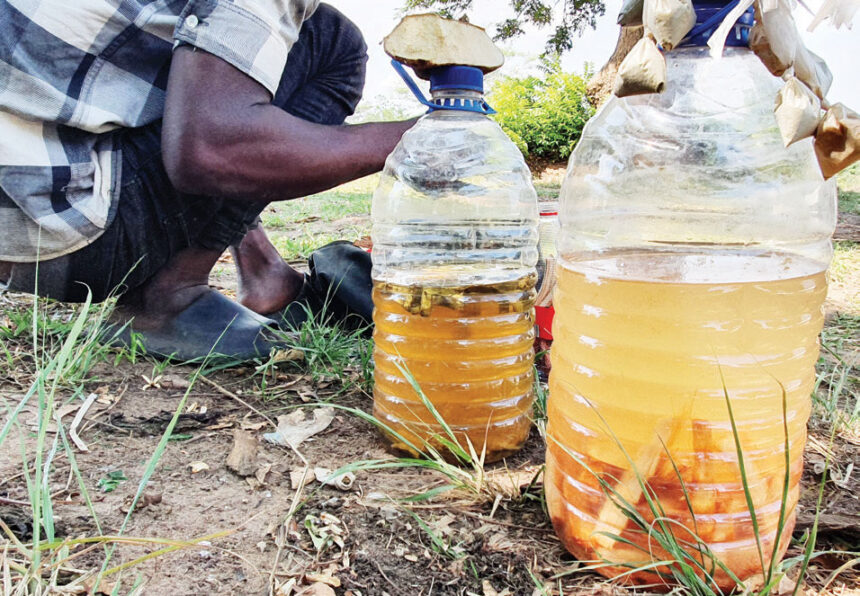
Patients in desperate search of cure often turn to anything that may relieve them from their pain. Some even go for uncertified herbs, which end up worsening their conditions, and, as THOMAS KACHERE writes, doctors are worried with such developments.
The phrase ‘You are what you eat’ may mostly refer to the food one consumes to stay healthy and fit.
But it may also extend to whatever we consume including medicines we hope will cure us from our ailments.
At the moment, there is a frantic search for herbal mixtures by some patients in the country, with some of them ending up making their medical conditions worse after consuming the concoctions.
A 25-year-old woman we will call Jane, from Zomba, is among those who are reeling from the harmful effects of uncertified concoctions.
- Advertisement -
Jane damaged her liver due to excessive consumption of the herbs and still feels unhealthy despite that she sought professional medical help.
“It was in November last year when I started feeling feverish and I was losing blood through my private parts. I initially thought it was normal until days turned into weeks and weeks into months,” she says.
After three months of feeling unwell, she trekked to a herbalist in Mulanje District, where she was told some people who were jealous of her had magically placed cancer in her.
The news immensely scared her, she says.
- Advertisement -
- Advertisement -
But the herbalist assured her that he would treat the condition.
“He started to sort out some herbs. I was surprised at the huge amount of the black plastic bags,” Jane recalls. herbs he was parking into
She was advised to mix the herbs with water in four different bottles of one litre each upon getting home. She did as instructed,
“I was taking them every day but there was no change. After a month of consuming them, my condition deteriorated.
“My brother, who stays in Lilongwe, visited me. He took me to hospital, where I was diagnosed with cervical cancer. I started receiving treatment right away,” Jane says.
Despite that the treatment was going on well, doctors discovered that her liver had been damaged by the concoctions she had been consuming.
“They warned that it would have been damaged beyond repair if I had continued with the treatment from the herbalist,” she says.
Experts warn that herbal medicines can cause kidney failure and liver damage in some consumers because they contain toxic chemicals or heavy metals or react harmfully with other drugs.
In Blantyre, Wilson Mpemba, who sells herbal mixtures around the city, claims his concoctions “wash away” different harmful conditions from the body.
He argues the mixtures even treat sexually transmitted infections and cancer.
“My grandmother knows a lot of herbs that cure diseases such as gonorrhoea and cancer,” Mpemba claims.
Secretary General of the Society of Medical Doctors in Malawi, Parth Patel, expressed worry over “continued false advertisements” that claim cure for diseases including cancer.
Patel said it was unfortunate that the market has been flooded with people who parade “false testimonies” that they got cured from certain diseases including cancer after consuming the concoctions.
“We, as doctors, are not against the use of herbs but we are trying to make sure that every patient has access to safe medication.
“Most of the herbal medicines are not produced in a regulated manner; so, we don’t know their contents. We don’t know their side effects because they don’t undergo clinical trials,” Patel said.
He warned that it is even more dangerous to give “unregulated medication” to children, the elderly and pregnant women.
“We are seeing a rise in the number of people with liver problems, because this organ is responsible for processing whatever you eat.
“If you take unregulated herbs in excessive amounts, they will all come to the liver. We, as doctors, also had discussions on such issues after noting that some HIV-positive people who had consumed the herbs ended up developing cancer, a condition they initially didn’t have,” Patel added.
Health rights activist Maziko Matemba said in a separate interview that it is not surprising to see that health facilities are overwhelmed with rising numbers of cancer patients.
He also warned that consuming concoctions that are not approved or tested by regulators can be life-threatening.
“Regulators should do their job by taking to task those who offer the herbal medicines without being permitted to,” Matemba said.
Some time back, the Health Committee of Parliament faulted the Pharmacy and Medicines Regulatory Authority (PMRA) for delays in commencing regulation of traditional and complimentary medicines.
The committee noted that lives of people were at risk of exposure to harmful substances.
Now, PMRA has moved to take to task those who offer such kinds of products without being permitted to.
However, “smaller ones”, who move around towns and cities with their concoctions or offer them in their “rural homes”, seem to be eluding the regulator’s eye.