




By Jacob Nyirongo, Contributor:
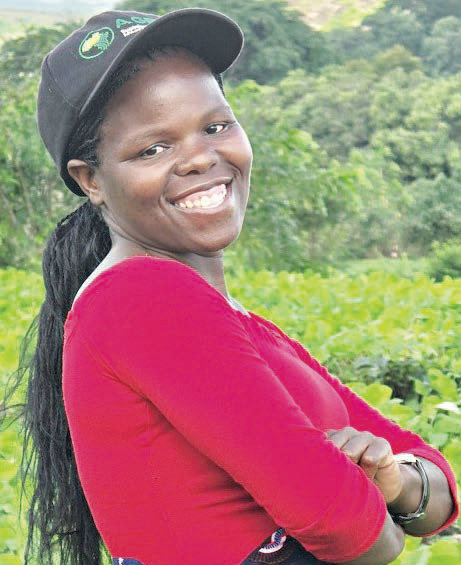
Not long ago, Rhoda Tsitsi farmed three acres of soybeans in Chigodi, Lilongwe District, central Malawi.
Today, she farms seven, and her earnings have risen by more than 150 percent.
For a 34-year-old farmer, the difference has been transformative.
Access to certified seed, agricultural advice and an input loan has allowed her to move beyond subsistence production. She now approaches farming as a business, keeping track of her costs, labour and expected returns.
- Advertisement -
But Rhoda’s story does not end with what she harvests.
She is also a member of the Madzumbi Aggregators Farmer Cooperative, which processes soybeans into flour and supplies it to Nkhoma Hospital for malnourished children under five.
Rhoda also works as a Community Agribusiness Adviser, helping other farmers access agricultural knowledge and services.
Her experience shows what farming can become when inputs, finance, advice, collective organisation and markets come together.
- Advertisement -
As the leader of an organisation that represents Malawi’s farmers, I also see the harder question it raises: Why are such opportunities still beyond the reach of so many of our members?
For too long, agricultural progress in Malawi has been judged by the size of the harvest.
Governments celebrate increased production; development organisations count farmers reached and trained.
These measures have their place. But they tell us very little about whether a farmer has made money.
Our members know this better than anyone. A household can produce more maize, soybeans or groundnuts and still struggle to pay its bills.
A farmer who borrows to buy inputs may find that the price offered at harvest barely covers the cost of production.
Another may lack transport or storage and be forced to sell immediately to intermediaries, on whatever terms are offered.
Malawi’s farmers contend with erratic rainfall, high input costs, inadequate storage and unpredictable prices.
Even when they increase their yields, the gains can disappear between the farm gate and the final buyer.
problem is not that markets do not exist. It is that farmers are poorly connected to them: they plant without knowing what buyers want, and sell individually, with little bargaining power and urgent cash needs.
Malawi has benefitted from years of investment by government, development partners, non-governmental organisations and private companies.
These efforts have introduced improved technologies, organised farmer groups and created opportunities for young people and women.
But as many of us reflected at the recent Agra@20 commemoration in Malawi, too many interventions are still designed around short funding cycles, each pursuing its own targets and reporting its own achievements.
A farmer might receive seed from one programme, attend training under another and be invited to a buyer meeting organised by a third. Yet no one is responsible for making sure she can finance production, store the crop, meet the buyer’s standards and be paid on fair terms.
A buyer meeting is not market access if no sale follows. A demonstration plot is not adoption if farmers cannot afford the seed. From the farmer’s side, this is not transformation. It is a collection of activities.
FUM has tried to do things differently.
Through its partnership with Agra under the Youth Entrepreneurship for the Future of Food and Agriculture (YEFFA) programme and the Progressive Upliftment Scheme for Holistic Agriculture (Pusha), it has set out to connect these pieces for young farmers.
Pusha addresses the first barrier young people face: securing the inputs needed to start commercial production.
In its first year, it targeted more than 4,000 young people with improved soybean seed and inoculants, alongside agronomic advice and market support. A further 3,000 are expected to benefit in the 2026-27 season.
Fum’s programme monitoring indicates that average soybean yields among these farmers have risen from about 400kg per hectare to more than 1,200kg.
With private seed companies, we have established more than 500 demonstration plots, and our network of 1,929 community agribusiness advisers, farmers like Rhoda, now brings practical advice closer to farming communities, complementing government extension workers.
There are encouraging signs on the market side, too. Around 82 farmer– buyer linkage meetings have helped facilitate sales of more than 60,000 tonnes of soybeans and groundnuts, valued at over K120 billion.
Our programme figures also indicate that average annual farmer income has risen from approximately K460,000 to K1.12 million.
The author is Farmers Union of Malawi Chief Executive Officer