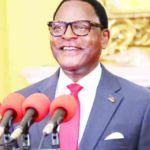
Finance Minister Simplex Chithyola has said he is optimistic that Malawi will meet the targets laid out in the first 10-year Malawi Implementation Plan (MIP1).
Among others, Malawi seeks to become a lower[1]middle income economy by 2030.
But in its latest Malawi Country Economic Memorandum, the World Bank says economic modelling has cast some shadows of doubt for Malawi to attain the lower-middle income economy status by 2030.
According to the memorandum, the Long-Term Growth Model (LTGM), which depicts a baseline scenario showing the most likely outcome if growth fundamentals are carried forward into the future, sees lower middle-income status achieved by 2046 under baseline assumptions, with income levels slightly more than one-third of the envisioned value by 2063.
The memorandum says, to achieve the 2063 goal, Malawians’ per capita incomes would have to increase by 5.1 percent between 2024 and 2063.
- Advertisement -
The memorandum says the ambition to be declared an upper middle-income country by 2063, as laid out in the Malawi 2063, would constitute a serious departure from Malawi’s history.
“Economic growth rates of between 6.5 percent and 8 percent would have to be sustained over decades, rivalling some of the world’s top performers. While initially barely perceivable, reforms that enhance economic efficiency would carry their momentum far into the future.
“A steep reform trajectory resembling Rwanda’s from 1995-2018 and focusing on market efficiency, infrastructure and institutions could make Malawians 44 percent wealthier under otherwise similar fundamentals,” the memorandum says.
It adds that a public investment drive could initially lift per capita growth rates by a percentage point over baseline levels.
- Advertisement -
- Advertisement -
“However, even if this investment drive is financed sustainably by rerouting consumption expenditure rather than crowding out private investment, the GDP-boosting effects would taper out,” the memorandum says.
In an interview, Chithyola Banda admitted that the implementation of MIP1 was hampered by many challenges and slowed it.
He was, however, quick to note that with the coming in of development partners to resume budget support, Malawi would accelerate it for its realisation.
“The Recovery, Develop and Protect (RDP) tool is another means of jumpstarting economic activities that will see fast growing of our economy
“We are working towards diversifying the economy by engaging into areas like diaspora programmes, mining discounted projects, Golden Visa programmes, cannabis biomass projects and many others,” Chithyola Banda said.
Malawi has a long term vision of becoming an upper-middle income economy come 2063.