





By Mauro Lourenço:
Africa is a water stressed continent. It is home to 1.4 billion people – 18 percent of the world’s population – yet has only 9 percent of global freshwater.
By 2050, when Africa’s population is projected to reach close to 2.5 billion, demand for already limited fresh water will be even higher.
Yet it’s not all doom and gloom. Despite being water-stressed, Africa is endowed with many “natural water towers”, a critical nature-based solution to water and climate challenges.
- Advertisement -

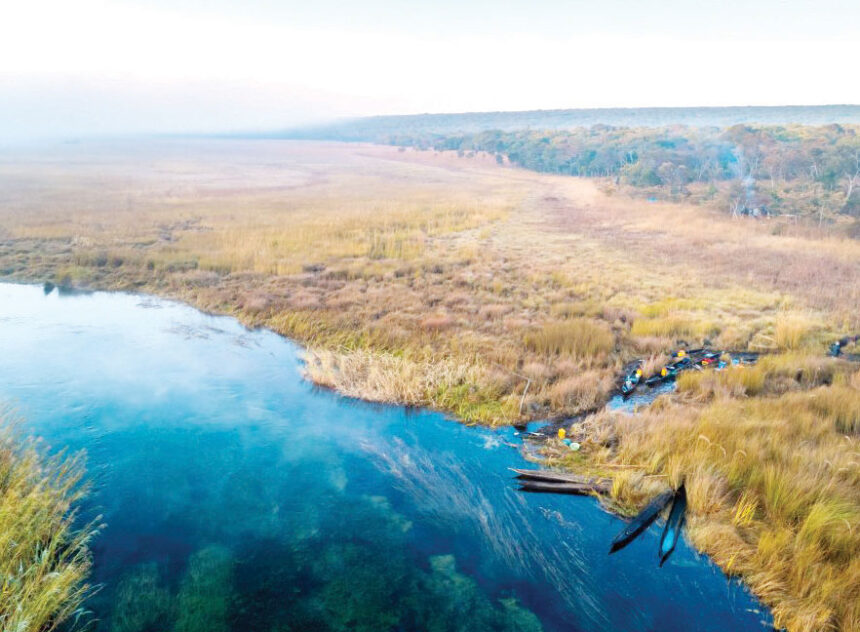
Take the remarkable Angolan Highlands Water Tower that feeds source lakes and major rivers across seven southern African countries. Every year, 423 cubic km of water – equivalent to 170 million Olympic-sized swimming pools – falls over the area known locally as Lisima Iya Mwono, meaning “Source of Life” in the Luchaze language.
- Advertisement -
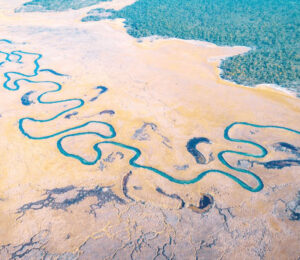
This water flows into the Congo Basin and the Zambezi Basin. It is the sole source of the Okavango Basin and provides 95 percent of the water that makes its way to the Okavango Delta, a Unesco World Heritage Site.
Rainfall from this south-eastern Angolan plateau sustains food and water security, livelihoods, and the survival of millions of people – in Angola, Botswana, the DRC, the Republic of Congo, Namibia, Zambia, and Zimbabwe – as well as iconic wildlife, including the planet’s biggest concentration of African elephants.
The Angolan Highlands Water Tower system is a prime example of a “natural water tower”. This term refers to the mountain ranges that naturally store and supply water that then sustains environmental and human demands downstream.
While human-made water towers supply households via a pressurised piped system, natural water towers are often connected to downstream sinks through ground water reservoirs and major river networks that may traverse country borders over thousands of kilometres.
- Advertisement -
Though, much like their human-made equivalents, natural water towers also provide relatively constant year-round supply thanks to water stored in snow, glaciers, and lakes.
Natural water towers play a significant role in shaping both global and local climates. They are the origin of the majority of rivers. They support biodiversity and are refuges and bridges for many species.
In recent years, recognition of water towers’ importance and the need to better understand them has rightfully increased.
In 2019, researchers ranked 78 water towers across the globe, not only by how much water they store and provide, but also by how vulnerable they are to environmental and socioeconomic changes in the next few decades. The resulting Water Tower Index identified some of the most relied-upon systems by continent, including: the Asian Himalayas and Tibetan Plateau, which supply water to the Ganges and Yangtze; the South American Andes Mountains, which are the headwaters of the Amazon; the North American Rocky Mountains, which supply water to the Missouri; and the European Alps, which host the headwaters of the Danube, Rhine, Po and Rhone.
This index has been critical for promoting the protection of mountain glacier-derived water towers, which provide water to up to 1.9 billion people globally – roughly a quarter of the world’s population. However, its focus on the presence of snow and ice to identify water towers left Africa and Australia out of its analysis and out of the spotlight of global concern.
Africa’s shortage of research capacity has made this situation more challenging. While Australia, the only region drier than Africa, established the Australian Rivers Institute as a world leader in research on rivers, coasts, and catchments, Africa lacks any comparative continent-wide rivers and freshwater research institute. And it was only last year that the Angolan Highlands Water Tower was defined within academic literature for the first time, thanks to researchers from the National Geographic Okavango Wilderness Project. Prior to this, the system was largely missing from the “global map” despite its huge hydrological and economic importance.
It is time to bring attention and urgency to Africa’s many natural water towers. To date, the only notable mention of them is in the Africa Water Atlas, complied by the UN Environment Programme (UNEP) in 2010.
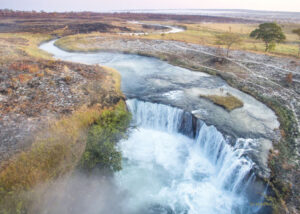
That database includes numerous water systems that enable otherwise dry areas to support life and that are essential for irrigation, agriculture, domestic and industrial processes. It highlights the Ethiopian, Kenyan and Lesotho Highlands as well as the Jos Plateau, Angolan Plateau, and the Central High Plateau of Madagascar. These areas supply water to Africa’s major rivers such as Blue and White Nile, Congo, Okavango, Orange, Limpopo, Niger, and Zambezi. They are also varied. While the Kenyan Highlands are dominated by closed canopy montane forests that have a wet microclimate, for example, the Lesotho Highlands have a cold, wet and misty climate that lies above the treeline and receives high rainfall in comparison to the surrounding lower elevations.
Nonetheless, the Africa Water Atlas is also limited in its identification of water towers according to elevation, precipitation, and contribution to regions far beyond their delineated boundaries. This rather simplistic definition does not cater for the diverse range of ecosystems and freshwater environments across the African continent.
It leaves out, for example, several critical water towers including the Eastern Highlands of Zimbabwe, the Highlands of Cameroon, the Ghana-Togo Highlands and the Central African Highlands of Rwanda, Burundi, and the DRC.
Many regions across Africa grapple with limited access to sufficient data and monitoring infrastructure. This scarcity of long-term studies hampers our understanding of the dynamics and health of freshwater ecosystems.
Unlike in many parts of the world where critical water towers are closely observed and analysed given their importance, many of Africa’s are not even recognised as such. African countries have struggled to research these critical water systems and monitor the wide-ranging impacts on them from challenges like pollution, climate change, and increasing water demand, let alone respond to them.
Collaborative initiatives involving local experts, international organisations, and governments have been working to address these gaps. However, there remains a huge need for increased funding, technological advancements, and interdisciplinary research to ensure the sustainable management and conservation of Africa’s diverse freshwater resources. Future research must acknowledge the continent’s diversity and that Africa’s Water Towers go beyond neat categories and broad-based definitions.
In the next decade, climate change is going to affect drinking water for people, for agriculture, for industry, and for nature and ecosystems. In Africa’s water towers, we’re talking about the water security of the world’s fastest growing population. Not only are they scientifically important, but they’re also often sacred, spiritual places for communities.
It’s time to challenge the traditional definition of a water tower looks like so that Africa’s water towers, the resources they provide, and the communities who depend on them receive their due protection.—AFRICAN ARGUMENTS