




By Daniel Zimba:
Governance policy analyst Mavuto Bamusi and elections analyst Funny Nthakomwa have called on youths, women and people with disabilities who have registered to vote in the September 16, 2025 polls to select leaders with manifestos that cater to their specific needs rather than voting based on candidates’ personalities or unrelated issues.
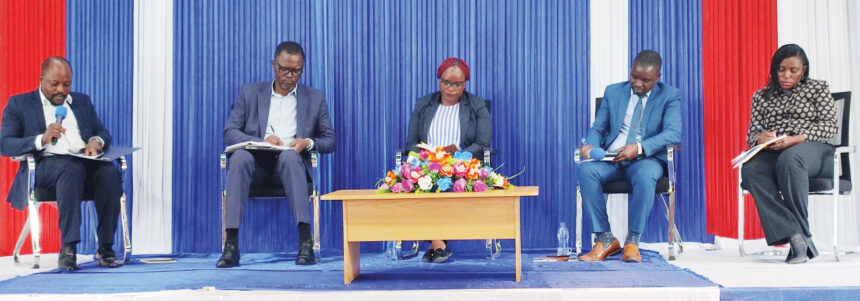
The two made their appeal yesterday at the Catholic University of Malawi (Cunima) during a panel discussion under the campaign initiative called ‘Go To Vote,’ which aims to promote inclusivity in upcoming general elections.
The campaign, championed by the Institute for Policy Interaction Malawi, comes amid reports of concerns that many people might not participate in the voting process, despite having registered with the Malawi Electoral Commission (Mec), due to factors such as widespread misinformation regarding electoral procedures.
Statistics from Mec show that about 7 million people have registered to vote in September, against a projection of about 10 million people, according to the National Statistical Office.
- Advertisement -
In his remarks, Bamusi said the country’s economy is controlled by 30 percent of the country’s population and that its politics are crafted to benefit the elite more than ordinary citizens.
He referenced the recent findings of Afrobarometer, which indicated that Malawi has lost direction in areas such as governance and the economy, stating that the responsibility to improve this situation lied with the voters.
“So, the choice to improve the situation in the country lies in your vote. Therefore, do not neglect voting because failure to vote is akin to voting for a wrong leader,” Bamusi said.
He then stressed the importance of individuals who registered to vote in the forthcoming Local Government, Parliamentary and Presidential Elections to ensure they actually cast their ballots.
- Advertisement -
- Advertisement -
Additionally, Bamusi encouraged foreign nationals who have Malawian citizenship to participate in the voting process.
Another governance and electoral analyst, Nthakomwa, supported the call for youths, women and people with disabilities to focus on leaders’ manifestos rather than their personalities when voting.
N t h a k o m w a highlighted the importance of active civic engagement beyond election day, encouraging citizens to participate in initiatives aimed at holding elected leaders accountable throughout their time in office. Meanwhile, panellist Selina Kainja, an online news editor at Nation Publications Limited, expressed concern that youths and women were often sidelined in electoral processes leading up to the September polls.
Kainja urged media professionals to play a proactive role in ensuring that the information available to the public is accurate, verified and credible.
“Accurate reporting remains key to free, fair and credible elections,” Kainja said.
Tsogolo Lowala Deaf Foundation Chief Executive Officer Gabriel Lunzu said voting was a human right, such that people had to exercise it.
The discussions, led by Times Television Station Manager Wonder Msiska, also addressed issues related to Mec’s decision to utilise election management devices (EMDs), commonly known by their manufacturer’s name, ‘Smartmatic’, despite resistance from some stakeholders, including political parties.
Catholic University of Malawi political science student Shonia Katola indicated that the discussion was enlightening, leading her to regret not registering for the elections based on the inaccurate information she had received.
“I was actually one of those who had a wrong perception regarding how this year’s electoral process is being managed, but now I have a better understanding,” Katola said.
The Institute for Policy Interaction Malawi organised the panel discussion with financial support from the governments of Malawi, Norway, the United States of America, the United Nations Development Programme and the United Kingdom’s international development agency, among others.