





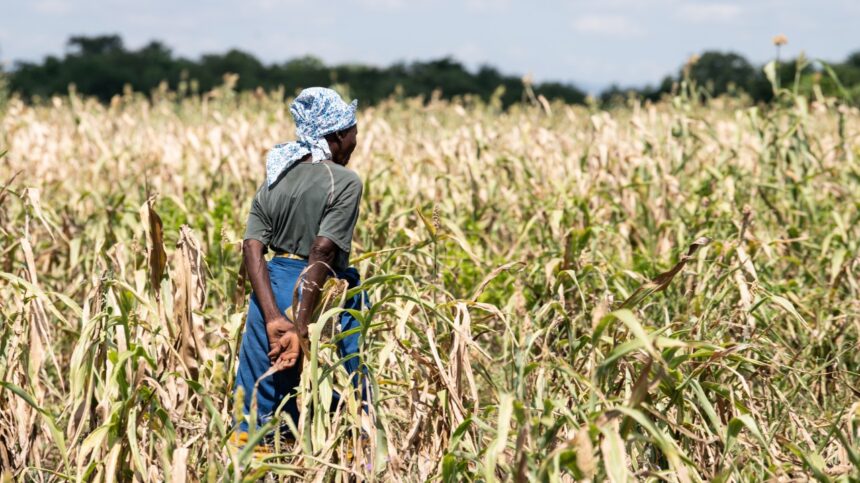
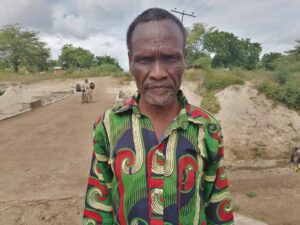
Village Head Anthuachino 2, from Sub-Traditional Authority Masache in Chikwawa, has lived long enough to remember when the rains arrived on time and stayed as expected.
Back then, clouds did not deceive farmers and rivers stayed within their banks. The seasons followed a steady pattern and people needed no radios or forecasts to know when to plant.
Sitting beneath the dying shade of a msangu tree near his home, the chief speaks slowly and thoughtfully, as if recalling details from long-forgotten lore.
“In those days, the first wind came from the east in October. We felt it in our bodies. It was warm and carried the scent of change. That wind meant the rains were coming,” he says, his face lined with nostalgia.
The elders observed everything, from trees, birds and insects to the behaviour of goats and chickens.
- Advertisement -
The flowering of the msangu tree was a reliable sign. If it bloomed early and thickly, it signalled plentiful rain. If the flowers were delayed or dropped too soon, people were advised to wait before planting.
“The mbulu birds were our messengers. They flew low over the fields, dancing in the air and we knew rain was near,” the chief recalls.
The signs extended beyond birds and the sky. The community watched the earth closely.
According to Anthuachino 2, when white ants emerged early from their hills, it meant the soil was soft and ready for ploughing.
- Advertisement -
“If they came late or in small numbers, the rains might be weak,” he explains.
Even frogs held secrets. Loud, persistent croaking meant water was near; a sign that the rains would be heavy enough to fill rivers and lakes.
“Goats and chickens too. When goats lay down early in the afternoon and chickens gathered tightly, elders said rain was near. Animals sense what we cannot,” he adds.
Now, however, the land is confused. Winds blow from the “wrong direction”. Trees bloom without rain. Sometimes the skies open violently, flooding fields before seeds can take root.
His area has not been spared the wrath of flash floods.
“Today, we prepare, but we don’t know for what. It might rain. It might not. The signs we trusted no longer speak,” he laments.
Even trees bloom unpredictably. Mbulu birds fly low during dry spells. Rain falls in January, or March or not at all.
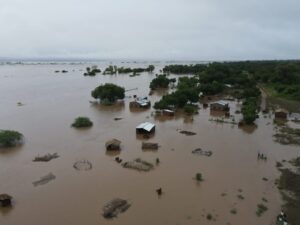
Mudslides triggered by tropical cyclones kill people, as they did in March 2023, when southern Malawi was struck by what has since been called the most energetic storm to hit the southern hemisphere.
Cyclone Freddy left indelible marks on the country and on Anthuachino 2 Village, which was inundated by floodwaters, losing three members.
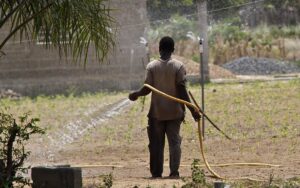
Climate change has unravelled what centuries kept in balance. Rains arrive without warning or flood fields overnight. Droughts last too long.
Village Head Anthuachino 2’s memories are more than nostalgia. Across Malawi and beyond, researchers have found traditional methods were far from superstition.
They reflected a deep understanding of local ecosystems, seasonal rhythms and environmental cues passed down through generations.
Climate change researcher Kenneth Mbale explains the predictive power of these indigenous practices.
“Traditional communities developed their own weather forecasting systems based on long-term observation of natural signs.
“For example, the flowering of trees like the msangu correlates with moisture levels that precede rains,” Mbale explains.
Bird behaviour before storms, such as mbulu and eagles, responds to changes in air pressure and humidity often undetectable to humans.
Termite emergence and frog croaking are linked to soil moisture and temperature, early indicators of rainfall.
“These signs are bio-indicators. They signal environmental changes that modern meteorology sometimes misses at the local level,” the researcher adds.
This traditional knowledge integrated many elements—the sky, plants, animals and stars. Rather than relying on a single sign, communities interpreted a complex system to predict the start, volume and duration of rain.
“Indigenous knowledge is sophisticated ecological wisdom. It is place-based science. Unfortunately, climate change disrupts the signals these communities rely on, making predictions harder,” Mbale says.
Anthuachino 2’s stories and Mbale’s research reveal the same truth. Before erratic climate patterns, Malawian communities thrived by listening closely to their environment.
Now, the balance that helped Village Head Anthuachino 2 and his people read the land is broken. Climate change rewrites the rules; natural signs have become unreliable.
For farmers in Chikwawa and across Malawi, this loss is beyond fading tradition; it threatens survival. Without dependable signs, planting becomes a gamble.
Seeds sown too early risk withering in dry spells. Planting late shortens the growing season and reduces yields. Sudden, violent rains wash away years of work.
Mary Banda, a maize farmer from Bembeke in Dedza District, describes the uncertainty. “We used to trust trees and birds. Now rains can come in January or sometimes not at all. We don’t know when to plant or how much to expect,” she says, crutching cracked soil.
James Phiri, a father of five from a nearby village, shares the harsh reality. “When the rains fail or floods destroy our crops, there is no food for our children. Climate change makes this worse every year,” Phiri says.
Experts like Mbale confirm that this growing uncertainty results directly from climate change disrupting weather patterns.
“The signals communities relied on are less reliable. Indigenous knowledge alone is no longer enough and farmers face greater risks, including food insecurity,” he says.
He and others stress the need to blend traditional knowledge with modern scientific forecasts.
“Combining local observation with meteorological data empowers farmers. It respects heritage while offering more accurate and timely information,” Mbale says.
Back in Chikwawa, Village Head Anthuachino 2 holds on to hope. And his people are not giving up.
Farmers, elders and young people are coming together to preserve traditional knowledge while embracing new ways to face a changing climate.
Non-governmental organisations and agriculture extension workers now bring farmers together to share ancestral wisdom alongside training in interpreting weather forecasts.
Mobile phones now deliver seasonal rainfall predictions, helping farmers plan better when the signs align.
“There is power in blending old and new. Our old stories still teach us, but science helps us prepare for what the skies will do,” says farmer Joseph Maseya, who is attending one such workshop.
And according to Mbale, in times such as these, there is no manual; the land teaches through seasons of adversity and survival.