




The quality of infrastructure in the country continues to attract mixed views, with experts now calling for standardisation of the entire value chain.
Corruption during bidding and tendering processes for public projects, lack of capacity among some contractors and consultants and a quest for cheap labour are singled out among the contributing factors to poor workmanship in the country’s construction industry.
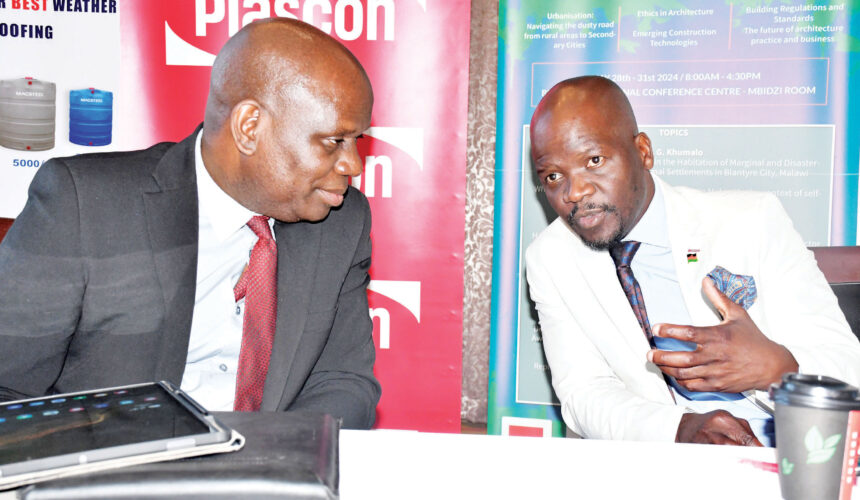
This was the general feeling at the start of a four-day Malawi Institute of Architects (MIA) Annual General Meeting in Lilongwe Tuesday.
Speakers and industry players took turns in lamenting low quality and poor workmanship in some of the country’s buildings and other infrastructure.
For years, there have been concerns over continued loss of billions of Kwacha each year due to substandard infrastructure projects, a situation participants have decried as retrogressive.
- Advertisement -
Delivering a keynote address at the indaba, National Construction Industry Council (NCIC) Chief Executive Officer Gerald Khonje lamented the infrastructure funding gap in the country—seen at over $332 million per year according to recent figures.
He said low investment and the quest for cheap labour has contributed to lowering of standards in the country’s construction sector over the years.
Khonje said the role and involvement of professionals in the entire production chain of construction projects at both domestic and public level would help in determining quality.
“We need to standardise how infrastructure is conceived and delivered. We even need to standardise the documentation and the entire process while we are enhancing speed of delivery with accuracy and ensure a radical change in the way we do things,” Khonje said.
- Advertisement -
- Advertisement -
He said, already, NCIC—a public entity entrusted with the mandate of ensuring standardisation and quality in the construction sector—developed infrastructure delivery management standards to safeguard quality at every stage of the infrastructure value chain.
According to Khonje, stakeholders should, therefore, be futuristic in shaping the tone of buildings in the country.
“We have to be more creative and innovative in terms of conceiving projects and make sure we do things that will stand the taste of time.
“It is a call to every stakeholder to put quality first. We need to identify the causes of the challenges and address them. There is no better forum to do that than when professionals are meeting,” he said.
MIA President Khumbo Chirwa also lamented political interference in public projects as one of the key challenges.
He said the country should ‘leave technocrats to do what they do best’.
“Our expectation is that as the country moves towards 2063 and implements the plans, they need to also listen to us on what we are thinking about the future.
“Architecture does not happen in isolation. We are talking of governance for example; if there is corruption, even if you bring in the best architect in the world, if they are compromised, the product will be compromised,” Chirwa said.
He reiterated the need for hastening the process putting in place a law that would regulate the industry to improve its effectiveness.