


screening
By Temwani Mgunda, contributor:
During the 2023-24 growing season, Southern Africa was struck by El Niño—a weather phenomenon which triggered prolonged dry spells, severely impacting crops. Malawi was not spared and, according to a Malawi Vulnerability Assessment Committee (Mvac) Report, up to 5.7 million people are considered food insecure for the 2024/25 season.
The crisis had also worsened malnutrition among mothers and children, with the Malawi National Nutrition Cluster Updates indicating that by July 2024, over 26,000 children under five had severe acute malnutrition whereas almost 18,000 children of the same age group suffered moderate acute malnutrition.
And as GIZ Malawi’s Green Innovation Centre (GIC) Project—funded by German Development Cooperation in Malawi— came to an end in March 2024, plans were already in place to reallocate its remaining funds to other countries. The project had supported thousands of farmers in soya, groundnut, and cassava value chains, contributing to agricultural innovations across the region.
However, recognizing the urgent food and nutrition crisis unfolding in the country, GIZ Malawi’s Country Director, Alan Walsch, made a strong case to the GIC Head of Programme, advocating for the funds to remain in the country to support an emergency nutrition response.
- Advertisement -
After intense discussions, the decision was made to, instead, redirect the funds toward Malawi’s emergency response efforts, aligning with both the Malawi Government’s crisis plans and Germany’s Drought Response for Southern Africa.
“We saw an opportunity to act quickly and make a real difference in the face of a growing nutrition emergency,” recalls Dr. Martina Kress, Team Leader of the GIZ Food and Nutrition Security Programme (FNSP).
She adds: “The decision to retain the funds in Malawi ensured that we could provide immediate support to nutritionally vulnerable households while reinforcing long-term resilience.”
This pivotal shift enabled FNSP, also funded by German Development Cooperation, to provide a Nutrition Emergency Response in Dedza District, where FNSP and Self-Help Africa (SHA) had been working since 2015 to improve food and nutrition security, particularly among children and expectant mothers.
- Advertisement -
- Advertisement -
A three-pronged approach
According to Achim Kress, GIZ Coordinator for the Nutrition Emergency Response, the Cash+ approach was adopted in Dedza, combining emergency cash transfers with agricultural support and training. This approach, merging elements from FNSP and GIC, provided a holistic response to food and nutrition insecurity.
The intervention was built on three key measures; firstly, unconditional cash transfers with each beneficiary receiving K95, 200 via mobile money, providing immediate purchasing power for essential food and household needs; and secondly, seed distribution whereby farmers were supplied with cassava cuttings, soya, and groundnut seeds, in coordination with district agricultural officers to ensure access to nutritious crops.
Lastly, the beneficiaries were trained in climate-smart agriculture as they received guidance on good agricultural practices and climate-resilient farming techniques, delivered by agricultural extension officers.
“The goal of the program was twofold,” explains Kress. “First, to provide immediate relief to food-insecure households, particularly undernourished children and women. Second, to build long-term resilience by strengthening agricultural production and food security for the coming seasons.”
Targeting nutritionally most vulnerable
The Dedza District Council took the lead in identifying beneficiaries for the Nutrition Emergency Response intervention, ensuring that assistance reached those most in need. With support from FNSP and SHA, the council focused on communities in Traditional Authorities (T/As) Kaphuka and Kachindamoto.
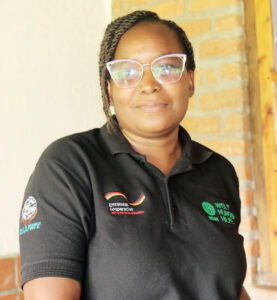
According to Juliet Jinazali, Dedza District’s Nutrition, HIV, and Aids Officer, the selection process was guided by a mass nutrition screening conducted by Unicef in October 2023, combined with findings from the Mvac report.
In Dedza, 39,135 children under five and 17,011 pregnant and lactating women were screened, revealing alarming levels of malnutrition.
“The screening in health facilities across the district confirmed a high number of undernourished children and mothers,” Jinazali explains. “Based on the Mvac report, TA Kaphuka and TA Kachindamoto were identified as two of the most food-insecure areas, so the response focused on severely and moderately malnourished children in these TAs.”
She adds that climate change impacts, poor harvests, and limited post-harvest food management knowledge were key drivers of food insecurity in these households.
Nutrition and climate-smart farming
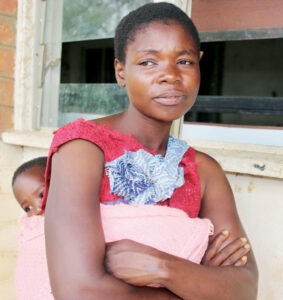
For Delita George, a mother of three from Kasina Village in TA Kaphuka, the Nutrition Emergency Response intervention arrived at a critical time. Before the intervention, her twin children, under two years old, were consistently underweight during check-ups at the local under-five clinic.
“We had barely any food at home after the poor harvest in the 2023- 24 growing season,” she recalls. “I relied on piecework to buy food, but it was never enough. My twins were constantly malnourished.”
Through the cash transfer intervention, George received cash transfers, groundnut seeds, and cassava cuttings. She used the K95,200 cash to purchase soya and maize, which she used to prepare nutritious porridge for her children. She also bought milk and other essential foods, ensuring a more balanced diet.
“Within a month, my twins’ weight increased from around 5kg to 9kg,” she says.
George also planted groundnuts, and her field is now thriving. However, the cassava cuttings dried out before planting, as the dry spell persisted at the time.
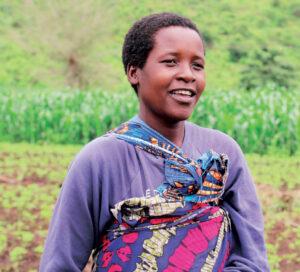
And for Linda Kumchenga from Chingondo Village in TA Kaphuka, the intervention’s climate-smart agriculture training made a lasting impact.
“We learned how to maximize yields on small plots and how to conserve soil and water,” says Kumchenga, a mother of four.
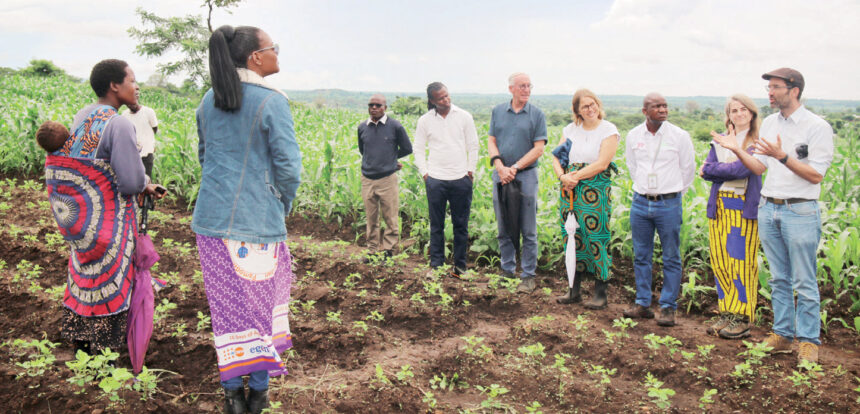
A visit to her soybean field—in the company of GIZ Malawi officials and Susanne Meltl, deputy head of cooperation at the German Embassy in Malawi—revealed the results: Kumchenga had demarcated the field with footpaths to prevent soil erosion and water runoff, ensuring that her crops could survive even if another dry spell hits.
“We were taught about optimal planting techniques, so I made sure to follow the recommended spacing and planted my soybeans in two rows per ridge,” she explains.
In addition to soybean seeds, Kumchenga received cassava cuttings and cash, which she invested in establishing her soybean field.
Towards sustainable food, nutrition security
According to Felista Chulu, SHA Project Manager for Dedza, the Nutrition Emergency Response reached 1,324 households in urgent need, providing critical support to vulnerable women and children facing malnutrition.
“The cash transfers had an instant impact on food access and dietary diversity, while the provision of seeds and agricultural inputs contributed to higher yields and improved household nutrition,” Chulu explains.
She highlights the long-term benefits of the intervention, noting that cassava serves as a stable food source, while groundnuts and soybeans provide high nutritional value for children and expectant mothers.
On the trainings, Sabrina Mwangi—Development Adviser for FNSP in Dedza—is optimistic that the agro-ecological practices introduced through the intervention will help communities adapt to climate change and strengthen food and nutrition security in the face of future shocks.
“The goal was not just to provide emergency relief, but to equip farmers with the knowledge and resources they need to adapt to climate change, increase agricultural productivity, and secure their food supply beyond the crisis period,” she says.