By Dumbani Mzale, contributor:
Phoneous Mulimbo from Mulanje District is the fitting epitome of a survivor who bade farewell to death’s bed after a long battle with tuberculosis (TB).
He is always passionate when sharing his emotive story on any given platform. His tale is three-pronged, beginning with how he was diagnosed, treated and ultimately recovered from the scourge.
“For three years, from 2017, I was bedridden and unable to function. I couldn’t walk or talk and would end up soiling myself.
- Advertisement -

“After we went to the hospital, I was diagnosed with TB. I was immediately put on a treatment plan, while observing all precautionary measures so that my family would not contract it,” Mulimbo recalls.
- Advertisement -
He is grateful to the health personnel from Khoviwa Village and his wife, who nursed him back to health without subjecting him to any stigma.
Mulimbo is now a dedicated advocate, helping to raise awareness of TB while also promoting treatment and preventative measures to other TB patients across the country.
His passion for fighting TB mirrors that of First Lady Monica Chakwera, who shares a similar dedication to this cause.
Chakwera is a committed ambassador for TB in Malawi and the Southern African Development Community, acting with a sense of urgency in the battle against the disease.
- Advertisement -
On several occasions, she has expressed her zeal and determination to see Malawi end TB by 2030.
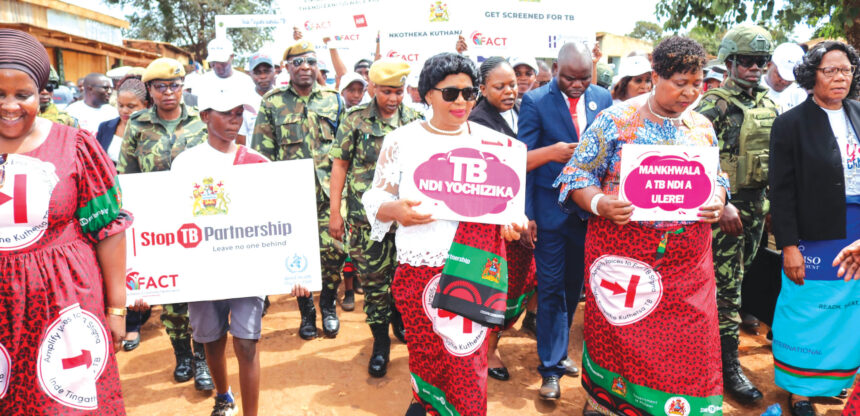
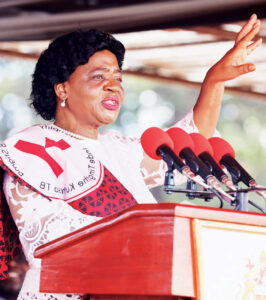
The First Lady’s commitment to eliminating TB was again evident on Monday, March 24, 2025, when she presided over the commemoration of World TB Day 2025 at Mgona Community Ground in Lilongwe.
This year, Chakwera led the country in reflecting also on World Leprosy Day, acknowledging the shared burden these two diseases impose on individuals, families and communities.
The double commemoration reminded every Malawian of the urgent need to raise awareness, confront stigma and accelerate collective efforts to eliminate both TB and Leprosy.
The global themes for this year, ‘Yes! We Can End TB: Commit, Invest, Deliver’ and ‘Unite, Act, Eliminate Leprosy’, echo a resounding call to action.
“This reminds us that together, we have the power to end these diseases by 2030, as part of our commitment to the health-related Sustainable Development Goals (SDGs),” Chakwera said.
For the First Lady, such themes call upon every leader and stakeholder to turn pledges made at the 2023 United Nations High- Level Meeting into action, actions rooted in sound policy, strong political will and community engagement.
Generally, this year’s themes emphasise the need for robust and sustained financing, as well as increased investments to reach the unreached, strengthen health systems and safeguard the health and dignity of all Malawians.
“These themes urge us to translate commitments and resources into tangible results. This means scaling up proven interventions— early diagnosis, prevention, quality treatment and care—while involving communities and embracing innovation,” Chakwera said.
During the event, the revelation of tangible gains that Malawi, as a nation, is harvesting from all investments in the fight against TB and leprosy, was prominent.
It was revealed that TB incidence has declined from 197 per 100,000 people in 2015 to 119 per 100,000 in 2023, representing a 40 percent reduction.
Almost all the speakers on that day had one thing in common: they all noted that if this trajectory continues, Malawi will reach the End TB targets within the next five years.
“Treatment success rates have improved from 82 percent in 2015 to 91 percent in 2023. Additionally, the rate of HIV co-infection among TB patients dropped from 50 percent in 2018 to 43 percent in 2024.
“Even among those with drug-resistant TB, treatment success rose from 55 percent in 2018 to 72 percent in 2022,” Chakwera informed the audience.
However, Chakwera was cautious, warning against complacency. She warned that Malawi must not ignore the resurgence of leprosy.
She added that although Malawi achieved elimination status in 1994, new cases have risen in recent years, with 404 cases in 2023 and 364 in 2024. Currently, over 665 individuals are undergoing treatment.
“While we remain within the World Health Organisation (WHO)’s threshold for elimination, these numbers are a reminder that the fight is not over,” she warned.
Overall, the First Lady commended the Ministry of Health for strengthening community-based interventions such as contact tracing, house-to-house screening, mobile diagnostic vans and sputum collection points.
Speaking separately, Matthias Joshua, Director of Reforms and Implementation in the Ministry of Health, said observing the day helps in raising awareness to curb the disease.
“It is possible for Malawi to meet the elimination targets of the disease as long as we stay the course. Investments have been made in mobile diagnostic vans to allow people to access TB detection and treatment services easily. The ministry is also promoting digital health to ensure efficient recording and reporting of cases,” said Joshua.
He indicated that the government is procuring and advocating for infrastructure and equipment such as GeneXpert and X-ray machines for improved diagnosis.
According to the WHO, a total of 1.3 million people died from TB in 2022 alone worldwide, making it the second leading infectious killer after Covid.
Due to such staggering figures, ending the TB epidemic by 2030 is among the health targets of the SDGs.
Chakwera and other stakeholders in the health sector are fighting to ensure that Malawi eliminates TB in the next five years and that all the gains accrued so far in the battle against the disease are preserved.