
becoming resilient
Malawi is said to have lost over K2 trillion between 2015 and 2023 due to natural disasters such as drought, storms and cyclones.
During the same period, the agricultural sector is said to have lost about K300 billion, a development that has culminated in 3.8 million Malawians becoming food insecure in the past three years.
This is according to Department of Disaster Management Affairs (Dodma) figures.
Dodma Director of Disaster Recovery and Resilience Peter Chimangeni has confirmed the development.
“However, these figures do not include properties and public infrastructure lost when Malawi was hit by Tropical cyclones Ana and Gombe,” he said.
- Advertisement -
And, speaking at a national resilience learning conference in Mangochi District Tuesday, when Care Malawi invited stakeholders as part of its Titukulane Programme, Chimangeni said there is a need for Malawians to join hands in managing and mitigating the effects of natural disasters.
“As at now, about eight million people were, in different ways, affected by natural disasters in the country in 2015, 2019 and 2023, with 2023 as the worst hit year as over 3.8 million people were affected in various forms by Cyclone Freddy.
“Malawians will continue to be affected by similar margins if stakeholders will not be open in engaging vulnerable people who are living in disaster-prone areas to take some responsibility and ensure that they are not being affected. If we look back, we will see that disasters have affected close to 30 million people [in the world] since 1990 and half of those have been affected in the recent past. In addition to that, it is estimated that about 15 million extremely poor people will be exposed to drought, floods and heat by 2030, which will further affect our economy if we cannot plan on how to mitigate these challenges,” Chimangeni said.
He bemoaned the resource gap that Malawi is facing to reconstruct and rehabilitate structures that were damaged by natural disasters.
- Advertisement -
- Advertisement -
The Dodma official said, by the time Malawi was affected by Cyclone Freddy, it was yet to recover from effects of previous disasters which hit the country.
“This means we need a lot of resources to recover. However, we should also find a way of being resilient as a country and in our respective communities,” he said.
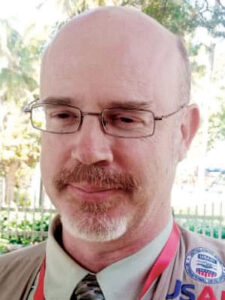
In his remarks, Brian Block, who is United States Agency for International Development team leader for Malawi, urged Malawi to use locally formulated policies and plans to deal with and mitigate the impact of natural disasters in the country.
“We, as the United States, will continue to support Malawi in filling its resource gaps within our operating frameworks. We are happy that Malawi has good plans which, if well implemented, can be useful in recovering from these disasters because the disasters that hit Malawi in the recent past are unprecedented,” he said.
Chief of Party for Titukulane Programme Daniel Abbot said his organisation is pleased that communities in which they are working are mobilising themselves and putting in place resilient structures that can help them in times of disasters.
“This is a clear indication that community members are becoming resilient,” Abbot said.
It is not the first time that development partners have come to the rescue of Malawi as, in April this year, the World Bank complemented the country’s disaster response efforts.
The bank pledged to disburse $245 million (approximately K250 billion) in grants as part of the $145 million (approximately K147 billion) water and sanitation deal it signed with the Malawi Government as part of Cyclone Freddy response amounting to $100 million (approximately K103 billion).
The deal was signed in Blantyre in the presence of a World Bank delegation led by Managing Director of Operations Anna Bjerde and Regional Vice President for Africa [East and South] Victoria Kwakwa.
Bjerde said they would ensure that cyclone response money was approved and disbursed timely.
“The World Bank is also mobilising funds to support Malawi’s reconstruction of roads, specifically to respond to the damage the cyclone has caused, and we are hoping for approval of additional financing,” Bjerde said.
Water and Sanitation Minister Abida Mia said the money meant for the water and sanitation project would go towards water supply, repairing of pipes and public toilets in schools.
She added that 4,000 people would benefit from it.
“It will make a huge difference because we need more funds towards water and sanitation because we are behind, in terms of access to water, sanitation and hygiene. Therefore, this is very important because the cyclone negatively impacted water and sanitation,” Mia said.
Finance and Economic Affairs Minister Sosten Gwengwe said the grants mean that the World Bank has the interest of Malawians at heart.
He added that the most exciting part is that the funds are grants, meaning that Malawi will not spend anything and that his ministry would play an oversight role in making sure that the money is used for the intended purpose.
“It means a lot to us and it means that we have a friend in the World Bank. Our institutions also have strong mechanisms for ensuring that the funds are used for the intended purpose,” Gwengwe said.
Cyclone Freddy landed in Malawi on March 11 this year, displacing thousands of people in camps and killing over 676.