Sports associations should brace for tough times ahead as Malawi National Council of Sports (MNCS) has been told to plan for activities for the 2026-27 budget within K25.3 billion, Malawi News Sport can reveal.
This means all 49 associations affiliated to the council could scale down their programmes for this year due to inadequate funding.
According to the figure which Malawi News Sport has seen, the council’s ceiling has been increased to K25.3 billion from K14.5 billion in the 2025-26 budget.
Despite the increase, some sports associations risk missing out on the annual grants.
Out of the K25.3 billion, the council will get K9.3 billion for its operations and K10 billion for reconstruction of the BAT Ground in Blantyre.
- Advertisement -
The Football Association of Malawi (Fam) has been allocated K3 billion whereas the Netball Association of Malawi (Nam) will get K2 billion.
Other 47 sports associations have been assigned K1 billion for their activities this year.
The 47 sports associations include Malawi Olympic Committee (Moc) which needs K1.6 billion for its crucial activities.
The K1.6 billion is for three ‘must sports activities’ such as the 2026 Commonwealth Games in Scotland. This means other sports associations face a bleak future.
- Advertisement -
- Advertisement -
MNCS Board Chairperson Jim Kalua said they have asked for an extra K2.6 billion for other 47 sports associations.
“We are lobbying for increased funding. We presented our programmes to Parliament on Tuesday, and we are happy that they pledged to lobby for increased funding,” Kalua said.
This comes after the council appeared before the Parliamentary Cluster Committee on Social and Welfare Committee in Lilongwe on Tuesday.
Kalua said other associations that failed to fulfil guidelines would find it tough to get annual grants.
He, however, urged associations to find alternative ways of generating resources to supplement annual grants.
“We urge all associations to run as business entities. We believe this is the only way they can generate extra resources for their respective activities,” he said.
According to the budget document, out of K9.3 billion allocated to council, K5 billion is for administration whereas K4.3 million is for sport internal programmes which need K5.4 billion.
This means council has a K1.1 billion shortfall for internal sport programmes.
“Other sports associations have been allocated the sum of K1 billion but Moc alone needs K1.6 billion for three must do programmes. This means that other sport associations will receive nothing. Henceforth, there is a need for government to reconsider this budget line. The impact is to reduce the sporting activities,” the budget document reads.
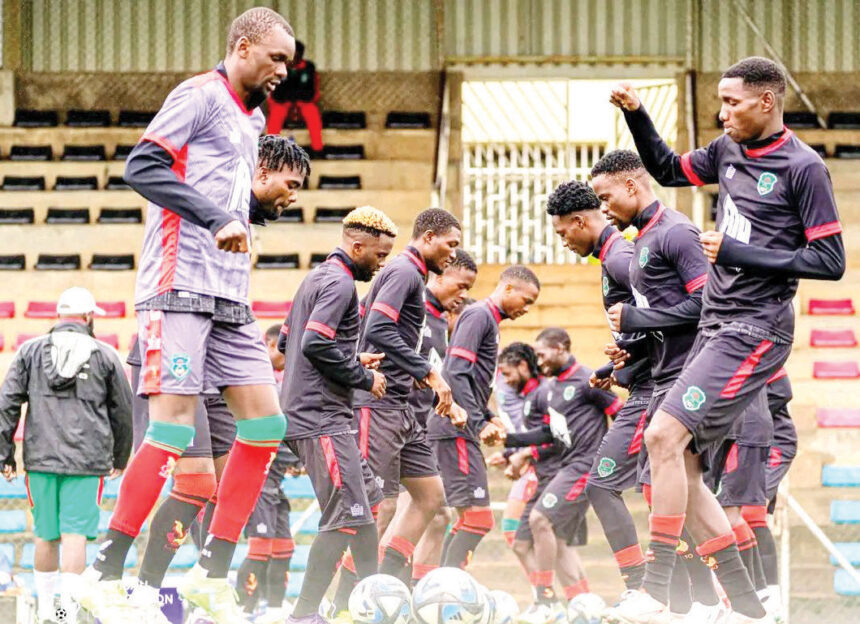
Fam has been allocated K3 billion for the Malawi National Football Teams, the Flames and Scorchers. This is against the association’s K3.8 million budget for national team activities.
Flames will take part in the 2027 Africa Cup of Nations (Afcon) qualifiers in September and Cosafa Cup in June this year.
Fam President Fleetwood Haiya, who had a meeting with Youth, Sports and Culture Minister Alfred Gangata on Wednesday, was optimistic that the government will fund the national teams.
“During the meeting, we apprised the minister on the current status of our national teams, both senior and junior. We also reminded him of the need for government support in recruiting permanent assistant coaches for our senior national teams.
“Additionally, we raised the matter of the outstanding Government arrears for the 2025/26 period,” Haiya wrote on his Facebook page.
Last year, Fam and Nam each got K1.5 billion in annual grants.
Malawi Schools Sports Association (Massa) President Blackson Malamula said the council should have priorities.
“Money will never be enough but the council should prioritise sports activities that are focusing on development,” Malamula said.
Massa is expected to host Confederation of School Sport Associations of Southern Africa (Cosasa) later this year.
Basmal General Secretary Peter Gomani said lack of government support had resulted in stunted growth of other sporting disciplines.
“There is a huge disparity there. Funding allocations often reflect priorities and focus. Therefore, that is where government focus is. They talk of fairness but this is huge pure hypocrisy. This is why we do not even have national teams because every effort to revive the national team has met with no funding from the council. For example, last time we wanted to take part in Zone 6 qualifiers in Zimbabwe, we failed to travel last minute because we were told there was no funding. It is frustrating and demotivating,” Gomani said.