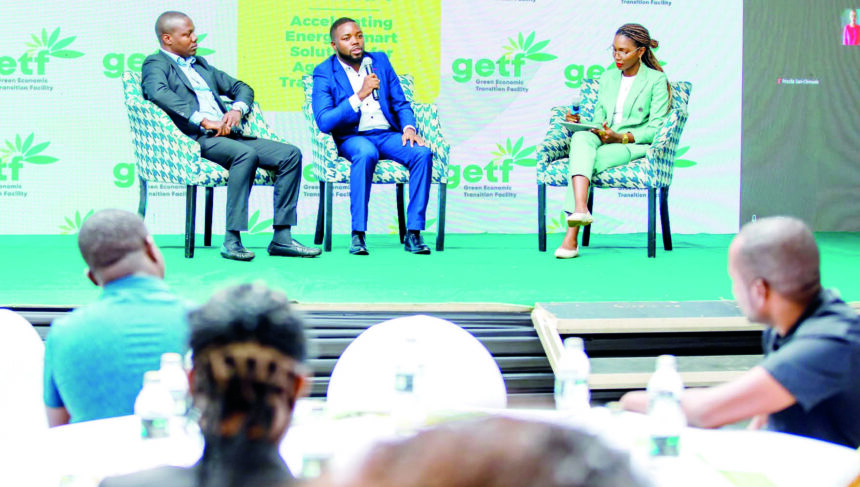
The third window of the Green Economic Transition Facility (GETF) has been opened, unlocking matching grant funding opportunities of up to $300,000 (about K520 million) per project to local businesses in accelerating clean energy innovation across the agricultural value chains in Malawi.
GETF is a flagship green financing facility managed by the United Nations Development Programme (UNDP) in partnership with Landell Mills International, supported by a consortium of development partners including the Embassy of Ireland in Malawi, German Development Cooperation through KfW Development Bank, and the Royal Norwegian Embassy (RNE) in Malawi.
The facility provides catalytic matched-grant finance and on-demand technical assistance to de-risk investment into innovative green products, technologies, businesses and industries.
The recently opened window 3 is targeting private sector players, who are expected to submit innovative solutions that accelerate energy-smart technologies for agricultural transformation in Malawi.
The window 3 funding opportunity, which opened last week, funded by RNE, targets businesses that develop solutions that improve agricultural productivity while promoting environmental sustainability through investments in Energy- Smart solutions.
- Advertisement -
The GETF provides matching grants ranging from $40,000 to $300,000, alongside on-demand technical assistance of up to $35,000 to help companies scale viable green innovations.
Overall individual projects have an opportunity to access up to $335,000 (approximately K586.6 million) in matching grant support and on-demand technical assistance.
Speaking at the launch of Window 3, RNE Ambassador to Malawi, Annie Sofie Bjelland, said instruments such as GETF demonstrated the importance of strong partnerships among governments, development institutions and the private sector in catalysing innovative solutions that address climate change challenges while strengthening economic development through sustainable private sector led investments.
“By providing matching grants of up to $300,000, together with tailored technical assistance of up to $35,000, the facility helps reduce investment risks and enables enterprises to scale innovative green energy agriculture business models that generate measurable environmental and social benefits.
- Advertisement -
- Advertisement -
“Such support strengthens Malawi’s efforts to build a climate-resilient economy while contributing to global climate commitments and sustainable development goals,” Bjelland said.
She said, each year, her government was channelling $1.9 million to Malawi as part of efforts to reduce investment risks and make it easier for Malawian businesses to adopt new technologies.
Bjelland said investments in green enterprises had the potential to create meaningful economic opportunities for young people, women and rural communities
“I encourage entrepreneurs, innovators and private sector leaders to take advantage of this opportunity and submit strong proposals that demonstrate both environmental impact and commercial sustainability,” she said.
UNDP Deputy Resident Representative Chika Charles Aniekwe said the project marked another important milestone in Malawi’s journey toward building a green, resilient and inclusive economy.
“This new window 3 focuses specifically on accelerating energy-smart solutions for agricultural transformation.
“These solutions have the potential not only to increase agricultural productivity but also to reduce emissions, lower production costs, strengthen food systems and create new economic opportunities for farmers and entrepreneurs alike,” he said.
He said the initiative aligned with Malawi’s broader development ambitions under the Malawi 2063 vision, which calls for the transformation of the country into a productive and industrialised middle-income economy.
Chika Charles said achieving the aspirations would require moving beyond primary production toward value addition, innovation and resilient agricultural systems and stronger participation from the private sector.
In his presentation, GETF Project Manager, Tambulani Chunga said the matching grant financing facility had helped bring 25 innovative green products to the market, created over 220 jobs and enabled more than 62,000 low-income consumers to access green products and services that improve their daily lives.