By Given Chichitike
It was not so long ago that 15-year-old Ethel Mkandawire, from Chiswankhata Village in Rumphi District, used to wake up around 4 o’clock in the morning to walk about a kilometre to fetch water from a nearby stream for her household.
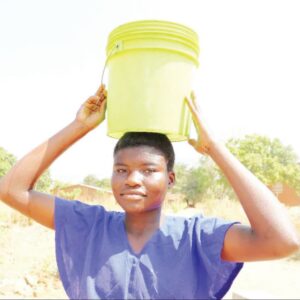
Ethel, a Standard Eight learner at Chitimba Primary School, tells us about the impact of the early morning water collection: “It was difficult for me to balance school and household chores because I had to wake up around 3 or 4 am to fetch water. “I spent most of my morning collecting water, and by the time I got to class, I was already tired, which affected my concentration,” she says.
However, in 2024, Unicef, in collaboration with the Government of Malawi and with support from the United States Agency for International Development’s (USAid) Bureau for Humanitarian Assistance (BHA), restored the borehole in Chiswankhata Village, which had been non-functional since 2021.
This borehole now enables the 52 households of Chiswankhata Village to access safe and clean water more easily.
- Advertisement -
Ethel, who has been selected to attend Karonga Girls Secondary School, says that the maintenance of the borehole allows her to wake up at 3 o’clock in the morning to study rather than to fetch water. This has improved her performance in class.
“The construction of the borehole has allowed me to have ample time to prepare for my Standard Eight examinations. The borehole is just a few minutes from my home, so I have plenty of time to study,” Ethel says.
Princess Chisambo, a six-year-old girl from Chiswankhata Village, concurs with Ethel, saying the borehole has provided her with the opportunity to drink safe water.
Witness Mhango, a mother of eight from Chiswankhata Village, says that access to chlorinated water has reduced the incidence of diarrhoea in the village. “Although we sometimes boiled the water we fetched from the river, we were not consistent.
- Advertisement -
- Advertisement -
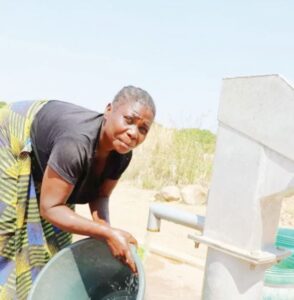
Therefore, cases of diarrhoea, including cholera, were high. “But since the borehole was repaired, the cases have decreased, which has increased productivity in our households,” she adds.
Elias Duwe, Secretary of the Chiswankhata Water Management Committee, says Unicef, with support from BHA, has trained the committee in borehole management to ensure its sustainability.
“Each household contributes K500 monthly, which we use to buy spare parts, and with the expertise we gained from Unicef, we are able to perform minor maintenance when needed,” Duwe says.
Water Monitoring Assistant for the Rumphi District, Doctor Chimwendo, says Unicef, in partnership with Self Help Africa, a non-governmental organisation, with support from BHA, has constructed a total of six boreholes in Rumphi, which have significantly reduced cases of diarrhoea in the district.
“In 2022-23, we registered high cases of diarrhoeal diseases, including cholera, but with the construction of the boreholes, the incidence of diarrhoea has significantly decreased in the target areas,” Chimwendo says.— Unicef