







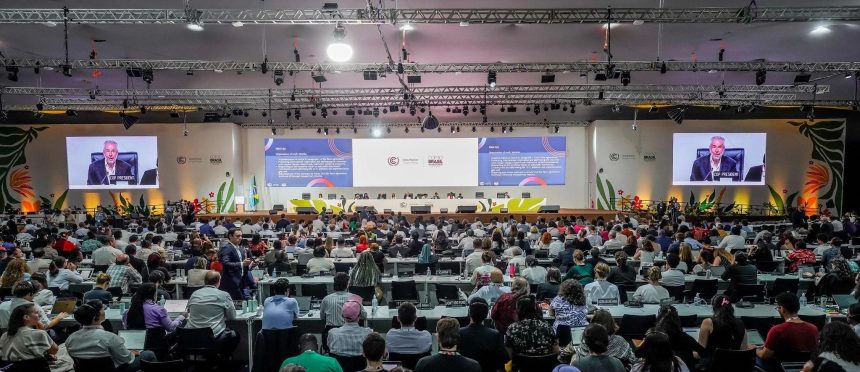
The Fossil Fuel Treaty Initiative has criticised the first draft of the Just Transition Mechanism at the 31st United Nations Climate Change Conference (CoP31), saying it falls short of commitments made by countries at last year’s climate summit in Belém, Brazil.
The proposed mechanism emerged from negotiations at CoP30 in November 2025, following calls by developing countries and civil society organisations for a permanent institutional arrangement to move just transition discussions towards practical implementation.
Countries agreed to develop the mechanism to strengthen international cooperation, provide technical assistance, build capacity and facilitate knowledge-sharing to support fair and inclusive transitions.
The agreement was considered an important step towards helping countries address the economic and social consequences of moving to low-carbon economies, including protecting workers and communities whose livelihoods depend on fossil fuel industries.
- Advertisement -

However, its specific functions and operational arrangements were left for further negotiations.
- Advertisement -
The first informal draft note, released late on Thursday night, is intended to guide discussions on how the mechanism will operate.
It is expected to address arrangements for bringing governments and practitioners together and connecting resources to projects and national transition plans.
However, the Fossil Fuel Treaty Initiative says the proposed text lacks clear functions and practical means of implementation, raising concerns that the mechanism could become another platform for discussions without tangible results.
Amiera Sawas, Head of Policy and Research at the Fossil Fuel Treaty Initiative, said the draft contradicts the understanding reached at CoP30 that just transitions require institutional support.
- Advertisement -
“We left Belém with a clear understanding: just transitions need institutional support, and the time for talk shops is over. Yet this draft gives us another talk shop,” Sawas said.
She argued that a mechanism without practical functions would undermine the principles agreed upon in Brazil, warning that empty promises could alienate workers and communities that just transition policies are intended to serve.
According to Sawas, the failure to provide meaningful support could also fuel a backlash against climate action, particularly among communities whose livelihoods are affected by changes in energy systems.
She urged countries negotiating the draft at CoP31, currently underway in Antalya, Türkiye, to reject the current text and push for a stronger framework that brings governments and practitioners together while connecting resources to actual projects and transition plans.
The initiative maintains that a credible just transition mechanism must provide practical institutional structures and support rather than create another platform for discussions without tangible outcomes.
