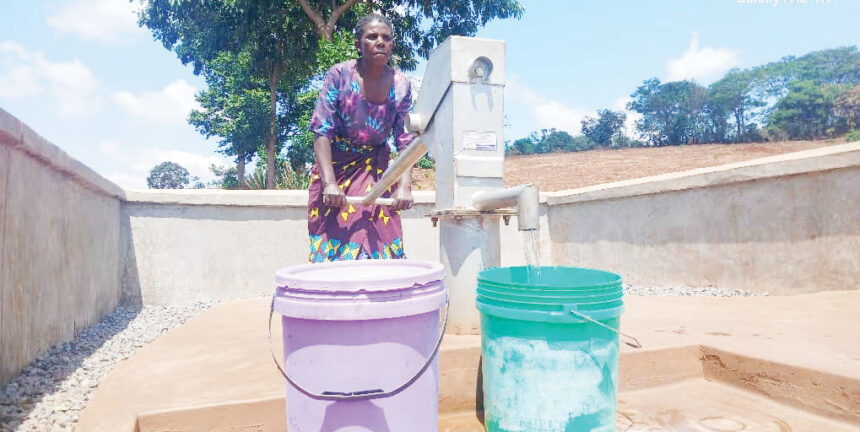
Water is life, but for people at Chisula 1 Village, Traditional Authority (TA) Kalumo, in Ntchisi District, access to clean water has been a luxury only a few could afford.
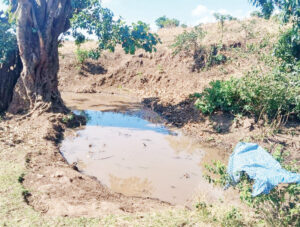
For years, people from this village shared a borehole they constructed on a natural stream with people from three other villages namely Chisula 2, Kachewu and Dzoole on this hilly part of Ntchisi.
Take 48-year-old Esau Kachikhawo, for example. He says for all the years he has been living in the area, it is only this year when he has seen people accessing clean water from a well-constructed borehole.
“I have lived in this area for the past 45 years but this is the only time we, people, can access clean water from the borehole, which was constructed earlier this year,” says Kachikhawo, now chairperson for a committee set up to lobby for clean water in the community.
It was the need for clean water that drove the people on a mission to mobilise resources and construct a borehole on the stream.
- Advertisement -
“Unfortunately, we did not have the necessary equipment for us to dig deeper to the level where we could be able to find the clean water we were looking for; so, we settled for the stream’s water table,” Kachikhawo says.
That water was hardly suitable for consumption, Kachikhawo says, adding that all the dirt from upstream would get into the well on which the borehole was constructed, thereby affecting the quality of water.
He says water from that well used to turn green when used for cooking nsima, which is the main meal for most Malawians.
“Any food cooked using that water would turn to something green and the taste was usually bitter; so, the water was fit for washing clothes but we would not use that water for cooking just because we did not have alternatives,” Kachikhawo says.
- Advertisement -
- Advertisement -
Fifty-nine-year-old Agness Nthukwa from Chisula 2 Village remembers the challenges people in her village and, indeed, three other villages, used to face to access water.
Nthukwa says although the water was not clean, let alone fit, for human consumption, the borehole, which was located at a distance, used to attract huge clouds of people, especially women, during morning hours.
“We did not have any other source of water. The other available source was the nearby river, which used to dry up during the dry season,” Nthukwa recalls.
The community members paid heavily for the lack of a safe water source in the area.
“Our children used to suffer from diarrhoea-related illnesses and used to miss classes whenever they escorted us to water-fetching points,” Nthukwa says.
After years of advocating for clean water, a breakthrough was made early this year.
A new borehole has been constructed.
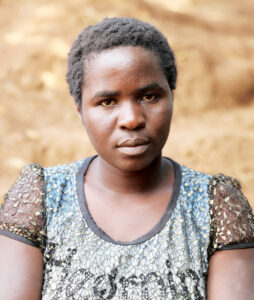
“It is not only the clean water that we are happy with; it is also the short distance we are covering to draw water that has made all the difference,” says 25-year-old Victoria Jafali, a mother of two.
Victoria says her children can now go to school on time and that diseases that used to affect their education are no longer a concern.
Nthukwa, on the other hand, says access to clean water has positively affected her family.
Nthukwa says where she used to spend more time fetching water, she now has more time for her family.
Village Head Chisula 1 has seen the toll that the absence of a reliable source of water took on his people.
“Almost every week, I would be forced to wake up, even in the middle of the night, to arrange transport to take an ill person, mostly a child, to the hospital at the Boma, several kilometres away.
“It was not a good feeling on me and my family but we thank God that there is a reduction of such kind of experiences now,” Chisula 1 says.
The recommended distance to a water access point is said to be a kilometre, with the travel time to a water point said to be within 30 minutes for a round trip, according to information made available to us.
However, the people of Chisula 1 Village used to spend hours covering long distances to fetch water.
In 2023, WaterAid Malawi, with support from the Wimbledon Foundation, started an initiative which aims at strengthening health service delivery in Ntchisi District by providing improved water, sanitation and hygiene (Wash) infrastructure to three newly upgraded health centres of Chandawe, Chinkhande and Sambakunsi.
The organisation would reach out to about 32,170 people.
“These investments are already bringing the much-needed change and lasting impact to communities, including those at Chisula and surrounding villages,” says Laston Zungu, programmes officer at WaterAid.
It is through the initiative that people at Chisula 1 Village are now able to access clean water.
Assistant Water Resources Development Officer for Ntchisi, Edgar Vitsitsi, acknowledges the challenges that community members at Chisula have been facing.
Vitsitsi says, for a long time, people had been relying on unprotected sources and highly non-functional water points.
“In addition to that, poor sanitation and hygiene as a result of low access to improved facilities and low rates of essential hygiene practices exposed community members to diseases,” Vitsitsi says.
He, however, says there are improvements following the initiative by Water Aid and the district council.
Vitsitsi said the council has been working with its partners to ensure the rehabilitation of water infrastructure and drilling of new boreholes.
“Together with our partners, we are also developing mechanised piped water systems and engaging the communities on how to take care and protect such infrastructure,” Vitsitsi says.
Malawi has a vision of achieving equitable access to clean water and sanitation for all by 2030, in line with Sustainable Development Goal number 6.
This United Nations goal commits countries to ensure availability and sustainable management of water and sanitation for all.