

The arrival of a new child is often a moment of celebration for a family, a time when joy fills the air and the community gathers to share in the happiness.
For Atupele Molesi, however, the birth of her third child, Zainab, signalled the start of an unexpected and challenging journey—one that would take an emotional toll and bring her face to face with harsh realities.
“Instead of receiving support, I was met with judgement and isolation. It was a painful time and I often felt completely alone,”
“Instead of seeing the beauty of a new life, all people saw was a child who was different. It was hard to bear,” Molesi recalls with despair.
- Advertisement -

The hurt of being judged and whispered about was constant. She describes how, with every glance, she could feel the weight of people’s disapproval.
- Advertisement -
“It was as though the community, which should have been a place of love and support, had turned against me,” she says.
Zainab was born with a condition affecting the growth of her skull, leaving her future uncertain and her mother’s heart heavy with a mix of love and concern.
The condition, a rare disorder, requires both immediate and long-term medical attention, something that Molesi was determined to secure for her daughter.
“I just wanted to see my daughter grow like any other child,” she says, her voice soft with longing. “I wanted her to run and play without pain and have the same opportunities as every other child.”
- Advertisement -
In search of hope, Molesi reached out to organisations that specialise in supporting children with rare medical conditions.
Though Zainab underwent surgery, she still needed extensive care, including physiotherapy for recovery.
Her journey took a positive turn when Zainab was enrolled in a programme designed to rehabilitate children with disabilities.
“When I first learned about this initiative, I felt hope in a way I hadn’t felt in months,” Molesi says, her face brightening. “It wasn’t going to be easy but this programme offered something no one else could—a real chance for Zainab to get the care she needed.”
St John of God Hospitaller Services, with support from the German charity Kindernothilfe (KNH), is running the initiative in Lilongwe.
It focuses on promoting and protecting the rights of children with disabilities, providing essential support to those who need it most.
Zainab’s life began to change as the healthcare professionals at the institution worked tirelessly to provide the necessary care.
“Each child’s journey is unique but with early intervention, we can give them the support they need to thrive.
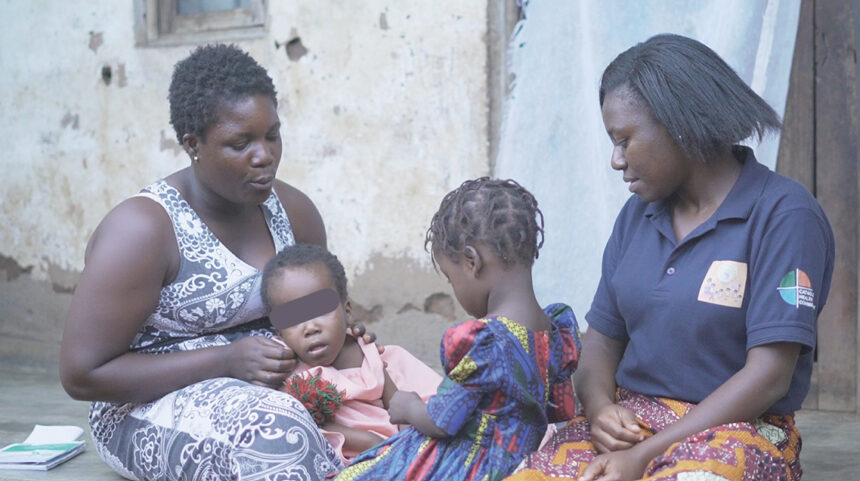
“Zainab has made remarkable progress. She has gained more control over her body and is becoming more independent,” Precious Nkosi, a physiotherapist at St John of God, says.
Nkosi states that physiotherapy is more than just exercises.
“We focus on building strength, improving balance and increasing the range of motion. If a child has difficulty with fine motor skills, we use specific exercises to improve coordination and dexterity,” she explains expertly.
From the very start of Zainab’s enrolment in the programme, her progress has been noticeable.
Nkosi stresses the importance of parental involvement in the healing process: “We teach parents simple exercises to reinforce what we work on in the clinic. Consistency is key to making progress.”
Molesi has taken on the role of Zainab’s physiotherapist at home, where the comfort and familiarity of their surroundings provide a foundation for healing.
She understands the importance of patience and persistence.
“The journey to her full recovery may be long,” she says, “but with my dedication and love, I know there is no road too hard to travel.”
Zainab’s progress, though slow, is undeniable.
“Every day, I see her becoming stronger. I never thought I would witness some of the milestones she has already achieved,” Molesi reflects with a mix of joy and disbelief.
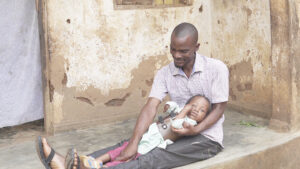
In addition to her mother’s support, Zainab is fortunate to have Levison Kumchulesi, her stepfather, by her side.
His dedication to the family is unwavering, even in the face of ridicule from their community.
“I will always be there for her, no matter what others say. People may have opinions about our situation but my focus is on what is best for Zainab,” Kumchulesi asserts.
His care for Zainab goes beyond physical therapy—he is deeply involved in managing her medical appointments and ensuring she receives the appropriate care.
In the St John of God programme, the process of identifying children who need specialised care begins with careful outreach.
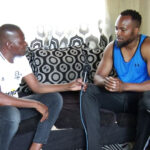
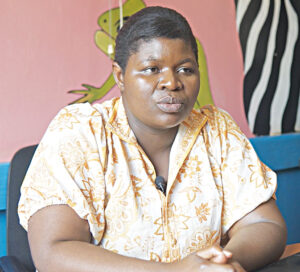
Ndaonga Mkandawire, a medical rehabilitation technician at the institution, explains how the programme works.
“Through community visits and outreach programmes, we train volunteers to recognise signs of disabilities in children—whether physical, cognitive or developmental. These volunteers help us connect with families who might not be aware of the services available to them,” she says.
Without the dedicated network of volunteers, many children would miss out on the vital early intervention they need.
“It is thanks to this network that many children receive the early care that can make all the difference,” Mkandawire concludes.
For children with disabilities, every small step towards recovery is a monumental achievement.
From their first independent movement to their first word, each milestone is a testament to the boundless potential within every child.
Molesi sees the changes in Zainab every day.
“She is becoming more independent. I can’t express how grateful I am for all the help we have received. She is showing us that nothing is impossible,” she says with a smile.
For the dedicated physiotherapists, rehabilitation technicians and parents working behind the scenes, there is no greater reward than witnessing a child achieve something once thought impossible.
They say each milestone is a triumph, not only for the child but for everyone involved in their journey.