By Isaac Salima & Feston Malekezo:
As people of all walks of life celebrate their entry into 2025, stakeholders have rated the year gone by as a mixed bag.
Leading the fray is Consumers Association of Malawi Executive Director John Kapito, who described 2024 as a year to forget.
“The year was challenging for consumers. As you are aware, the cost of living went up sharply. We have had one of the highest inflation rates in recent memory. The economy has also not been doing well for consumers, with poor access to goods and services negatively impacting most people,” he said.
Kapito said most of the goods that were affected by price rises were part of basic needs, making it difficult for consumers to meet daily needs.
- Advertisement -
“You look at maize, water tariffs, electricity; those were some of the goods and services that were affected by the situation,” he said.
In September last year, headline inflation was at 34.3 percent.
However, in October, it went down to 32.4 percent.
In November, it was pegged at 32.5 percent.
- Advertisement -
- Advertisement -
The Reserve Bank of Malawi attributed this to increases in food prices, which rose to 42.5 percent in the third quarter of 2024.
Kapito said consumers were looking forward to improved outcomes this year.
“We expect to see changes this year,” Kapito said.
People’s Federation for National Peace and Development (Pefenap) Executive Director Edward Chaka said, in terms of efforts aimed at promoting peace, Malawi registered gains in the year that has elapsed.
“For example, in May last year, the Malawi Government ratified the Arms Trade Treaty, meaning that Malawi is committed to promoting the cause of peace. This was a good development.
“The Malawi Police Service and stakeholders such as Pefenap also continued to encourage those who hold unregistered guns to either register them with the relevant authorities or surrender them to police. So far so good, as citizens’ response has been encouraging. As such, we regard 2024 as a year Malawi solidified gains made in ensuring the proliferation of peace. Peace is the basis of development,” Chaka said.
On his part, political scientist Ernest Thindwa said 2024 was marked by cases of tension, political and otherwise.
He said such tension posed a threat to the holding of free and fair elections this year.
Eligible voters will, on September 16, vote in the Local Government, Parliamentary and Presidential Elections.
“There is fear that the electoral journey might be violent. Already, you have seen political parties drawing demarcations by making claims over territory and that is creating tension. This tented the political terrain in 2024,” Thindwa said.
For drivers, the year was one to forget.

This is because the problem of fuel shortage affected almost every sector of the economy.
“We have been experiencing persistent fuel scarcity problems, a development that has negatively impacted our businesses.
“This is the time when people go to various places to enjoy themselves but the fuel challenges stand in their way. This is the time when we make money but where are we going to get the fuel?” queried minibus driver George Malewa.
Yesterday, some drivers slept on the queue as they waited for fuel at Petroda Filling Station, Clock Tower, in Blantyre and other places across the country.
One of the kabaza motorcycle taxi operators we found at Clock Tower, Pemphero Salijeni, said he had had no fuel for four days.
“And, as such, I could not operate. That is why I am here, waiting for my turn tomorrow,” he said.
Leader of the Opposition in Parliament George Chaponda, in a statement, said Malawians would never forget 2024 due to challenges they encountered.
Chaponda said Malawians had been hit by the increase in commodity prices on the market, hunger, fuel and forex shortages, among others.
“Equally concerning has been the disastrous implementation of the Affordable
Inputs Programme. Farmers have been left struggling as the programme has been mired in inefficiency, corruption and poor planning.
“The current food insecurity is a direct result of systemic mismanagement and the inability of our leadership to deliver on promises,” Chaponda said.
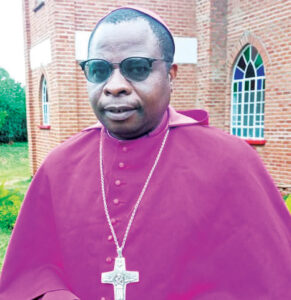
On his part, Anglican Bishop for Northern Malawi, Reverend Fanuel Magangani, asked politicians and voters to refrain from violence, hate speech and focus on issue-based campaigns as the terrain becomes slippery.
Magangani said voters should reflect on the qualities of leaders who are contesting by considering their integrity and commitment to developing the country.
“To those in political office, who are asking the public to support them, we implore you to take deliberate action against violence and hate speech. Engage respectfully and offer facts about your candidacy rather than resorting to intimidation and violence. Politeness and integrity should guide our political discourse, fostering an atmosphere of trust and cooperation,” he said.
In the streets of Mzuzu, people had bitter memories of 2024.
“The year 2024 was not good for most Malawians because of devaluation of the Kwacha, which raised the cost of living. We also faced the issue of fuel scarcity and the most painful thing was the death of State vice president Saulos Chilima,” said resident Vitumbiko Msowoya.

On his part, government spokesperson Moses Kunkuyu said confidence in the country’s leadership and policies of the administration were now bearing fruits.
“We endured certain hardships to qualify for the restoration of the ECF [Extended Credit Facility with the International Monetary Fund], resumption of direct budgetary support and here we are with a budget that has been prudently implemented with unprecedented minimal 0.02 percent overspending as at midyear review.
“We endured dusty and muddy roads but here we are now; some of the roads that were under construction have been constructed and we are driving on them. We endured the torture of natural disasters caused by cyclones and drought but we stood together and the affected are being provided with food. We have endured electricity blackouts in the past but here we are, with electricity supply uninterrupted and more rural communities connected under Marep [Malawi Rural Electrification Programme],” he said.
The minister further touted the current administration’s flagship mega farms’ project.
“We have endured persistent food shortages in the past but here we are, with mega farms now taking off and rekindling our hopes of a hunger-free 2025. We were not without challenges. We faced the fuel shortage but we thank God that we are making progress and we are moving forward. We are looking forward to a very fruitful and productive year 2025,” Kunkuyu said.