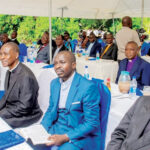
The government Wednesday launched the Integrated National Financing Framework (INFF) and SDG Investor Map, instruments its officials say are designed to close the country’s development financing gap and drive progress towards the attainment of Malawi 2063 vision and Sustainable Development Goals (SDGs).
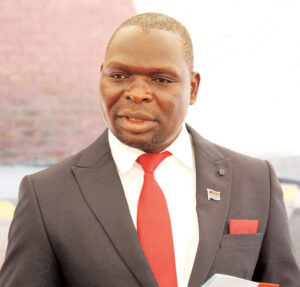
Finance Minister Simplex Chithyola Banda described the tools as transformative in mobilising, coordinating and aligning public and private financing with national priorities.
“We are running a deficit budget and much of our development financing comes from our partners. The INFF is a transformative solution to integrate and align financing sources with our national priorities,” Chithyola Banda said.
He said INFF would help optimise fiscal policies, promote smarter tax systems, enhance anti-corruption efforts and unlock sustainable investment in strategic sectors including agriculture, mining, manufacturing, tourism, renewable energy and digital infrastructure.
On the other hand, SDG Investor Map highlights high-impact investment opportunities in sectors such as energy, agribusiness, finance and tourism—serving as a guide for private sector players who want to invest in areas that are aligned with the country’s development ambitions.
- Advertisement -
On his part, Trade Minister Vitumbiko Mumba described the SDG Investor Map as a vital tool for driving inclusive economic growth and job creation.
“This map offers a roadmap for identifying viable business opportunities that are aligned with national development goals. Together, we are laying the foundation for a resilient and prosperous Malawi,” Mumba said.
He encouraged stakeholders to align their investments and development resources with the opportunities outlined in the map.
Speaking at the same event, European Union Ambassador to Malawi Rune Skinnebach said the EU was committed to supporting the frameworks through capacity-building, improved planning tools and coordination mechanisms.
- Advertisement -
- Advertisement -
He said this would be done in partnership with the Ministry of Finance.
“The INFF is more than just a financing framework—it is a foundation for resilience and unlocking the full potential of Malawi’s public and private sectors,” Skinnebach said.
He singled out the Global Coordination and Information Management System (DCMIS) as a crucial component that would support data-driven planning, better tracking of resources and improved development outcomes.

“This is about investing in people, institutions and systems that can sustain long-term development in Malawi,” he said.
On her part, United Nations (UN) Resident Coordinator Rebecca Adah Dontoh reaffirmed their commitment to supporting Malawi’s development aspirations and urged all sectors to act with urgency.
“Malawi must run—faster, further, and together,” Dontoh said, emphasising the importance of shared responsibility among government, development partners, civil society and the private sector.
She noted that Malawi was rich in policies and strategies, such that what was remaining was to focus on implementation.
Dontoh further urged the country to tap into global platforms such as the Path for the Future and the upcoming International Conference on Financing for Development to align its strategies with global financing trends.
“These frameworks are an opportunity for Malawi to transition from being policy-rich to implementation-rich,” she said.