‘The Minister of Agriculture disowns us and says we are supposed to be under the Ministry of Local Government, but the work comes from the Ministry of Agriculture’
By Rebecca Chimjeka:
Extension workers who are central to the registration of beneficiaries of Affordable Input Programme (AIP) have disclosed that the registration process is almost non-existent as the Ministry of Agriculture has not provided them with equipment for use yet.
The development comes after the ministry said on Thursday that beneficiaries for the AIP this year would get the inputs next month.
But the extension workers said this week that they have not started the process of updating the list of the beneficiaries expected to receive the inputs.
- Advertisement -
Secretary General for Agricultural Technicians Union of Malawi (Atum) Isaac Adams Kwisongole said in an interview that the Ministry of Agriculture is yet to provide extension workers with mobile devices meant for the exercise.
He also said there is no means for mobility, data bundles or allowances for them.
“We are facing the same problems this year. The Minister of Agriculture disowns us and says we are supposed to be under the Ministry of Local Government, but the work comes from the Ministry of Agriculture,” said Kwisongole, adding that the officers are not comfortable to work under the Ministry of Local Government.
According to Kwisongole, Atum was established and registered in 2010 to work with the Ministry of Agriculture for the welfare of all agriculture staff.
- Advertisement -
- Advertisement -
However, due to the decentralisation in 2016, the Ministry of Agriculture took it as a basis to dump the union, diverting it to the Ministry of Local Government.
“The Ministry of Agriculture is still mandated to provide policy and strategies for all agricultural activities, and it is responsible for the mess involved in AIP due to its negligence in management on the same,” Kwisongole said.
He said the AIP mess that has been there before is caused by the ministry itself.
He said his union presented suggestions to the ministry in 2018 to clean up the mess but it gave them a deaf ear.
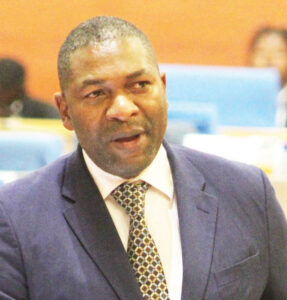
Minister of Agriculture Sam Kawale did not respond to our questionnaire on the development but the ministry’s Principal Secretary responsible for Technical Services Medrina Mloza Banda told The Daily Times of September 14, 2023 that the ministry is almost done with the task of preparing names of beneficiaries and assured Malawians not to worry because beneficiaries would start accessing the inputs next month.
“We are working on the list and, very soon, the names will be released. People should not get worried because we still want that, by October, beneficiaries should start accessing the inputs,” Banda said.
Agriculture parliamentary committee chairperson Sameer Suleman said this year’s AIP is looking to be a man-made disaster.
“There’s no seriousness from the ministry on issues to do with AIP or maize. The ministry has failed us. This is September, and the rain is getting closer, yet we have not yet made any progress on this programme. We are yet to see what action will be taken by the President since a precedent was set last year when he took action against the ministry for failing to acquire fertiliser in time,” Suleman said.
Suleman said the Ministry of Agriculture needs a complete overhaul as it has failed Malawians.
Experts have argued that all administrations have maintained the programme for political reasons.
They have argued that farmers who benefit from the programme need to graduate from the lowest levels of poverty to productive levels where they can produce and support themselves, but no government has listened.
Suggestions have been made that transitioning would provide fiscal space on the national budget, as it would help the design of the programme to have farmers under a free subsidy arrangement and farmers under a credit input scheme.
As such a graduation would trigger an agricultural sector that should be able to produce beyond domestic consumption for food security but also feed into industrialisation that would produce the much-needed export processed products, hence creating jobs for the youth. Farmers Union of Malawi president, Manes Nkhata, said many farmers are already under stress due to the rising cost of commodities and are most likely going to fail to buy fertiliser considering prevailing market prices.