‘By running a system that cannot ordinarily conclude cases timely and determine the guilt or not of those affected, we expose all to such risks’
By Deogratias Mmana:
The decision by the United States Government to impose travel bans on four Malawian individuals on allegations of corruption should make government look into its law enforcement systems and improve their efficiency, legal minds say.
Last week, the US Department of State announced that former Solicitor General and Principal Secretary of Justice Reyneck Matemba, former Public Procurement and Disposal of Assets Authority director John Suzi Banda, former Malawi Police Service Attorney Mwabi Kaluba and former Inspector General of the Malawi Police Service George Kainja were “generally ineligible for entry into the United States, due to their involvement in significant corruption.”
The allegations are in relation to government’s dealings with British businessman, Zuneth Sattar.
The statement from the US alleged that Matemba, Suzi Banda, Kaluba and Kainja abused their public positions by allegedly accepting bribes and other articles of value from a private businessperson in exchange for awarding a government procurement contract to the Malawi Police Service.
- Advertisement -
The statement read: “The United States stands with Malawians working towards a more just and prosperous nation by promoting accountability for corrupt officials, including advocating for transparency and integrity in government procurement processes. These designations reaffirm the United States’ commitment to counter corruption, which stifles economic growth and development, hinders investment and erodes trust in government.”
But speaking on Friday last week during the opening of a two-day Agricultural Investment Conference in Lilongwe, Chakwera took a swipe at the US government for undermining Malawi’s law enforcement and judicial systems considering that the matters related to the four are being handled by the courts.
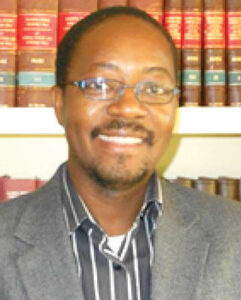
We asked Malawi Law Society president Patrick Mpaka and University of Cape Town professor of law Danwood Chirwa to explain the bigger picture behind the ban, the handling of cases in Malawi and Chakwera’s angry reaction to the sanctions.
Mpaka said the ban should serve as a serious wake-up call to the government to see the need for quick prosecution of cases.
- Advertisement -
- Advertisement -
He said in essence, the government is failing to protect its people by taking too long to process cases.
“This incident should serve as a serious wake up call to our governors across the three branches of government to see to an efficient and well-resourced justice administration system where cases get started when the prosecutors are ready and get concluded timely and the people’s innocence or guilt is determined according to our law.
“Otherwise, the credibility of our justice systems and the protection of possibly innocent Malawians falls into serious jeopardy under the law of nations as has happened here [with the ban],” he said.
He added: “Notwithstanding the constitutional obligation to protect its people under section 4 of the Constitution, the State, through its relevant organs, has not protected its people, not just those accused who are presumed innocent but also their wives and family members bearing their names that may be affected by this US statement.
“By running a system that cannot ordinarily conclude cases timely and determine the guilt or not of those affected, we expose all to such risks.”
He argued that Malawi speaks to the world as though it follows tenets of law of nations and the rule of law “while internally and in practice legal processes face several hiccups and take forever to deliver justice.”
“And here we are — while our laws’ presumption of innocence subsist on those accused in the corruption scandal that went public way back in October 2021 with no tangible progress in our courts, the law of nations and of international relations, which we committed we follow and the Supreme Court confirmed for us, is operating on the information under the corruption scandal concerning our country and now affecting entire families and people not answering any charges or presumed innocent in our courts,” Mpaka said.
On the US sanctions, Mpaka said: “We cannot as a country control what other equally sovereign nations are going to do about their laws with information which is public and available to all and so the USA is entitled to use its law according to its ways.
“As law society we said in June 2022 that these high level corruption matters ought to be resolved quickly.”
When the Anti-Corruption Bureau arrested Vice President Saulos Chilima, and Chakwera suspended his delegated powers, MLS issued a statement on June 26, 2022 calling for speedy trial of the case because of the impact of the arrest.
On the other hand, Chirwa said the response from Malawi confirms its fear of drastic action.
He said there is no need to respond to the ban in a petulant manner, to the extent of comparing Malawi to the US on matters that are completely incomparable.
“This is deeply troubling for the country as we have a government which only exists to advance personal interests rather than those of the state and its people. It will continue to invoke the public interest as a smokescreen,” Chirwa said.
Chirwa defended America’s position arguing that the announcement is consistent with its recent practice of naming and shaming African authorities who have been alleged to have been involved in corruption.
“This practice has arisen from a lack of trust in African governments to investigate and prosecute corruption. Malawi’s track record unambiguously shows that corruption has become so institutionalised that no development partner can expect the situation to change without taking radical measures such as these.
“It also shows that development partners have lost all their patience and tried all other diplomatic means,” he said.
On the choice of the four individuals, Chirwa said the choice could have been based on their level of seniority in government and the strength of evidence they have in possession.
We also asked the ACB to explain what it makes of the ban and delay to prosecute the cases.
The bureau’s spokesperson Egrita Ndala said yesterday in a written questionnaire that the bureau does not have any comment on the action taken by the US government.
The ACB has been under criticism from various stakeholders for arresting just a handful of suspects from a list of 84 officers contained in its report which it submitted to Chakwera.
Chakwera told the nation on June 21, 2022 that ACB’s report on allegations of bribery against public officers in connection with dealings with Sattar had 13 other officers that the bureau said had been extensively investigated to the point of concluding that they conducted themselves corruptly in dealing with Sattar.