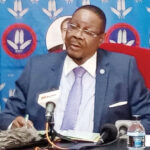
On Thursday, President Lazarus Chakwera announced a 50 percent fuel allocation cut for top government officials among a raft of expenditure control measures.
Our calculations suggest that fuel allocation in government is, indeed, one big siphon of taxpayers’ money from the public purse.
What is not clear thus far, however, is whether, at current fuel allocation rates, the Chakwera administration at all effected the 20 percent fuel cuts that he directed when government devalued the kwacha by 25 percent in June 2022.
Chakwera’s Thursday directive was in response to the International Monetary Fund (IMF) demand for Malawi to cut public expenditure as a condition for the country to be granted the $174 million Extended Credit Facility (ECF).
Now we can report that if Chakwera sees to it that his directive is implemented with immediate effect, government could save significant sums in the last third alone of the 2023-24 financial years.
- Advertisement -
In his statement on Thursday in response to the IMF approval of Malawi’s ECF, Chakwera directed fuel cuts on ministers, principal secretaries, directors and senior management officials in government.
We inquired the fuel allocation for these positions.
We found that ministers receive 1,000 litres of fuel every month, principal secretaries get 500 litres of fuel every month while senior directors take an average of 375 litres of fuel every month.
We randomly selected four ministries of Finance, Agriculture, Trade and Education for our analysis.
- Advertisement -
- Advertisement -
We also worked on the basis that officials in these ministries use diesel vehicles as is common standard in government.
Cabinet ministers
To begin with, Chakwera has 22 ministers in his cabinet –excluding himself, the Vice President and deputy ministers.
At 1,000 litres of fuel per minister per month, it means taxpayers buy 22,000 litres of fuel every month for the ministers.
Today, diesel is selling at K2,734 per litre. This means taxpayers are being bled K60.15 million a month for fuel for cabinet ministers alone.
In the next four months before the next financial year, that will translate to a total K240.6 million.
Principal Secretaries
We found that there are two Principal Secretaries each in the ministries of Trade, Agriculture and Education.
Then we have four Principal Secretary positions in the Ministry of Finance which include Secretary to Treasury, Accountant General, Principal Secretary for Administration and Principal Secretary for Economic Planning and Development.
Since Principal Secretaries get 500 litres each every month, this means 5,000 litres of fuel for 10 principal secretaries in those four ministries in one month.
To buy that fuel for them, taxpayers would have to spend K13.67 million in one month.
In four months before the next financial year, taxpayers would have spent K54.68 million on 10 PSs in just four ministries.
Directors
We also found that there are seven directors in each of the ministries of Trade and Agriculture while ministries of Finance and Education each has 12 directors.
That makes 38 directors in the four ministries.
With each of them allocated an average 375 litres of fuel every month, it means taxpayers are buying 14,250 litres of diesel every month, spending almost K39 million in one month.
This means that in the four months before the next financial year, taxpayers will have spent about K156 million for fuel for the directors, K54 million for 10 PSs, K240 million on cabinet ministers.
That is a total of K450 million in four months.
If the President’s directive is effected, that expenditure could come down by 50 percent – which suggests that government would make big savings if fuel expenditure to senior officials in all ministries is to be taken into account.
Directive implementation
What is sticky now is the implementation of the directive.

In an interview inside Times Talk programme on Times Radio, Thursday, Executive Director of the Consumers Association of Malawi (Cama) John Kapito said there was need for the directive to be implemented as soon as possible and that the Office of President and Cabinet (OPC) should issue a circular to all that will be affected.
“For the directive to be operational we want to see communication being made from the OPC to the ministries so that they start following the directive which we have not seen.
“We do not want the President’s speech to be one of those empty speeches. When this is implemented, we want the ministries to issue reports weekly to show us what is being saved,” Kapito said.
In a separate interview, economist Andrew Kumbatira indicated that our figures could be on the conservative side and that the current fuel allocations cast doubt whether the June 2022 fuel cuts directive was implemented.
“The figure could be more because that fuel amount is for local running and when they are going to the field they get more.
“On the other side, we need to understand that these fuel allocations were provided because they could not increase their salaries.
“However, we are wondering because all these measures were explained last year after the 25 percent devaluation and the fact that they are mentioned again now means they were not implemented. So are they going to implement now?” wondered Kumbatira.
He said what is important now is the spirit to ensure that everyone shoulders the problems facing the economy.
In a statement, Director for Centre for Research and Consultancy, Milward Tobias, challenged president Chakwera to ensure direct implementation of budget reform proposals his own administration announced in the 2022-23 Budget Statement.
The measures include replacing expensive vehicles with cost-effective ones, reducing allowances for cabinet members and senior government officers and procuring strategic commodities direct from manufacturers.
“This is a system change unlike what he has announced which has a defined effective period.
“He should cut on un-presidential local trips too. These are trips like presiding over ground breaking ceremony for construction of a maternity wing, presiding over commissioning of a rehabilitated dam for Lilongwe Water Board and several other trips that are beneath the office of the president,” said Tobias who is also a presidential aspirant in the 2025 election
He added that as the mid-year budget review is in session, the Minister of Finance should reallocate resources from budget lines towards service delivery budget lines.
Delivering his speech on Thursday, Chakwera further ordered the Secretary to the President and Cabinet to circulate to all public institutions a criterion for local trainings and local travel that will be acceptable, as well as a cap on how much of their budgets can be spent on allowances for such trainings and trips.
“I am effectively ending the practice of draining public coffers to spend on allowances for useless activities.
“I have directed the Minister of Finance and Economic Affairs to include provisions in the upcoming midyear budget review for cushioning Small to Medium Enterprises so that we can protect the jobs that they create,” Chakwera said.