By Dumbani Mzale in Cairo, Egypt:
The Third Intra-African Trade Fair (IATF2023) organised by the African Export- Import Bank (Afreximbank) in collaboration with the African Union (AU) and the Africa Continental Free Trade Area (AfCFTA) secretariat is underway at the Egypt International Exhibition Centre and Al Manara International Conference Centre in Cairo, Egypt, and will run until November 15 2023.
Thirty-six African countries alongside two Caribbean countries are participating in the IATF2023 and Malawi is among the countries that are standing shoulder-to-shoulder with other Africa giants at the high-level international indaba.
From the onset, many trade and economic experts have given the nod to the assertion that Malawi’s participation at this continental showpiece demonstrates the country’s strong zeal and ego to sprawl its opportunities across Africa, especially as the country intensifies her efforts in implementing the Malawi 2063 agenda—the second long-term national development blue-print after Vision 2020.
Malawi’s President, Lazarus Chakwera—who is attending the continental showdowning will inevitably leverage his participation in the gathering to showcase Malawi’s potential, strength and capacity in terms of how Malawi is pursuing its dream of turning the economy into a wealthy, industrialised and self-reliant nation as espoused in the Malawi 2063 outline.
- Advertisement -
Of interest are glaring opportunities, whether short-term or long-term, that are usually attached to this continental congregation, as well as the AFCFTA bloc, as a whole.
For example, IATF2023 is set to provide a unique and valuable platform for businesses to access an integrated African market of over 1.3 billion people with a gross domestic product (GDP) of over $3.5 trillion created under the African Continental Free Trade Area.
For a country like Malawi, whose nominal GDP is just estimated at $12 billion by the National Statistical Office (NSO), it means a $3,5 trillion GDP market is simply colossal and stands to unleash trade and investment opportunities to the southern African country, with its population of about 20 million.
In view of these pertinent prospects, we engaged Malawi Trade Minister Sosten Gwengwe to provide a glimpse of Malawi’s expectations from a trade perspective at the meeting.
- Advertisement -
- Advertisement -
“IATF serves as a significant platform for promoting intra- African trade and fostering economic integration among African countries. It is an opportunity for countries like ours to showcase their products and services, explore new business partnerships and enhance regional trade cooperation,” he said.
It is particularly noted that intra- Africa trade is only 16 percent of total African trade. Such a statistic speaks volumes of a continent which is yet to unleash its full trade potential by deepening trade among its own member states.

According to Gwengwe, one of the factors contributing to a sluggish growth of intra-Africa trade is lack of access to trade and market information.
“To address this challenge, the African Export-Import Bank (Afreximbank) established the Intra Africa Trade Initiative with the aim of providing trade and market information and to connect buyers and sellers from across the continent,” he said.
Malawi’s participation under microscope
The Malawi delegation, led by Gwengwe himself, comprises senior government officials, project promoters and exporters and development partners.
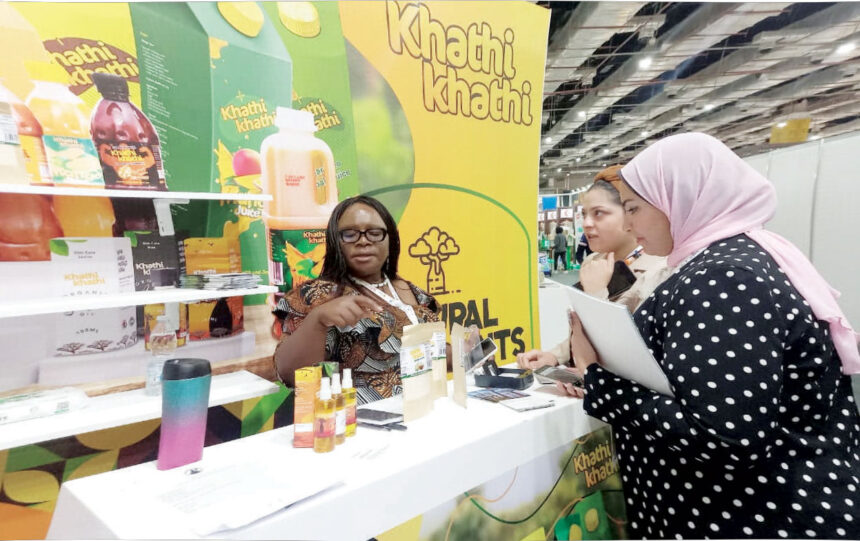
Of particular interest is the fact that Malawian companies from sectors such as agriculture, tourism, energy, textile, tourism, arts and crafts, mining, banking, and manufacturing/ agro-processing registered and 4 statutory corporations will showcase investment and trade opportunities and rich resources at the IATF.
Apart from government to government meetings, the Malawi Investment and Trade Centre (MITC), in coordination with the Malawi Embassy in Egypt, has organised business to business meetings for Malawian businesses, according to the institution’s chief executive officer Paul Kwengwele.
“Currently, the Malawi Embassy has profiled companies from the Egyptian Business Association for expression of interest by Malawi companies to engage in discussions to forge partnership investment and market opportunities with their counterpart,” he said.
To further underscore the importance of partnership, the Government of Malawi will engage in bilateral and multilateral meetings as profiled in the IATF2023 programme and other side event meetings.
In particular, Malawi intends to take advantage of the IATF to engage with Afreximbank to expedite some of the initiatives that are being undertaken with the bank’s support.
Economic experts such as Gowokani Chijere Chirwa, contend that the IATF2023 aligns well with Malawi’s ongoing transformational drive, which places emphasis on industrialisation, as acknowledged by Malawi 2063—the country’s long-term national economic development plan.
He muses that the event provides a strategic platform for Malawi to showcase its capacity to export value-added products, significantly shifting away from the traditional raw commodities exports and traditional export product lines such as tobacco.
All in all, the indaba also augurs well with the preaching of Chakwera, who is anxious to forge partnerships and attract the necessary foreign direct investment which are all key ingredients for driving Malawi’s vision of self-reliance and turning Malawi into an industrially advanced nation.
As things stand, Malawi’s main bilateral trade agreements are with China, South Africa, Zimbabwe, Mozambique and Botswana.
Malawi is also a member of the World Trade Organisation (WTO), the Southern African Development Community (Sadc), and the Common Market for Eastern and Southern Africa (Comesa).
The country is also party to the African Growth and Opportunity Act (Agoa) and Everything But Arms (EBA) of United States of America (USA) and the European Union (EU), respectively.
Most importantly, Malawi participates in the COMESA-Sadc-EAC free trade area negotiations and signed the WTO trade facilitation agreement and ratified it in July 2017, before signing the African Continental Free Trade Area in 2018 and fully ratified the agreement in 2021.