

By Savanna Craig :
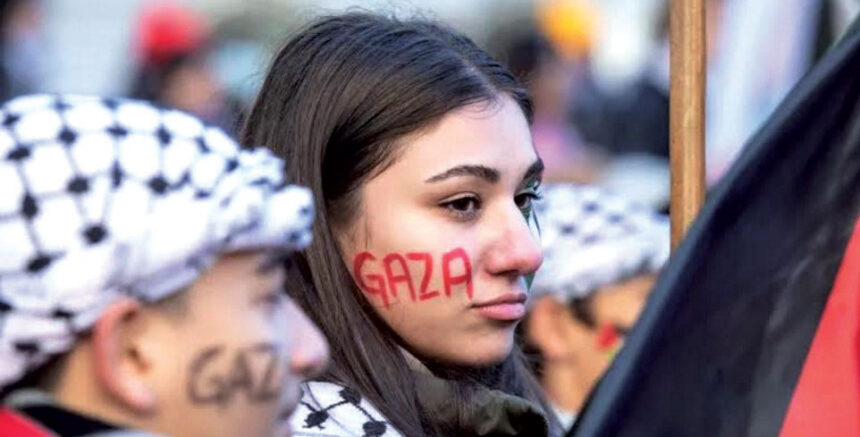
On the morning of April 15 this year, I headed to a branch of Scotiabank in downtown Montreal, Canada, to cover a protest. I watched as protesters blocked ATMs and teller booths and the police were called in.
Police officers showed up in riot gear. When it was announced the activists were going to be arrested, I did not expect that I would be included with them.
Despite identifying myself as a journalist numerous times and showing officers my press pass, I was apprehended alongside the 44 activists I was covering. It was inside the bank that I was processed and eventually released after hours of being detained.
- Advertisement -

I now potentially face criminal charges for doing my job. The mischief charges I face carry a maximum jail sentence of two years and a fine of up to 5,000 Canadian dollars ($3,600). I could also be restricted from leaving the country.
- Advertisement -
Canadian police can only suggest charges, so the prosecution has to decide whether or not to charge me. This process alone can take anywhere from a few months to a year.
I am the second journalist to be arrested in Canada while on assignment since the beginning of 2024.
In January, journalist Brandi Morin was arrested and charged with obstruction in the province of Alberta while covering a police raid on a homeless encampment where many of the campers were indigenous. It took two months of pressure for the police to drop the charges against her.
Over the past few years, a pattern of arrests has emerged, with police specifically targeting journalists working freelance or with smaller outlets. Many of these journalists have been covering indigenous-led protests or blockades. Often they claim that the media workers they have come after “do not look like journalists”.
- Advertisement -
The Canadian police continue to use detention to silence and intimidate us despite our right to free speech under the Canadian Charter of Rights and Freedoms. To specify, under section two of the charter, Canadians’ rights to freedom of thought, belief and expression are protected. The charter identifies the media as a vital medium for transmitting thoughts and ideas, protecting the right for journalists and the media to speak out.
Furthermore, a 2019 ruling by a Canadian court reasserted the protection of journalists from being included in injunctions in situations where they are fulfilling their professional duties.
The court decision was made in the case of journalist Justin Brake, who was arrested in 2016 while documenting protests led by indigenous land defenders at the Muskrat Falls hydro project site in Newfoundland and Labrador. Brake faced criminal charges of mischief and disobeying a court order for following protesters onto the site, as well as civil contempt proceedings.
Despite Brake’s victory in the court case, journalists have still been included in injunctions. In 2021, another high-profile arrest of two Canadian journalists occurred in western Canada. Amber Bracken and Michael Toledano were documenting indigenous land defenders protecting Wet’suwet’en territory near Houston, British Columbia, from the construction of the Coastal GasLink pipeline when they were arrested.
They were held in detention by the Royal Canadian Mounted Police for three days until they were released. In an interview, Toledano said he and Bracken were put in holding cells with the lights on 24 hours a day, minimally fed and denied access to both toothbrushes and soap. “We were given punitive jail treatment,” Toledano explained. They faced charges of civil contempt, which were dropped a month later.—Al Jazeera