By Benadetta Chiwanda Mia:
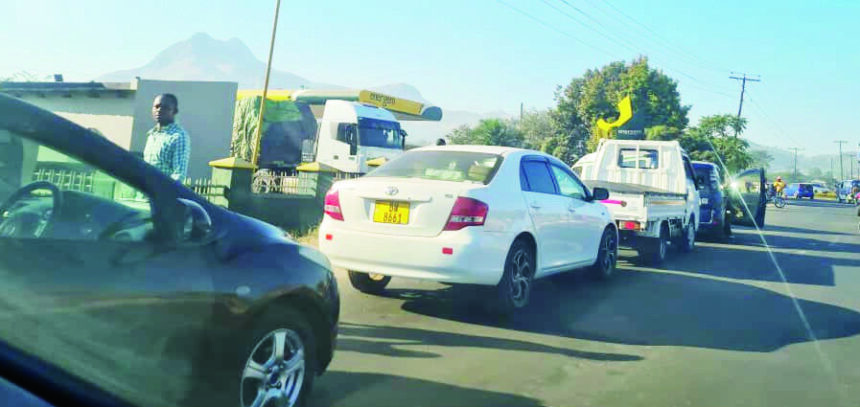
As the problem of fuel shortage persists, companies are rationing fuel for their daily operations, including powering goods delivery trucks.
Chairperson for the Manufacturers Association of Malawi Gloria Zimba expressed concern over the situation, noting its negative effects on delivery and turnaround times.
“Delivery trucks are spending extended periods waiting for fuel, and it is a nightmare knowing there is no certainty about when fuel will be available,” Zimba said.
Zimba, who also serves as Human Resources and Corporate Affairs Director at Castel Malawi Limited, highlighted that small-scale companies were facing even greater challenges.
- Advertisement -
“The impact on larger manufacturers is somewhat less severe because many have their own filling stations. However, they too face uncertainty regarding fuel supplies. This makes it difficult to effectively plan routes to markets and to consumers,” she said.
Zimba called for enhanced collaboration between the government and the private sector to better prepare for disruptions that could lead to economic crises.
She added that economic uncertainty hampers production and service delivery planning.
Economic expert Edward Chilima emphasised the detrimental impact of fuel shortages on the production cycle.
- Advertisement -
- Advertisement -
He highlighted the necessity of addressing foreign exchange scarcity to mitigate current challenges.
“The irregular fuel supply affects not only the manufacturing sector but also agriculture. This is a crucial time for farmers to access their fields—without reliable fuel, many are resorting to alternative sources, increasing production costs,” Chilima said.
“The fundamental issues surrounding fuel procurement such as foreign exchange availability have not been adequately tackled. So, we should anticipate that this problem will persist,” he said.
The country witnessed a short-lived relief of fuel supply a few weeks ago.
However, queues have resumed in a number of filling stations across the country while other stations are running dry taps.
When contacted for comments on the current fuel supply situation, Fitina Khonje, spokesperson for the Malawi Energy Regulatory Authority, directed inquiries to the authority’s daily fuel supply updates.
As of November 11, 2024, fuel deliveries were scheduled to 15 locations in the northern region, 42 in the central region, and a significant 84 in the southern region, according to an update from MERA.
The fuel shortage has also started affecting power supply.
The state-owned Electricity Generation Company last week announced reduced operating hours for its diesel power plants at Likoma and Chizumulu, which require a minimum of 10,000 litres of diesel every two weeks for normal operations.