As part of 2023 Reading Africa Week which falls in December, Catalyst Press publisher Jessica Powers interviewed four women publishers across the continent – Maureen Masamba for Dzuka Publishing Company Limited (Malawi), Azafi Omoluabi of Parrésia Publishers Ltd (Nigeria), Goretti Kyomuhendo of African Writers Trust (Uganda), and Mutesi Gasana of Ubuntu Publishers (Rwanda) – to gain their perspective on the industry, publishing trends, and reading cultures across the continent.
What brought you to publishing? How has this career been different from what you expected?
Maureen Masamba: Having trained and qualified as a high school teacher in Languages, instead of going teaching, I took up editorial duties with a publishing company. And my first assignment was being a Field Editor, trafficking educational manuscripts from Authors to Content Editors to Designers, sitting and observing in commissioning meetings.
I found it very interesting. It was and has been like being a teacher from another angle because my main area of work has been textbook publishing. Very satisfying and fulfilling. I have actually convinced myself that trained teachers make the best publishers.
Azafi Omoluabi: I’ve always loved books, and wanting to know the process took me into publishing. Yes, it’s been different. I eventually learned that having a passion for books differs from book production, sales, and marketing. The many tentacles of publishing are akin to having blind men touch an elephant from different sides and having different experiences.
- Advertisement -
The Nigerian literary community is growing, but at the moment, it is medium-sized. It cuts across gender and age. What I find most delightful are young adults who dominate social media as book influencers and reviewers. This group of readers could currently make or break a book.
Goretti Kyomuhendo: My publishing career started with FEMRITE –https://www.femriteug.org/ which I directed for 10 years, 1997-2007. We started with running programmes and activities aimed at empowering Ugandan women writers to tell their stories, including training in writing skills and personal empowerment workshops. We soon realised, though, that we would need to add the publishing aspect. The stories that the women were writing needed to be published. There were limited publishing outlets in the country at the time. And so, we launched FEMRITE Publications Limited, and started publishing novels, poetry, life stories and others. We did everything ourselves: from writing, editing, publishing, marketing and selling the titles we produced. We learnt on the job, and dealt with the resulting issues, such as storage, as they arose.
My latest publishing project this year is the re-issuing of Whispers from Vera under the African Writers Trust imprint which I founded in 2009. This, too, was out of need. Whispers from Vera was first published in 2002 in Uganda; however, about a year later, the publisher went out of business. Subsequently, the title went out of print. I decided to reissue the novel on the 20th anniversary of its first publication.
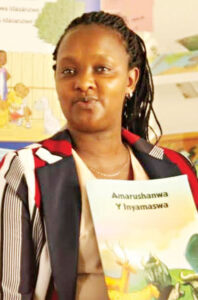
Mutesi Gasana: I loved books from an early age, growing up in a teacher’s home but making books and knowing how to venture into publishing wasn’t in my wildest dreams. I was introduced to publishing in 2009 by a regional publishing house, who had come into Rwanda for a market for textbooks in the country. I was hired as a consultant to carry out country-wide marketing of the then approved titles to all government schools in Rwanda. I gained an interest in books then and started a small bookstore in Kigali. I however found it difficult always answering questions from parents and schools that needed more than textbooks but, rather, reading resources.
- Advertisement -
- Advertisement -
Later, I realised that the stories in the market depicted and were telling other people’s stories other than our own and that when I decided to become part of the change I wanted to see and founded Ubuntu Publishers.
In your years of publishing, do you have one “highlight” moment?
Maureen Masamba: Not so much a highlight but something that sticks out, in 2020 (during Covid time), I invested my pension savings into a publishing project solicited by the government only for it to be cancelled at evaluation level. I crashed then – I have not yet recovered from that ordeal.
Azafi Omoluabi: Our first highlight moment was when we won the NLNG Prize for Literature with Abubakar Adam Ibrahim’s Season of Crimson Blossoms in 2013. I can’t fully express the thrill and fulfillment that came with it. In 2019, The Son Of The House by Cheluchi Onyemelukwe won the prize for International Best Fiction at the Sharjah International Book Fair. When it happened, I was in the hall, and I believe I screamed louder than everybody else—the same thing when it won the Nigerian Prize for Literature in 2020 or 2021. One never gets tired of the excitement that comes with these wins.
Goretti Kyomuhendo: In 2022, we published an anthology of short stories and poems entitled Threads and Faces: Stories about Identity and Belonging under the African Writers Trust imprint, by writers and poets from five African countries. As the editor, a number of factors thrilled me about this collection: the writers are young people, exploring a variety of themes including love, grief, identity and belonging, sexuality and disability. More exciting is the fact that the stories are written as personal reflections, memoir or autobiographical narratives, a genre we need to see more of in African literature. And perhaps, the greater highlight are the countries represented in this anthology, some of which are seldom visible in African literature, such as Burundi and Sudan.
With so much turmoil in the world at the moment, I am glad we gave young people hope and the opportunity to amplify their voices, and for their concerns to be listened to, for they are the future.
Mutesi Gasana: Yes – in 2018, we published 53 picture stories authored by 53 young authors (8-12 years) from 23 districts of Rwanda in the campaign dubbed “Gira Igitabo” (“Have a Book”). We really felt the pride of publishing these authors for the first time.
What’s a book on your list that’s surprised you? Any titles coming up for you that you’re particularly excited about?
Maureen Masamba: Venturing into a totally new publishing level – children’s stories/picture books – is exciting for me. It is uncharted territory, and very involving, to bring out high quality and exciting books for the young reader that are unsolicited – a risky and exciting venture.
Azafi Omoluabi: The Son of The House. I’m looking forward to the release of our first General Fiction title tiled Cracked Screen.
Mutesi Gasana: The book that surprised me was a children’s book authored by a young pre-teen child who shared her personal story of a friend who had got pregnant at an early age of 12 years. The story was painful, and her commitment was to protect others from sugar daddies. She crafted the story because her area was an area of teen pregnancies.
We are excited about the children’s travel books coming up; the books will be a series of books that introduces children to travelling and learning about different things and parts of the world, starting from Rwanda.
Do you publish what you read? Or are your personal reading interests different from your professional ones?
Maureen Masamba: No, our main market, just like most African countries, is educational books and predominantly high school level. My personal reading interests are very different.
Azafi Omoluabi: I’ve been accused several times about publishing what I read and the need to be more open to other genres of fiction. I’ve promised several times to listen.
Mutesi Gasana: I publish both what I read and what my children read, I love children and I love stories so, yes, I publish what I read. – AFRICA IN WORDS