By Cathy Maulidi:
Chief Justice Rizine Mzikamanda Wednesday launched the Electronic Court system, which is a digital platform that links prisons and police stations with courts.
Again, the initiative strives to provide access to justice, targeting vulnerable groups, including survivors of gender-based violence (GBV).
Mzikamanda said with the initiative, justice services would easily be accessible and that the system will help minimise costs incurred in the administration of justice by both judicial officers and respondents as some service seekers used to cover long distances to meet in one court.
“The e-court that we have launched is very significant in the administration of justice because it will help bring justice closer to the people. It will take justice to the people electronically so that they don’t have to travel long distances and spend so much.
- Advertisement -
“This will also help in dealing with delays in the delivery of justice and this is extremely important. We have many cases; we are talking of a backlog of hundreds and thousands of cases. So, we believe that this system is a milestone in efforts to address the perennial backlog of cases we have,” Mzikamanda said.
He encouraged users of the system to utilise it and also make sure that it is being used for its intended purpose.
“We really want to digitise the entire Judiciary. We have had issues of missing files. So, we believe that this system will help minimise [the occurrence of] such incidences,” Mzikamanda said.
Mzikamanda added that the e-court would help the Malawi Police Service and Malawi Prison Service reduce the number of inmates and detainees by ensuring that they access justice remotely.
- Advertisement -
- Advertisement -
The United Nations Development Programme (UNDP) is providing financial support for the implementation of the initiative.
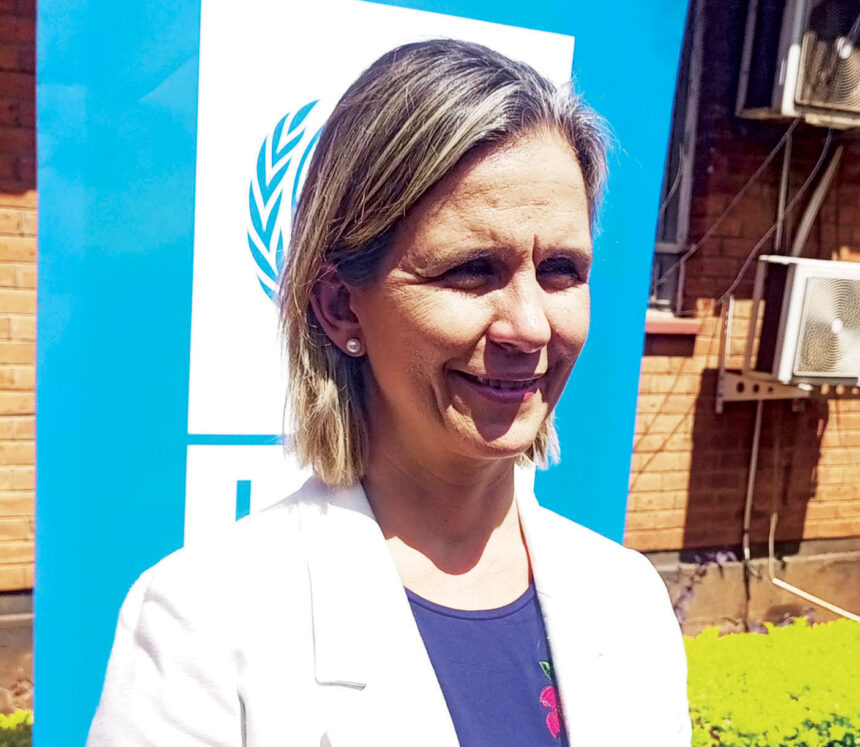
UNDP Country Representative Fenella Frost said she hopes that the system would help bring justice closer to the population.
“The idea is to reduce costs and also save time. An example [we can give is based on what happened] today, [when] we saw a prisoner on remand in one of the country’s prisons and there was a magistrate connected. Imagine if all individuals involved in the case would have to travel; that would mean a lot of vehicles needing to be used and would mean more petrol to be used and time for the travel. That would cost a lot of money.
“So this system will help bring justice to the people in a quicker way and, in a way, that saves government’s money,” Frost said.
So far, the project has connected 20 sites to the tune of $350,000 (approximately K700 million) and $1.8 million (approximately K3.6 billion) will be used to connect it to 60 sites which UNDP assessed.
Malawi Prison Service, through Commissioner General Masauko Ng’ombeyagwada Wiskot, has hailed the system, saying it would help the service save money which was being used to transport suspects who are being remanded in prisons.
“Now the suspects on remand won’t need to travel to the courts as they will be connected [through the system] and this will help us save money,” Ng’ombeyagwada Wiskot said.