




By Kingsley Jassi:
The cost of printing new bank notes to replace the worn out ones rose to about K44 billion last year due to high use of hard cash.
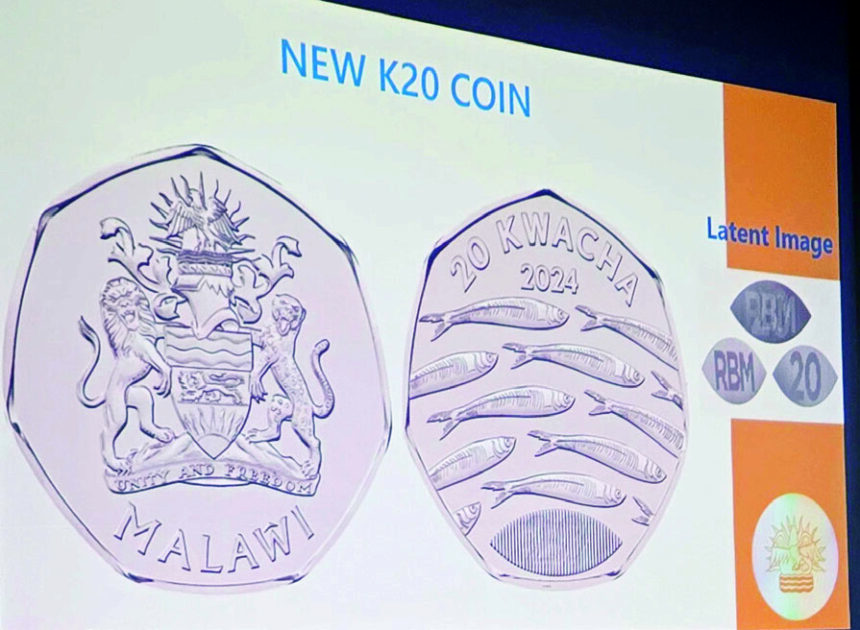
Reserve Bank of Malawi (RBM) Governor George Partridge said at a press briefing in Lilongwe that such costs have a toll on currency management expenses, hence the decision to introduce the coins that replace K50 and K20 banknotes next month.
The Governor, who dismissed any devaluation rumours following this change, said the low value bank notes exchange hands faster and are easily worn out, piling pressure on cost of replacement.
“These are the ones that have the shortest lifespan of just one year and it’s expensive to replace them,” Partridge said, adding that this does not affect their value.
- Advertisement -
The bank requires printing over 4 million new K50 notes and about 1.5 million K20 notes every year and, according to Patridge, the huge savings will come from the coins’ durability as they last for about 10 years.
Recently, there have been efforts to increase digital payments to reduce the use of bank notes but with the economy dominated by the informal sector, such efforts are hardly getting traction.
A 2026 Labour Market Profile for Malawi, released by Danish Trade Union Development Agency showed that 93 percent of income earners in Malawi are in informal employment, way above the regional average of 39 percent.
On the possible introduction of a new higher currency denomination above the current K5,000, the central bank Governor assured that the numbers on demand of bank notes have not shown the need for such.
- Advertisement -
- Advertisement -
“We have a system that informs us when there is a need for a higher value bank note and we have not been informed of that need yet,” Partridge said.
With elevated inflation since 2022, there had been anxiety to see the central bank introducing a K10 000 bank note to ease pressure on the K5 000 bank note.