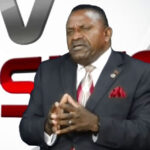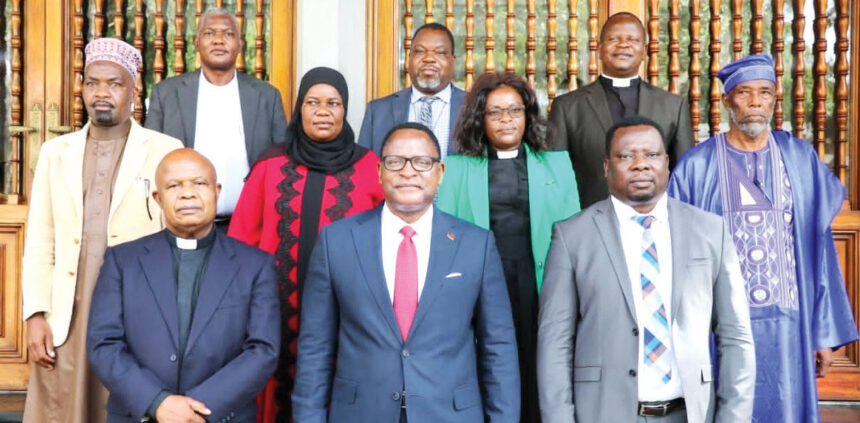
The Public Affairs Committee (Pac) and President Lazarus Chakwera are today expected to deliberate on issues pertaining to the current political and economic situation in Malawi.
The quasi-religious organisation last met Chakwera in January 2022 during which it raised several governance concerns.
Pac also gave the President a 90-day ultimatum to reshuffle his Cabinet and dismiss ministers suspected to be involved in corruption, among others.
The organisation sought to meet Chakwera again in June this year amid deteriorating living conditions of Malawians and a “stagnating fight against corruption”.
In an interview Monday, Pac Executive Director Robert Phiri said the aim of the meeting is to raise issues of national importance especially on the current political and economic situation.
- Advertisement -
Phiri could not be drawn to disclose the actual agenda but indicated there will be a follow-up on the performance of government departments.
“Although the executive committee has not adopted the agenda, based on its meeting held on 8th November 2023 in Mangochi, the audience is likely to touch on governance issues, economic challenges and public service.
“Pac booked this audience as early as June 2023 but because of the busy schedule of the Head of State, it could not take place,” he said.
Presidential Secretary Antony Kasunda said this is one of the occasional meetings that the President conducts with the quasi-religious body.
- Advertisement -
- Advertisement -
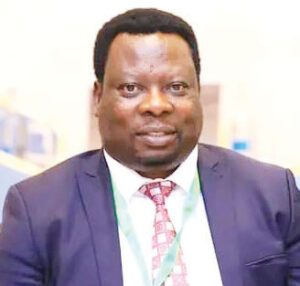
Governance commentator Mabvuto Bamusi said the dialogue between Pac and Chakwera helps to provide direct accountability on the presidency.
“It provides the citizenry an opportunity to get feedback in terms of how the President is performing based on the promises that he made during election campaign or other engagements,” Bamusi said.
He, however, argued that Pac has lost the stamina when it comes to calling a spade by its name apparently because the religious leaders’ body falls short of following up on issues agreed on between the two parties.
“Time and again, Pac comes up with what are known as actionable resolutions, but they end up into mere rhetoric because there is little or no concrete action on the deliverables at the end of the day.
“There are concerns that the current structure of Pac is compromised; that it is captured by the State because the presidency or State House is largely comprised of people of religious backgrounds,” Bamusi said.
On November 15, 2023, Chakwera announced several measures to cushion Malawians from the impacts of the 44 percent devaluation of the Kwacha and save public resources in the midst of a troubled economy.
The austerity measures include a ban on public-funded external travel and a cut on fuel allocations for senior government officials.
However, some stakeholders have been of the view what the President needed to do more such as reducing his Cabinet.
Church and Society of Blantyre Synod Church of Central Africa Presbyterian recently asked Chakwera to trim his Cabinet to 15 ministers and presidential advisers to five in addition to the announced austerity measures.
Chakwera’s Cabinet has around 29 ministers. He also has around 10 presidential aides.
In a statement signed by its executive director Reverend Master Jumbe, Church and Society also asked members of Parliament (MPs) to objectively deliberate on the mid-year budget review whose statement Finance Minister Simplex Chithyola Banda presented on Monday last week.
The budget has risen from K3.7 trillion to K4.33 trillion, largely due to the 44 percent devaluation of the Kwacha.
Jumbe said the MPs should not forget “critical issues of enforcement of strict fiscal discipline and hunger”.
“We, therefore, turn to our legislators to demand from the President a reduction in the size of the Cabinet to a maximum of 15 members; presidential advisers to a maximum of five and replacement of luxurious and fuel-guzzling vehicles used by Cabinet ministers and senior government officials,” he said.
But, reacting to the lean Cabinet demand, government spokesperson Moses Kunkuyu said powers to appoint ministers are conferred on the president by the Constitution and that every president applies their discretion to appoint a committee of ministers that will help them drive the national development agenda.
“It is up to the President, who has come up with the austerity measures that everyone is applauding, to decide what sort of Cabinet will help him actualise his aspirations. Let us give him all the support,” Kunkuyu said.