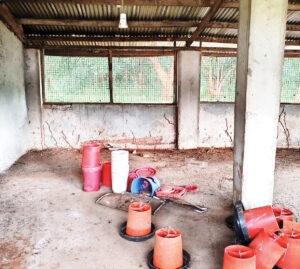
Once the pride of the nation, government-established livestock centres now stand as monuments, their transformative potential wasted by years of disregard and mismanagement.
A case in point is Choma and Dwambazi in Mzuzu and Mzimba, respectively.
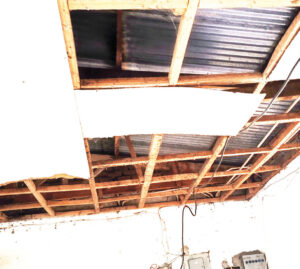
These vital hubs of agricultural growth have fallen into a state of disrepair, plagued by dilapidated infrastructure, encroachment and shortage of human resources.
Take, for instance, the Choma government hatchery.
It was established in 1976 as an outlet of black australorp and started production by 1980.
- Advertisement -
The hatchery was established to meet three objectives, namely producing six-week black australorp chicks meant for sale to farmers in the Northern Region, producing fertile eggs to sell to farmers and acting as a demonstration or training centre for farmers and institutions.
During the early years, the farm produced a minimum of 30,000 black australorp chicks but the figures have been going down over the years, with the recent number of chicks being 3,000 in the 2022-23 season.

production requires good structures
Ekron Kamanga, who is a livestock development officer, paints a grim picture of the challenges facing the hatchery.
Kamanga cites disease outbreaks, crumbling infrastructure and understaffed workforce as some of the factors that have stifled productivity, leaving the once-bustling facility in a state of disrepair.
- Advertisement -
- Advertisement -
“Poultry production requires good structures and if they are poorly housed, they can’t give the desired output. There is a need to intensify security measures as well disease surveillance but also recruit additional staff to ease the vacancy rate,” he said.
The hatchery used to produce compound feed on its own but its soya extruder and feed mill malfunctioned in the last five years.
The problems are yet to be fixed. Owing to this, the facility waits for feed from the line department, and this usually takes time, sometimes leading to the death of chickens— which have become customers of starvation.
When we visited the facility on February 19 2024, we found that all 10 kraals at the hatchery required extensive maintenance and a lot of equipment, notably generator, fence, houses and vehicles, also needed fixing.
Additionally, a huge chunk of its 50 hectares of land has been encroached largely for staying idle for a long time.
The situation is not different from that at Dwambazi livestock centre in Mzimba District.
Lying on 6,187 hectares of land, Dwambazi livestock centre began its operations in 1971 with the aim of providing improved livestock breeds through crossbreeding. The farm also served as a centre of learning.
The livestock was then sold to farmers.
The centre also grows crops such as maize for livestock feed, which is also sent to other livestock centres that do not have feed.
Among other breeds, the farm harbours Malawi Zebu, American Brahman, Holstein Friesian breeds of cattle, local and Boer goat breeds.
Just like Choma, Dwambazi livestock centre is facing challenges of encroachment, disease incidences, human resource constraints, all of which have contributed to a decrease in the number of animals kept at the centre.

Dwambazi livestock farm manager Bonface Malata said the challenges they are facing have led to the decrease in the number of animals at the centre.
As at February 20 2024, the centre had 120 goats, 230 sheep and 830 cows despite having a minimum storage of 1,000 for each breed.
Malata added that they are required to have 79 workers but they only have 38 workers.
“The numbers of livestock has drastically declined because of challenges such as diseases,” he said.
In the meantime, the government has earmarked Dwambazi livestock centre as a pilot livestock mega farm and this will involve demarcating it into two.
Ministry of Agriculture Director of Animal Health and Livestock Development Julius Chulu acknowledged that most livestock centres are in dilapidated state but indicated that they will be fixed through the livestock infrastructure development programme which aims at making the centres vibrant again.
On the issue of encroachment, Chulu said they are working with traditional leaders to deal with the problem.
He further disclosed that the department of human resource has given them authority to recruit additional staff in government livestock centres.
“Government has some funds and, as such, we have slowly started rehabilitating them and if you go and visit them soon, you will see some new structures while others will be renovated and this will be done at all centres and, in some areas, we will have one-stop livestock centres,” he said.
Agriculture economist from Lilongwe University of Agriculture and Natural Resources, Horace Phiri, agreed that most government livestock centres are in poor state and that there is a need to modernise them.
Phiri added that the livestock centres serve a crucial purpose of breeding and supplying improved breeds to farmers in the country but that their growth has been sluggish, which is why they need to be revamped.
“We all know that management of publicly owned enterprises tends to be poor and what we need is to modernise them by managing them under different arrangements that are consistent with the time because some of the farms were established during colonial times and we have maintained the structures instead of making them up-to-date,” he said.
As the winds of change begin to blow, it is clear that the revitalisation of these livestock centres goes beyond mere infrastructure repair; it is a holistic endeavor that encompasses economic empowerment, social resilience and environmental stewardship.