By Brenda Kayo:
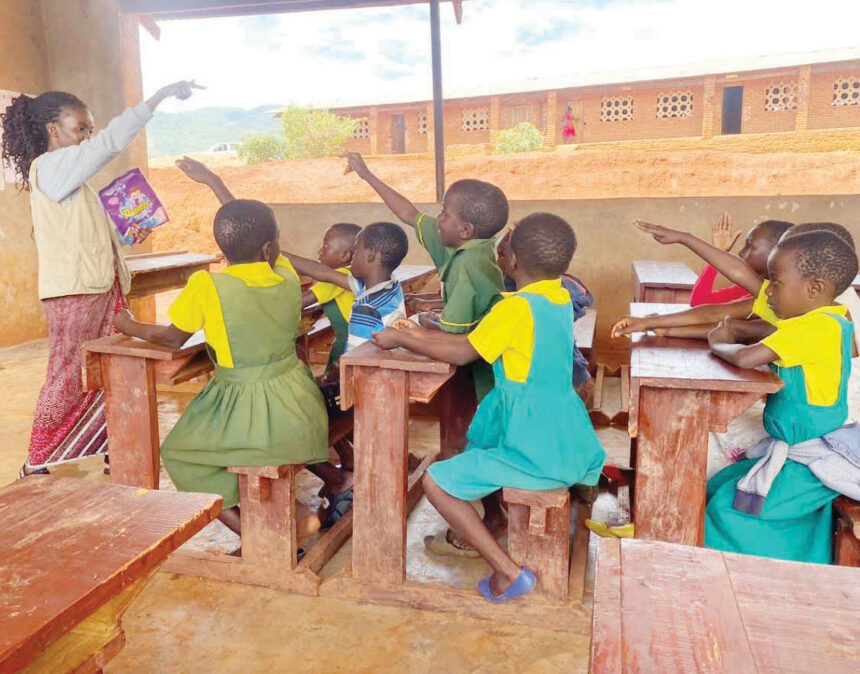
Chisomo, not his real name, sits in his Standard 4 classroom, staring blankly at his English textbook.
The letters, words and symbols blur together as his mind fogs with confusion. He struggles to understand even the simplest sentences. His frustration is evident.
Despite his efforts, Chisomo consistently scores poorly in English and Mathematics.
His teacher recognises his difficulties and tries to offer him support. However, with 60 students in the class, the teacher’s attention is spread thin.
- Advertisement -
Chisomo’s parents, subsistence farmers, cannot afford private tutoring.
His mother worries for his future.
“How will he manage in life if he can’t even read or do simple sums? We want him to have a better life but it seems impossible,” the mother laments.
Chisomo’s struggles are a reality for many early education learners across Malawi, as the country continues to battle high illiteracy rates and strives to cultivate a reading culture in line with Malawi 2063 (MW2063), the country’s long-term development plan.
- Advertisement -
- Advertisement -
It is concerning to stakeholders that many children in the lower classes of government primary schools are struggling with basic literacy and numeracy.
This issue became apparent during this year’s reading competition at Njewa, Chitipi and Airbase primary schools in Lilongwe.
The event exposed the deep-rooted challenges facing the education system, with many early learners still unable to read or grasp basic mathematical concepts.
This mirrors a similar incident during a spelling bee competition, which drew criticism when contestants failed to meet basic spelling expectations.
It is clear that Malawi’s education system is trapped in a cycle, repeating the same mistakes while failing to address the underlying challenges.
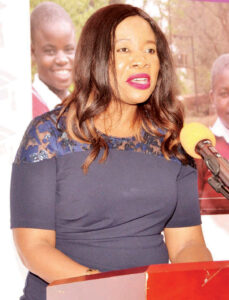
Minister of Education, Madalitso Kambauwa Wirima, revealed alarming gaps in reading and numeracy skills among primary school learners who struggle with both reading and basic mathematical calculations.
With Malawi’s education poverty rate standing at 87 percent, Wirima notes that it is concerning that only 13 out of every 100 learners can read comprehensively and perform basic arithmetic.
“This is a crisis,” she says.
To tackle this problem, the minister stresses the need for immediate, collective action.
“Our goal is to reduce this rate by at least 27 percent by 2030 and achieve education for all,” Wirima says.
According to a National Education Standards report, 87 percent of learners in lower grades fail to meet the minimum reading proficiency standards and struggle with basic maths, posing a threat to Malawi’s education system.
Benedicto Kondowe, Executive Director of the Civil Society Education Coalition, underlines the need to address longstanding issues in the education sector, such as the shortage of textbooks and the lack of qualified teachers, which contribute to high teacher-student ratios.
“Improving numeracy skills in early grades is essential to prevent rising illiteracy and subsequent poverty. The United Nations [UN] recognises education as a key strategy for eradicating poverty globally.

“By focusing on numeracy skills in early education, we can empower future generations, break the cycle of poverty and promote sustainable development,” Kondowe says.
President of the Teachers Union of Malawi, Willy Malimba, stresses the importance of addressing these challenges if Malawi is to make progress in tackling educational poverty, particularly in early education.
He explains that many learners face challenges similar to Chisomo’s, perpetuating a cycle of poverty and limited future opportunities.
“Investing in teacher training, providing educators with the necessary skills and resources to teach both English and Chichewa effectively, developing high-quality textbooks and teaching materials that are culturally relevant and accessible to all learners and promoting early childhood education programmes are all crucial steps,” Malimba says.
Lilongwe District Council’s Director of Education, Sophia Mthiko, states that in order to address these difficulties, the Ministry of Education has launched the National Foundation Learning Committee, which targets primary education to equip 80 percent of children with literacy and numeracy skills by 2030.
“Improving literacy and numeracy skills is critical for Malawi’s future,” Mthiko says.
Stakeholders agree on the need for Malawi to take immediate and effective measures to tackle the challenges in its education sector, particularly in early education, to move towards achieving MW2063.
They posit that this will not only help cultivate a skilled workforce but also promote sustainable human capital, a key factor in the country’s development, as highlighted in the UN’s Global Consensus Report.